Compact cameras are enjoying a full-blown renaissance in 2026, and the models that stand out share one classic feature: a proper viewfinder. Smartphone screens wash out in daylight, arms tire quickly at eye level, and touchscreens invite fingerprints and misfocused shots. A viewfinder solves all three problems inside a single tiny window. Photographers now demand pocketable bodies that still deliver the intimate, eye-to-lens experience that made photography feel serious in the first place.
The buzz around the Fujifilm X100VI, the arrival of the Ricoh GR IV in autumn 2025, and the return of premium zoom compacts like the Leica D-Lux 8 prove one thing — the market is loud, competitive, and richer than it has been in a decade. This guide cuts through the noise. You will find honest picks, verified specs, and buying advice for every budget from $1,000 to $8,000.
📸 Just shot a great trip? Let our expert editors polish every frame with our professional photo retouching service — flawless skin, colors, and light delivered fast.
What Actually Counts as a “Compact Camera With a Viewfinder” in 2026?
Not every small camera earns the label. A true compact camera with a viewfinder combines four traits:
- A body you can slip into a jacket pocket or small sling — usually under 750 grams
- A built-in electronic viewfinder (EVF), optical viewfinder (OVF), or hybrid — with a couple of notable exceptions that support high-quality clip-on optical viewfinders
- A capable sensor — from 1-inch up to full-frame
- Direct manual controls — aperture rings, shutter dials, or clean top plates
Some fixed-lens models like the Fujifilm X100VI blur the line between “compact” and “premium rangefinder.” Others, like the retro-styled Nikon Zf, sit at the larger edge of the compact category yet earn a mention because their charm and photo-first design remain unmatched.
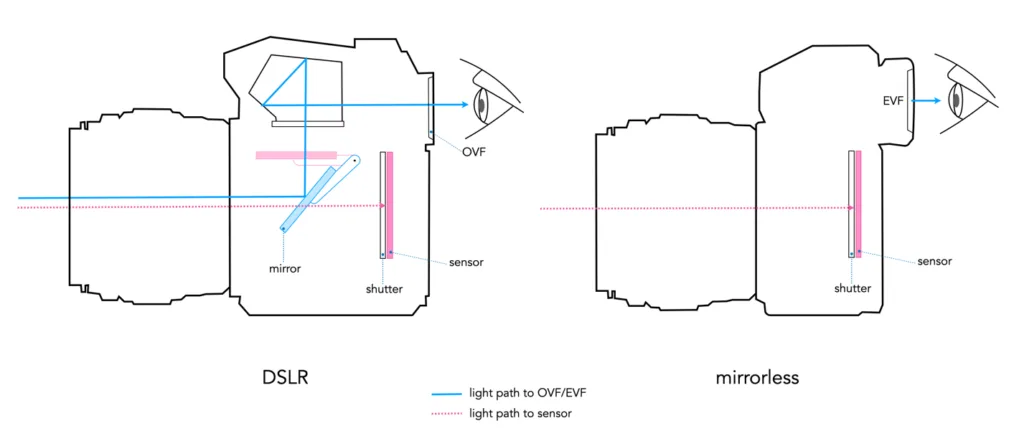
Optical vs Electronic Viewfinder: A Quick Primer Before You Buy
Choosing a camera without understanding its viewfinder is like buying shoes online without knowing the size. Here is what actually matters.
Optical Viewfinder (OVF)
- Shows the real scene through a small window, not through the lens
- Delivers zero lag and zero battery drain
- Excels in bright sunlight
- Cannot preview exposure, white balance, or focus peaking
Electronic Viewfinder (EVF)
- Shows a live digital preview from the sensor
- Displays exposure, histogram, and film simulations in real time
- Uses battery power and can lag slightly in low light
- Modern OLED panels feel almost as natural as OVFs
Hybrid Viewfinder (Fujifilm’s Signature)
- Switches between OVF and EVF with a flick of the front lever
- Adds a tiny EVF window inside the OVF for perfect focus confirmation
- Only Fujifilm’s X100 series and X-Pro line offer this trick
An EVF-focused explainer from DPReview argues that most professionals now prefer EVFs for WYSIWYG accuracy — a valid stance because the human eye’s real-world resolution already outpaces every panel on the market, so what really matters is the preview information the finder can display.
Why a Viewfinder Genuinely Improves Your Photography
The advantages go far beyond nostalgia. A viewfinder trains the eye and steadies the hand at the same time.
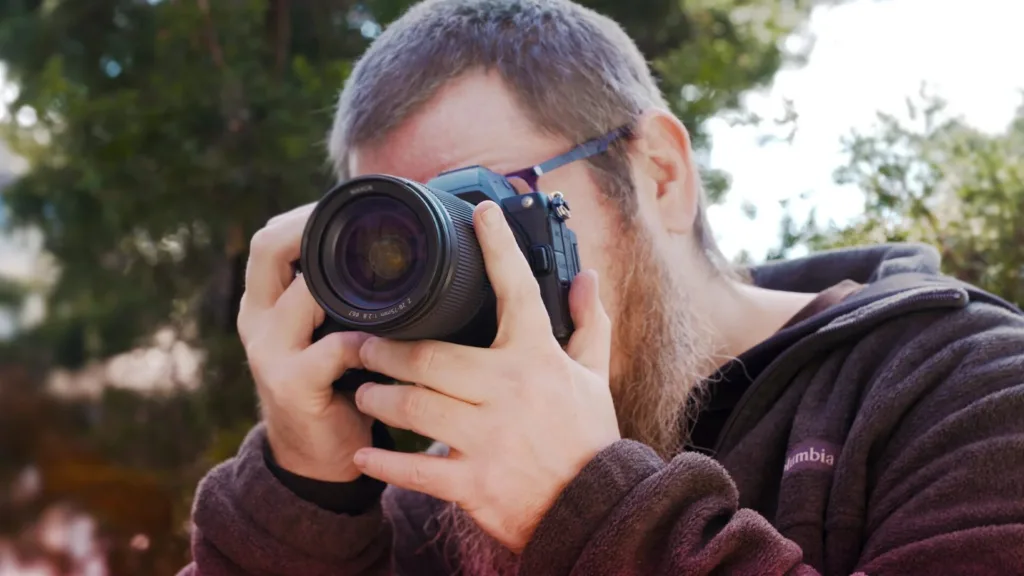
- Stability boost — Pressing the camera against your face creates a third contact point, cutting shake
- Sun-proof composition — LCDs fade in bright light while viewfinders stay perfectly readable
- Immersion — Blocking peripheral distractions helps you see the frame as an image, not a scene
- Battery efficiency — Many EVFs draw less power than a rear LCD in high-brightness mode
- Discretion — Eye-level shooting looks faster and less obvious than lifting a screen
Even with modern in-body image stabilization, a viewfinder makes you slower, more deliberate, and ultimately more accurate.
Quick-Reference Buying Table for 2026
Here is a snapshot of the top compact cameras with viewfinders covered below. All figures come from official manufacturer spec sheets and current retail listings.
| Camera | Sensor | Viewfinder | Weight (with battery) | Approx. Price (USD) |
|---|---|---|---|---|
| Fujifilm X100VI | 40MP APS-C | Hybrid OVF/EVF | 521 g | $1,599 |
| Ricoh GR IV | 26MP APS-C | Optional GV-3 optical clip-on | 262 g | $1,499 |
| Leica Q3 | 60MP Full-frame | 5.76M-dot OLED EVF | 743 g | $5,995 |
| Leica Q3 43 | 60MP Full-frame | 5.76M-dot OLED EVF | 772 g | $6,895 |
| Sony RX100 VII | 20MP 1-inch | 2.36M-dot pop-up EVF | 302 g | $1,298 |
| Leica D-Lux 8 | 17MP Four Thirds | 2.36M-dot EVF | 397 g | $1,795 |
| Panasonic LX100 II | 17MP Four Thirds | 2.76M-dot EVF | 392 g | $999 |
| Fujifilm X-T50 | 40MP APS-C | 2.36M-dot OLED EVF | 438 g | $1,399 |
| OM System OM-5 II | 20MP MFT | 2.36M-dot OLED EVF | 416 g | $1,199 |
| Nikon Zf | 24MP Full-frame | 3.69M-dot OLED EVF | 710 g | $1,999 |
The 10 Best Compact Cameras With a Viewfinder in 2026
Below sit the strongest options this year, ranked by handling, image quality, viewfinder experience, and overall value.
1. Fujifilm X100VI — The Cult Favorite That Lives Up to the Hype
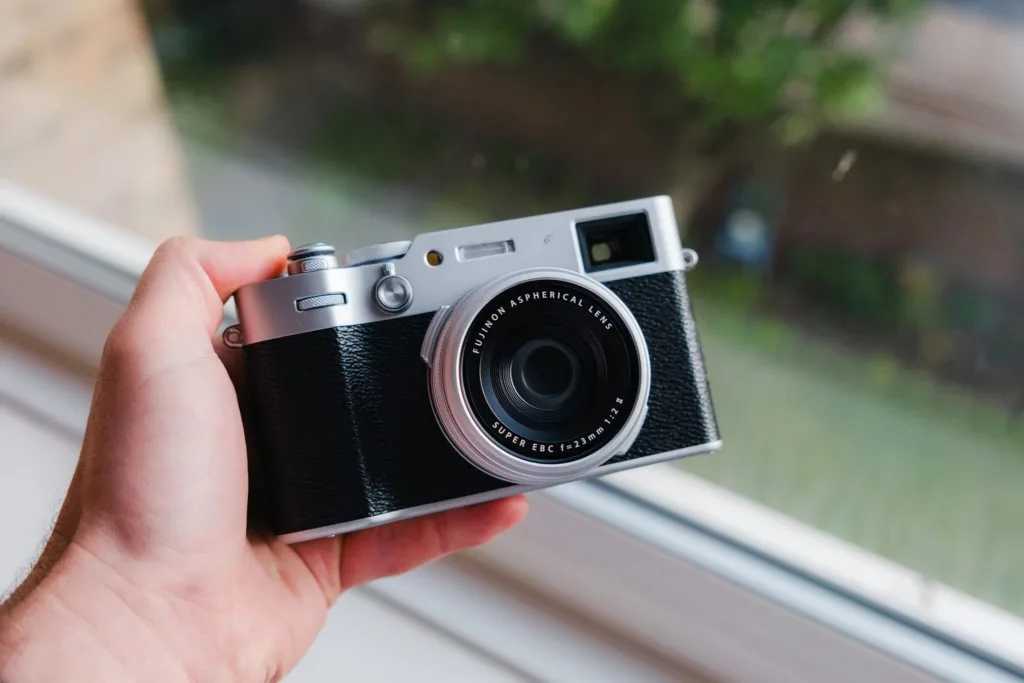
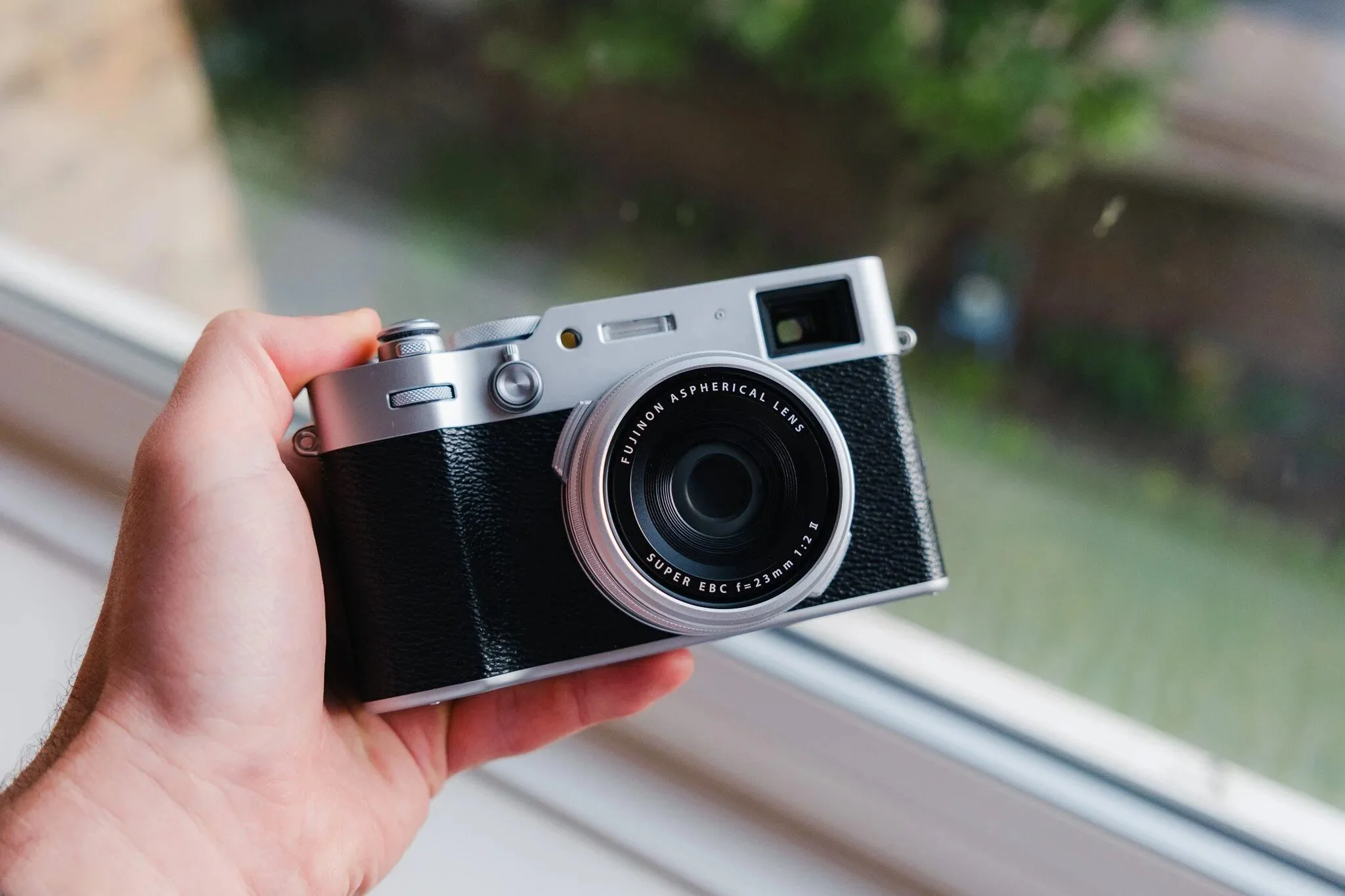
The Fujifilm X100VI launched in early 2024 at $1,599 and became the year’s most sought-after compact almost overnight. Fujifilm engineered a stabilized 40.2-megapixel APS-C X-Trans 5 HR sensor into a body that weighs 521 grams with battery and card. Its hybrid viewfinder remains the signature trick — a real optical window that overlays digital data, plus a full EVF mode when you want a live exposure preview.
Why it wins:
- Six-stop in-body image stabilization added for the first time in the X100 line
- 6.2K video at 30p and 4K at 60p
- Twenty film simulations, including the classic Reala Ace
- One-of-a-kind hybrid viewfinder for street and documentary work
- Fixed 35mm-equivalent f/2 lens with the redesigned optical formula from the X100V
The X100VI is not perfect. The fixed 35mm equivalent lens will not suit everyone, and stock shortages continued well into 2025. Yet for photographers who value character, tactile dials, and unmistakable Fuji color science, no rival comes close.
2. Ricoh GR IV — The Pocket Street Legend (With Optional Optical Viewfinder)
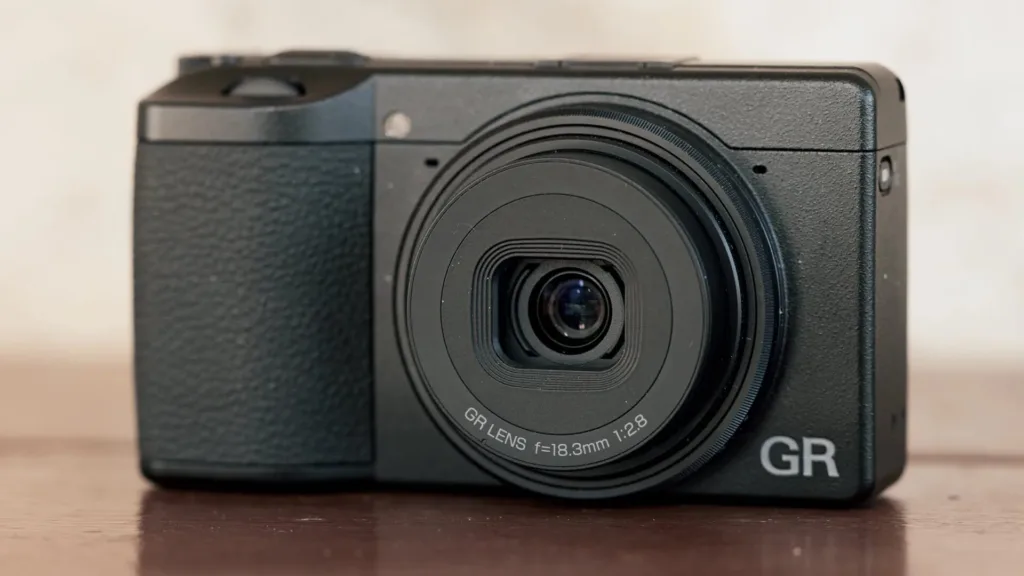
Important note upfront: the Ricoh GR IV does not include a built-in viewfinder, but Ricoh specifically supports the optional GV-3 optical hot-shoe viewfinder with a 28mm equivalent frame that matches the GR IV’s lens perfectly. Because reviewers universally rank the GR IV as the finest true pocket APS-C camera of 2026, it belongs in this list for buyers open to a $250 clip-on finder.
Key specs:
- 25.7-megapixel APS-C BSI-CMOS sensor
- 18.3 mm f/2.8 (28 mm equivalent) fixed lens with new coatings
- Five-axis in-body stabilization — a first for the GR line
- ISO 100 to 204,800
- Just 262 grams with battery and SD card
Reviewers describe the GR IV as “the best true pocket APS-C camera right now,” praising sharper optics and a faster hybrid autofocus system. If you crave silent, invisible street shooting and prefer a rangefinder-style zone-focus workflow, this camera is unmatched.
📸 Turning street shots into striking portfolios? Sharpen every subject with our precision clipping path service and elevate every image.
3. Leica Q3 — The Undisputed King of Full-Frame Compacts
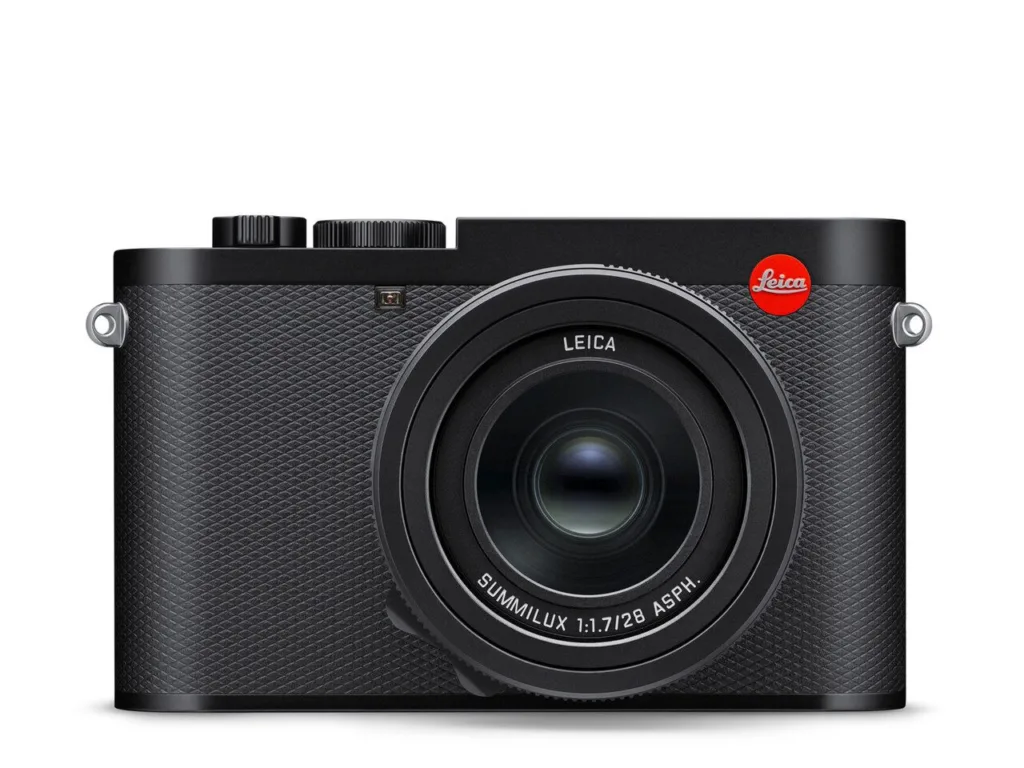
The Leica Q3 places a 60-megapixel full-frame BSI CMOS sensor behind a fixed Summilux 28mm f/1.7 ASPH lens. Its 5.76-million-dot OLED viewfinder is one of the finest on any camera, period, and photographers routinely describe it as bright, sharp, and genuinely a joy to use.
Why serious photographers save for it:
- Crop modes at 35, 50, 75, 90, and 120 mm equivalents
- 8K video recording and Leica FOTOS wireless workflow
- Tiltable three-inch touchscreen — a first for the Q line
- Legendary Leica color and micro-contrast
- CIPA-rated 350 shots per battery
Yes, $5,995 sits at the luxury end. However, the Q3 delivers medium-format-adjacent image quality in a body of just 743 grams. For travel photographers wanting the last camera they will ever buy, the Q3 justifies its price tag.
4. Leica Q3 43 — For Photographers Who Prefer a “Natural” Focal Length
The Leica Q3 43 uses the same 60-megapixel sensor and OLED viewfinder as the standard Q3 but swaps the 28mm lens for an APO-Summicron 43mm f/2. That focal length sits close to what the human eye naturally sees, which explains why documentary photographers adore it. It launched at $6,895 in mid-2024 and weighs 772 grams with battery.
If you already own a 28mm elsewhere, or you simply prefer the compression of a “standard” lens, the Q3 43 offers a genuinely different creative tool inside the same tiny Leica shell.
5. Sony RX100 VII — The Original Pocket Rocket Still Delivers
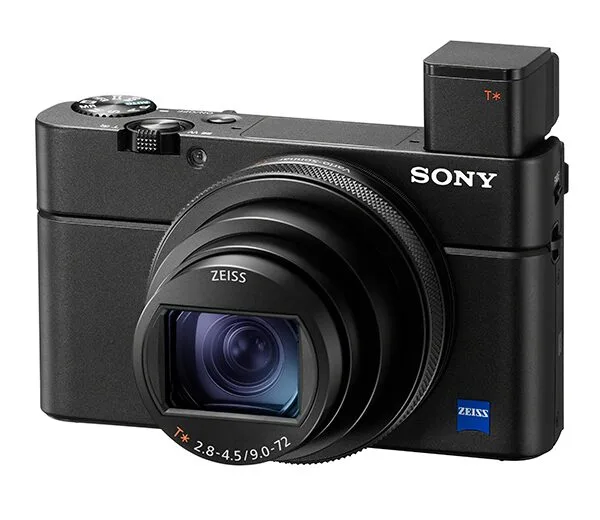
Sony’s RX100 VII crammed a 20.1-megapixel 1-inch stacked sensor and a 24-200mm equivalent f/2.8-4.5 zoom into a shirt-pocket body of just 302 grams. Its pop-up 2.36-million-dot EVF appears only when you need it, which keeps the camera slim.
Highlights:
- Fastest fixed-lens compact autofocus in its class at 0.02 seconds
- Real-time Eye AF for humans and animals
- 20 fps burst with blackout-free shooting
- 4K HDR video and vertical clip support for social content
- CIPA-rated 260 shots per battery — modest but manageable
For travelers who refuse to swap lenses, the range and speed of the RX100 VII remain remarkable. Just budget for two extra batteries and a fast SD card that can hold thousands of photos.
6. Leica D-Lux 8 — Small Sensor, Big Charm
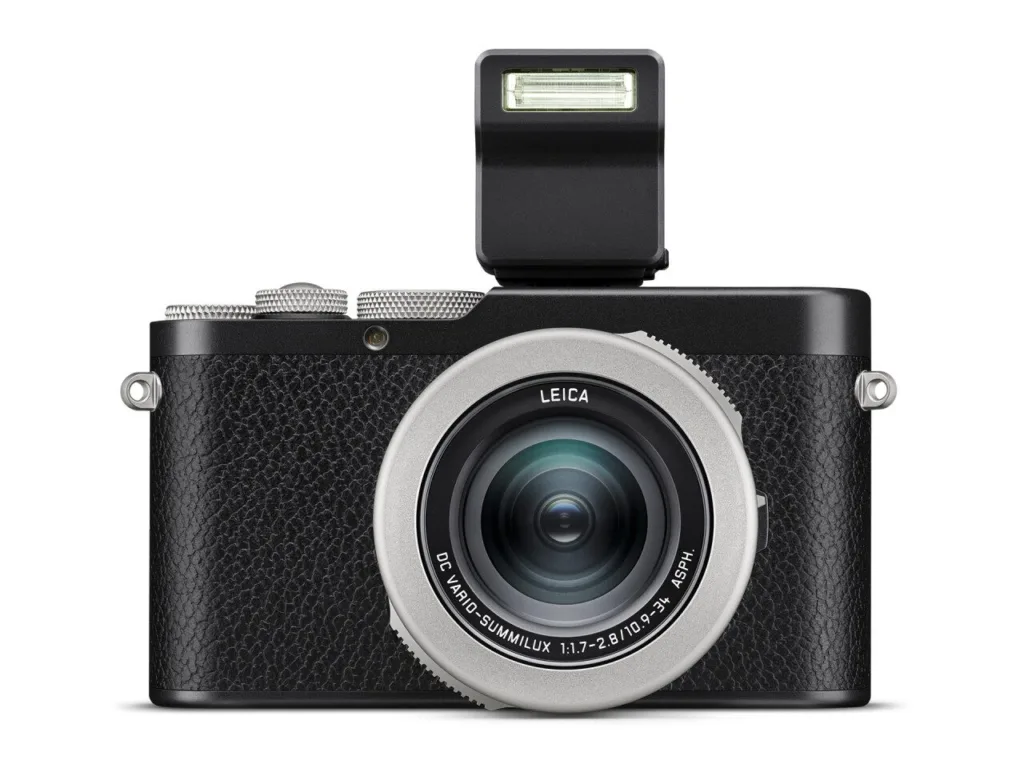
The Leica D-Lux 8 reinvents the classic zoom compact. A 17-megapixel multi-aspect Four Thirds sensor sits behind a 24-75mm equivalent f/1.7-2.8 Leica DC Vario-Summilux zoom. Digital Camera World called it a “fun, straightforward camera that is surprisingly affordable for a Leica.”
Standouts:
- Improved 2.36-million-dot EVF (less distracting than the D-Lux 7’s version)
- Redesigned menu system with familiar Leica icons
- 4K video and native DNG raw
- Compact form at 397 grams
The D-Lux 8 costs about $1,795 — a fraction of the Q3 — yet delivers real Leica handling, colors, and prestige.
7. Panasonic Lumix LX100 II — Best Value Enthusiast Compact
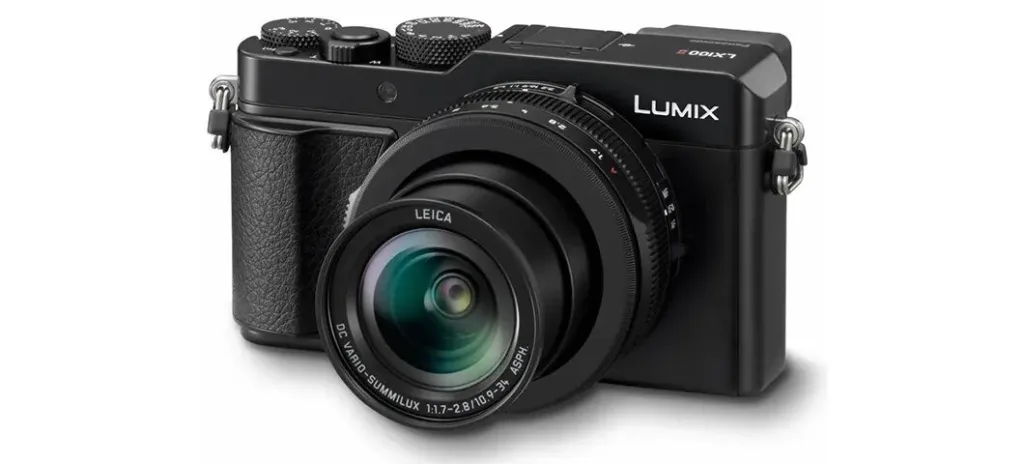
Under the skin, the Panasonic Lumix LX100 II is the sibling of the Leica D-Lux 7 — same sensor, same lens, half the price. It offers a 2.76-million-dot electronic viewfinder with 0.7x magnification and 100 percent coverage. Direct dials for aperture and shutter speed make it feel like a proper photographer’s tool.
Bullet-point brilliance:
- Multi-aspect Four Thirds sensor uses different crops of a larger imaging area
- 4K video and 4K Photo modes for burst-derived stills
- Fast Leica DC Vario-Summilux 24-75 mm f/1.7-2.8 lens
- Well under $1,000 in the current market
For photographers who want direct controls, a real EVF, and a versatile zoom without a Leica badge tax, the LX100 II remains the smart-money pick even years after release.
8. Fujifilm X-T50 — Interchangeable-Lens Compact With a Film Simulation Dial
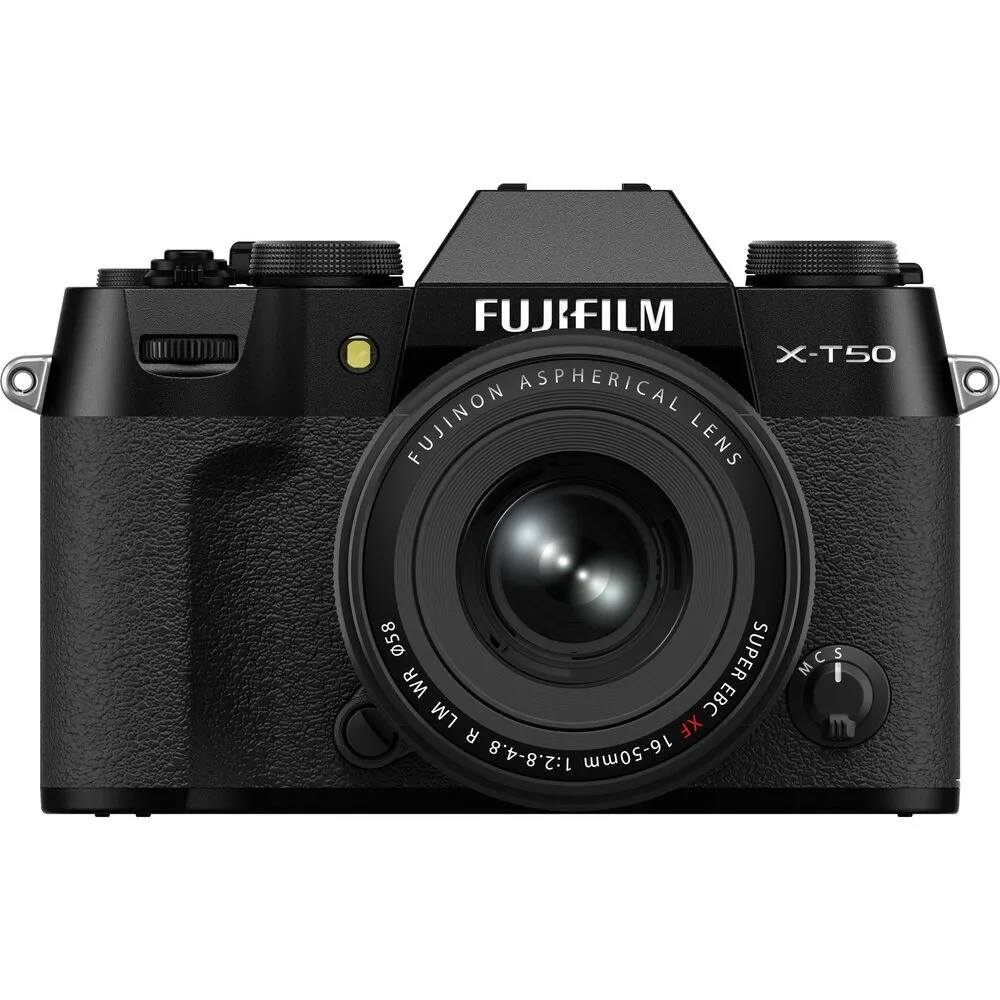
The Fujifilm X-T50 shrinks the flagship X-T5 into a smaller body while keeping the same 40.2-megapixel APS-C X-Trans 5 HR sensor and seven-stop IBIS. Its 2.36-million-dot OLED EVF with 0.62x magnification is smaller than the X-T5’s finder but still crisp. The dedicated film simulation dial on the top plate is genuinely fun for JPEG shooters.
Reasons to consider it:
- Interchangeable X-mount lenses for creative flexibility
- 6.2K video at 30p and 4K at 60p
- Eight fps mechanical burst and 20 fps electronic shutter
- Compact retro-inspired body at 438 grams
If a fixed lens feels restrictive, the X-T50 gives you the same sensor as the X100VI plus the freedom to swap glass. Beginners can pair it with an inexpensive prime — our list of the top mirrorless cameras covers wider alternatives at similar price points.
📸 Working with product images from your new camera? Let our specialists remove distracting backgrounds via our background removal service — perfect for eCommerce.
9. OM System OM-5 Mark II — The Weather-Sealed Adventurer
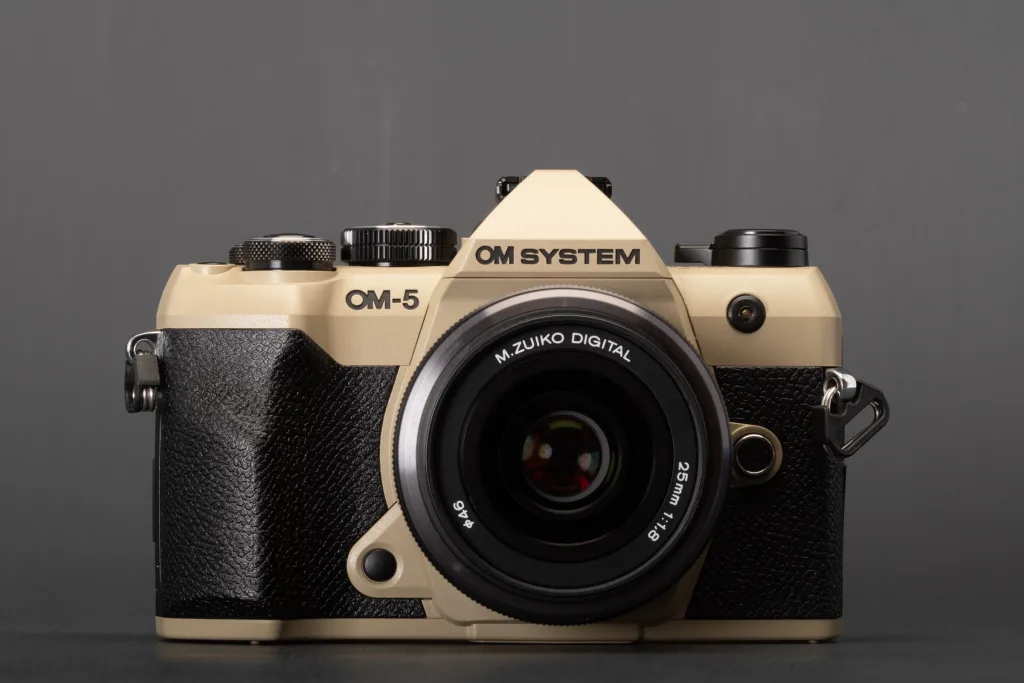
The OM System OM-5 Mark II targets hikers, backpackers, and outdoor shooters. Micro Four Thirds sensor size keeps lens weight tiny, and the IP53-rated body shrugs off rain and dust. Its 2.36-million-dot OLED EVF with 0.68x magnification handles landscape framing well.
Why adventure photographers love it:
- Five-axis IBIS delivers up to 7.5 stops of shake correction with Sync IS lenses
- Handheld high-res shot combines multiple frames into 50-megapixel files
- Live ND, Live Composite, and Focus Stacking built into the menu
- Just 416 grams with battery and card
- IP53-rated weather sealing and freeze-proof to –10 °C
The OM-5 II won’t impress spec-sheet warriors, but its computational photography tools genuinely expand what you can shoot without a tripod.
10. Nikon Zf — Retro Full-Frame in a Beautifully Compact Package
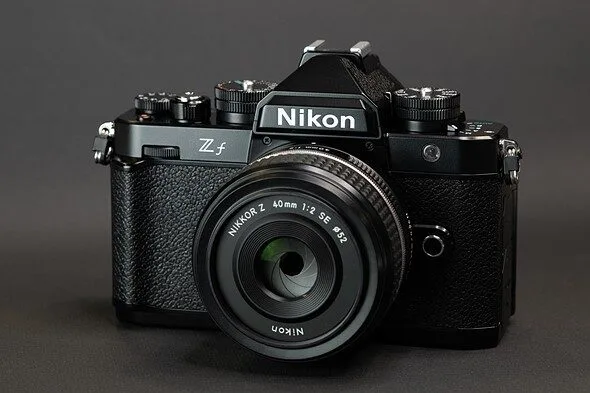
The Nikon Zf sits at the larger end of compact, but its 24.5-megapixel full-frame sensor, 3.69-million-dot OLED EVF with 0.8x magnification, and 710-gram weight place it in genuine competition with premium fixed-lens cameras. Reviewers highlight its exceptional autofocus and rich color rendition.
Why it deserves a spot here:
- Classic Nikon FM2-inspired body with dedicated ISO, shutter, and exposure dials
- Excellent subject-detection autofocus inherited from the Z8
- 4K/60p video and reliable full-frame low-light performance
- Interchangeable Z-mount for near-infinite lens choice
For photographers who want full-frame quality with vintage soul, the Zf is unmatched at its $1,999 body-only price.
How to Match a Compact Camera With Viewfinder to Your Actual Needs
Picking the right model depends less on brand loyalty and more on how you actually shoot. Break your decision down honestly.
For Street Photographers
- Choose a discreet body with quick controls
- Prioritize fast prime lenses and near-silent shutters
- Best picks: Fujifilm X100VI, Ricoh GR IV, Leica Q3
For Travel Photographers
- Look for versatile zooms and (ideally) weather sealing
- Battery life and size often matter more than megapixels
- Best picks: Sony RX100 VII, Panasonic LX100 II, OM System OM-5 II
For Portrait and Documentary Work
- Full-frame sensors and 35mm–50mm equivalents shine here
- IBIS becomes essential for handheld natural-light work
- Best picks: Leica Q3, Leica Q3 43, Nikon Zf
For Content Creators and Vloggers
- Flip-out screens, strong autofocus, and clean audio inputs matter
- Best picks: Sony RX100 VII, Fujifilm X-T50
Curious how tiny cameras stack up against phones? Our comparison of the mirror vs camera accuracy covers how sensor and framing shape the way you see your own images.
Sensor Sizes Explained: What Really Matters Inside a Tiny Body
The sensor determines almost everything — dynamic range, low-light performance, depth of field, and even lens design.
- 1-inch sensor (Sony RX100 VII) — Great in good light, weakest in low light, produces the smallest bodies
- Four Thirds (LX100 II, D-Lux 8, OM-5 II) — Balanced size and IQ with strong lens flexibility
- APS-C (Fujifilm X100VI, Ricoh GR IV, X-T50) — The sweet spot for enthusiasts
- Full-frame (Leica Q3, Nikon Zf) — Maximum image quality, larger and pricier
Understanding sensor behavior also connects to memory strategy. If you plan to shoot RAW plus JPEG, review the best cloud storage for photos before your next big trip to protect thousands of frames.
Viewfinder Specs That Actually Matter
When comparing electronic viewfinders, three numbers tell the truth.
- Resolution (measured in dots) — 2.36 million is standard, 3.69 million is very good, 5.76 million is premium
- Magnification — Higher magnification means a bigger, more immersive image
- Refresh rate — 60 Hz is minimum, 120 Hz feels lag-free
The Leica Q3’s 5.76M-dot OLED panel remains the reference for the segment, while the Panasonic LX100 II’s 2.76M-dot unit still beats many pricier cameras. Small differences on paper create large differences in real-world tracking of moving subjects.
Common Mistakes When Buying a Compact Camera With Viewfinder
Skip the regret. Avoid these traps.
- Chasing megapixels alone — A 60-megapixel sensor demands more storage, tripods, and stellar lenses
- Ignoring lens speed — An f/2.8 zoom might feel slow after using an f/1.7 prime
- Overlooking ergonomics — A camera that hurts your hand stays home
- Forgetting the accessory ecosystem — Filters, cases, and grips add real money
- Buying too much viewfinder — A 5.76M-dot EVF is overkill for a casual hobbyist
The best purchase matches how you actually shoot, not how spec charts suggest you should.
📸 Selling clothing online? Our ghost mannequin service creates clean, professional apparel shots that boost conversions instantly.
Accessories Every Compact Camera Owner Should Consider
A few small additions transform how a compact camera performs.
- Extra batteries — Compacts drain fast, especially in cold weather
- Fast SD cards — UHS-II V60 or better for 4K video and burst shooting
- A soft leather half-case — Adds grip and protects the base
- Neutral density filters — Essential for wide-aperture daytime shooting
- A small microfiber cloth — Small lenses collect fingerprints instantly
For photographers new to gear investment, our roundup of the best budget digital cameras offers cheaper starting points to try before splurging on a premium compact.
Editing Workflow: Making Your Compact Camera Files Shine
Even the sharpest JPEG benefits from a light touch of post-processing. Focus on:
- Exposure fine-tuning for shadow and highlight recovery
- Color grading to match a personal style
- Subtle sharpening without introducing halos
- Selective retouching for portraits and product shots
Adobe Lightroom, Capture One Pro, and DXO PhotoLab dominate the professional space. Photographers using free tools can explore our list of free Photoshop alternatives for 2026 to build a lean editing suite without subscriptions.
The Compact Camera Comeback Is Real — And Here to Stay
Sales data from 2024 and 2025 confirmed what enthusiasts already sensed on the street. Compact cameras with viewfinders now outsell many mid-range mirrorless bodies among serious hobbyists for the first time in a decade. Manufacturers responded with the Ricoh GR IV, Fujifilm X100VI, Leica Q3 43, and OM System OM-5 II — all released inside a two-year window. This is not nostalgia. It is a market answering a demand that never really disappeared.
Photographers realized that phones capture memories while cameras create photographs. A viewfinder simply reinforces that intent. It slows the shutter finger just enough to make composition matter again.
Frequently Asked Questions (FAQ)
Which compact camera with viewfinder is best for beginners in 2026?
The Panasonic Lumix LX100 II offers the friendliest learning curve. It provides direct control dials, an excellent 2.76M-dot EVF, and a versatile 24-75mm equivalent zoom for under $1,000. Users graduating from smartphones love its blend of automation and manual tactility.
Is a viewfinder actually necessary if I already have a bright LCD?
Yes, particularly outdoors. Even the best LCD screens struggle in direct sunlight, while a viewfinder stays perfectly readable. A viewfinder also improves handheld stability and helps you compose without distractions from bright surroundings.
What is the difference between OVF, EVF, and hybrid viewfinders?
An OVF shows the real scene through a small optical window. An EVF displays a live digital feed from the sensor. A hybrid viewfinder, found only on Fujifilm X100 series and X-Pro bodies, combines both — you can switch instantly and even overlay data on the optical view.
How pocketable is the Fujifilm X100VI really?
The X100VI weighs 521 grams and measures 128 × 75 × 55 mm. It fits into a large jacket pocket or a small crossbody bag comfortably, but not into a jeans pocket. Compare that with the Ricoh GR IV, which slips into most trouser pockets at just 262 grams.
Do all compact cameras with viewfinders shoot in RAW?
Nearly all serious models covered here shoot in DNG or proprietary RAW. Ricoh, Fujifilm, Sony, Leica, Panasonic, OM System, and Nikon all support raw capture. Only very basic point-and-shoots restrict output to JPEG.
Can I use a compact camera with a viewfinder for professional work?
Absolutely. Wedding photographers use the Leica Q3 as a discreet second body. Photojournalists rely on the Fujifilm X100VI for its silent leaf shutter. Product photographers pair the LX100 II with a small tripod. Compact cameras today deliver image quality that rivals full-size mirrorless bodies from just five years ago.
How long do these cameras last per battery charge?
CIPA-rated numbers from official spec sheets look like this:
- Fujifilm X100VI: about 450 frames (Normal mode)
- Ricoh GR IV: about 250 frames
- Leica Q3: about 350 frames
- Sony RX100 VII: about 260 frames
- Nikon Zf: about 410 frames
Always carry at least one spare battery, especially for travel or event shooting.
Is 4K video enough for a compact camera with viewfinder?
For most creators, yes. The X100VI, X-T50, and Q3 push into 6K or 8K, but 4K remains the practical standard for social media, YouTube, and client deliverables. Learn more about resolution differences in our what is 4K resolution explainer.
Final Verdict: Which Compact Camera With Viewfinder Should You Actually Buy?
Every camera in this guide earns its place, but three stand above the rest.
- Best overall: Fujifilm X100VI for its hybrid viewfinder, character, and image quality
- Best luxury pick: Leica Q3 for uncompromising 60MP full-frame quality
- Best budget pick: Panasonic Lumix LX100 II for a real EVF, real controls, and real value
If none of these fits your workflow, revisit your shooting style honestly. Street shooters lean toward Ricoh and Fujifilm. Travelers gravitate to Sony and Panasonic. Adventurers reach for OM System. Portrait pros end up at Leica or Nikon.
The market has never been richer, and the resurgence shows no sign of slowing. Pick the camera that fits your hand, matches your budget, and — most importantly — makes you want to pick it up every single day.
📸 Ready to make your camera work shine? Explore our full suite of professional image editing services and see the difference expert retouching makes.