Best 360 Degree Camera 2026: Top 8 Picks Tested, Ranked & Compared
The 360 degree camera category exploded in 2026. Manufacturers finally cracked the true 8K barrier, low-light performance jumped a full stop, and AI reframing tools now turn raw spherical clips into cinematic single-lens shots with one tap. Whether you shoot travel vlogs, real-estate walkthroughs, motorcycle rides, or virtual reality experiences, this year’s flagships deliver crisp resolution, dependable stabilization, and workflows that welcome beginners.
This guide walks you through the best 360 degree cameras of 2026 based on hands-on reviews. Inside, you’ll find deep dives on the Insta360 X5, GoPro Max 2, DJI Osmo 360, Kandao QooCam 3 Ultra, Insta360 X4 Air, Ricoh Theta X, Insta360 X3, and AKASO 360 — plus a comparison table, buyer’s checklist, and answers to eight common questions.
📸 Ready to publish spotless product shots from your new 360 camera? Try our precision background removal service and turn every frame into a store-ready image.
Why a 360 Degree Camera Belongs in Your 2026 Kit
Traditional mirrorless cameras frame one direction at a time. A 360 camera records everything at once. You then pick your angle inside the app and pull perfectly composed 4K clips from a single spherical take. This “shoot first, frame later” workflow removes the pressure of nailing the angle during the moment.
Key reasons creators buy 360 cameras in 2026:
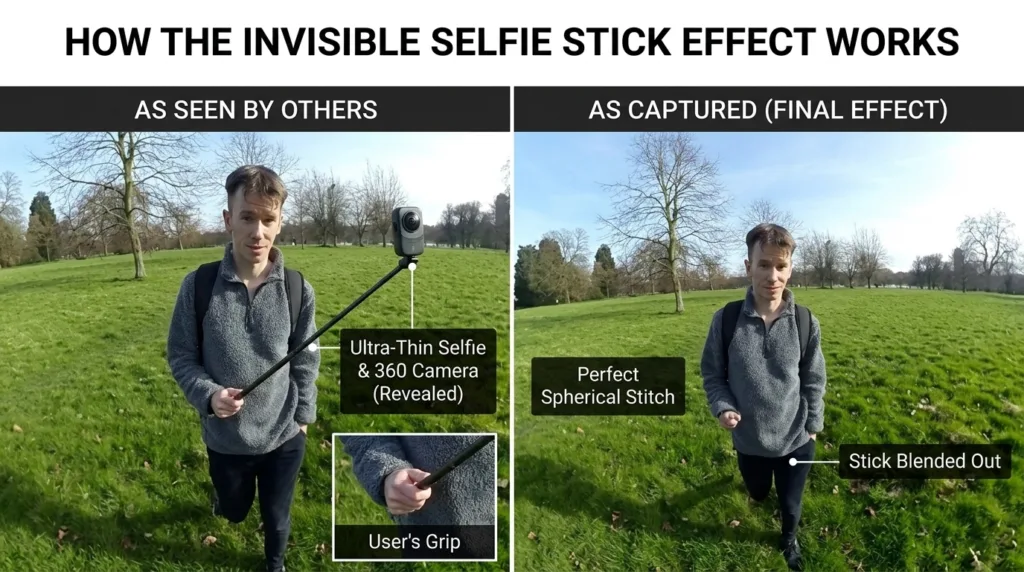
- Invisible selfie-stick effect produces drone-like third-person shots without a drone.
- AI reframing turns one clip into multiple aspect ratios for TikTok, Reels, and YouTube.
- Immersive VR content looks stunning on Meta Quest 3 and Apple Vision Pro.
- Real-estate & virtual tours benefit from single-click 360 stills with sharp stitching.
- POV action sports capture front and back simultaneously — ideal for motorcycles, skiing, and mountain biking.
The category matured fast. According to WIRED’s 2026 roundup, the top three flagships (Insta360 X5, GoPro Max 2, DJI Osmo 360) now shoot true 8K spherical video with battery life pushing past 85 minutes at max resolution.
Quick Comparison: Best 360 Degree Cameras 2026
| Camera | Price (USD) | Max Video | Photo Res | Sensor | Best For |
|---|---|---|---|---|---|
| Insta360 X5 | $549 | 8K30 | 72MP | 1/1.28″ (×2) | Best overall / low light |
| GoPro Max 2 | $499 | 8K30 | 29MP | 1/2.3″ (×2) | Simplicity & ruggedness |
| DJI Osmo 360 | $549 | 8K50 | 120MP | 1/1.1″ square (×2) | Largest sensor / DJI users |
| Kandao QooCam 3 Ultra | $599 | 8K30 (10-bit) | 96MP | 1/1.7″ (×2) | VR & color grading |
| Insta360 X4 Air | $399 | 8K30 | 29MP | 1/1.8″ (×2) | Beginners & travel |
| Insta360 X3 | $299 | 5.7K30 | 72MP | 1/2.0″ (×2) | Best budget flagship |
| Ricoh Theta X | $599 | 5.7K30 | 60MP | 1/2.0″ (×2) | Real-estate photos |
| AKASO 360 | $199 | 5.7K30 | 72MP | 1/2.0″ (×2) | Entry-level buyers |
Prices and specs verified via CNET’s best 360 camera roundup and manufacturer spec sheets.
1. Insta360 X5 — Best Overall 360 Camera of 2026
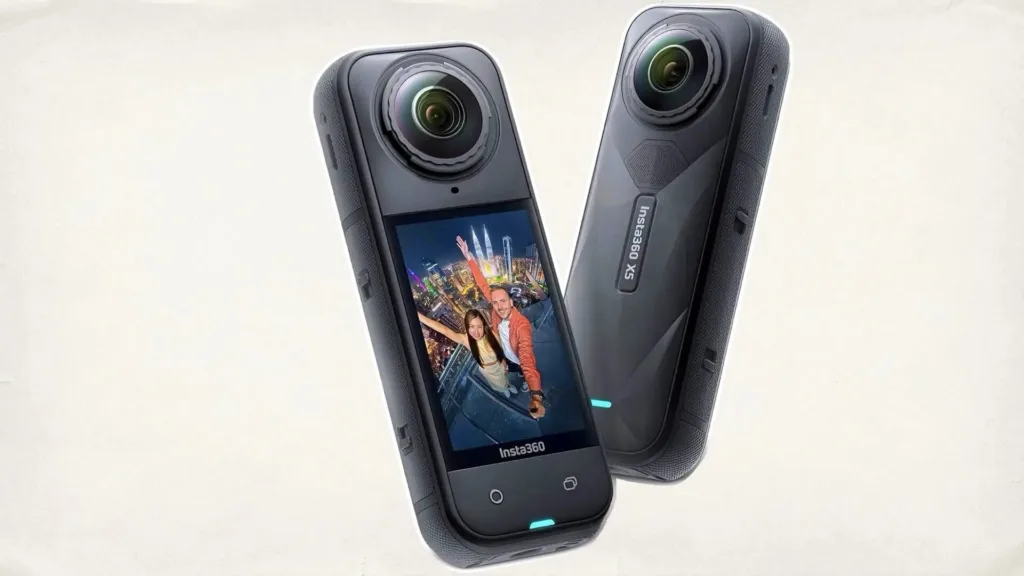
The Insta360 X5 claims the top spot in most 2026 reviews, including PCMag’s editor recommendation and CNET’s Best Overall pick. It packs dual 1/1.28-inch sensors — significantly larger than the X4 — plus a triple AI chip that handles noise reduction and stabilization in real time.
Why it wins:
- Shoots 8K30 spherical video and 5.7K60 for smoother action clips.
- PureVideo mode brightens low-light scenes without smearing detail.
- Handles depths of 49 feet (15 m) without an underwater case.
- Uses replaceable lenses — scratch one, twist it off, install a new one.
- Delivers a class-leading 208 minutes in 5.7K endurance mode from its 2400 mAh battery.
- Fast-charges to 80% in 20 minutes.
Trade-offs: The X5 costs $549, and the extra chip pushes the body slightly heavier than the X4 Air. Editing 8K footage also demands a modern laptop or desktop.
Best suited for: Travel creators, motorcyclists, and shooters who want one camera that handles both 360 and single-lens 4K vlogging. Pair it with a fast SD card — our storage explainer on how many photos can 256GB hold helps you plan capacity.
✂️ Selling gear on eBay, Reverb, or Amazon? Get flawless clipping paths that make product photos pop against clean backgrounds.
2. GoPro Max 2 — Best 360 Camera for Simplicity and Ruggedness
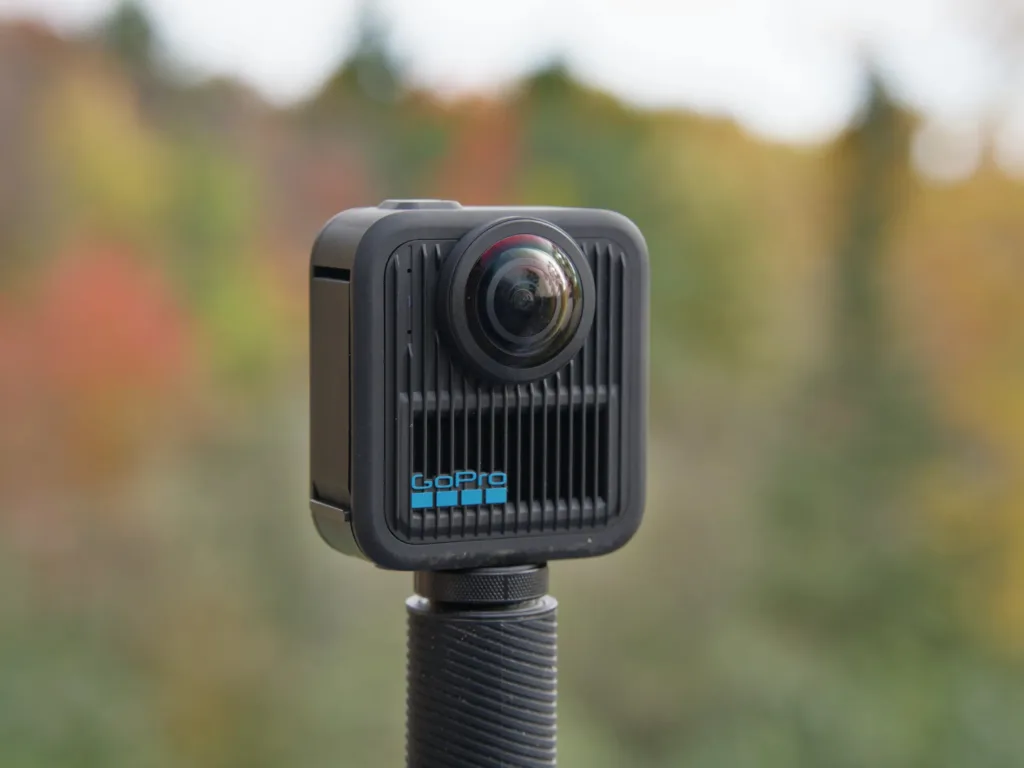
GoPro finally released the long-awaited Max 2 on September 23, 2025, and it landed as WIRED’s Best 360 Camera for Most People. It shoots true 8K30 with roughly 21% more usable resolution than the original Max, thanks to bigger sensors and a fully redesigned pipeline.
Highlights from DC Rainmaker’s teardown review:
- True 8K 360 video (7680×3840) at 30/25/24 fps.
- 29MP 360 stills with 10-bit and GP-Log color profiles.
- 4K single-lens output at up to 100 fps for buttery slow motion.
- Rugged design plus the massive GoPro mounting ecosystem.
- GoPro rates the Enduro battery at up to 88 minutes at 8K30; most testers hit 60–70 minutes.
- Price: $499 standalone, $399 with GoPro subscription.
Weaknesses: Battery life still trails the Insta360 X5 and DJI Osmo 360 in the real world. GoPro’s Quik app also lags behind Insta360’s polished editing workflow.
Ideal user: Existing GoPro shooters who already own mounts, batteries, and mods. Beginners who want stellar auto-mode results without wrestling with settings will love the Max 2. If action sports are your main use case, also read our roundup of the best cameras for action and sports photography in 2026.
3. DJI Osmo 360 — Biggest Sensor & Best DJI Ecosystem Play
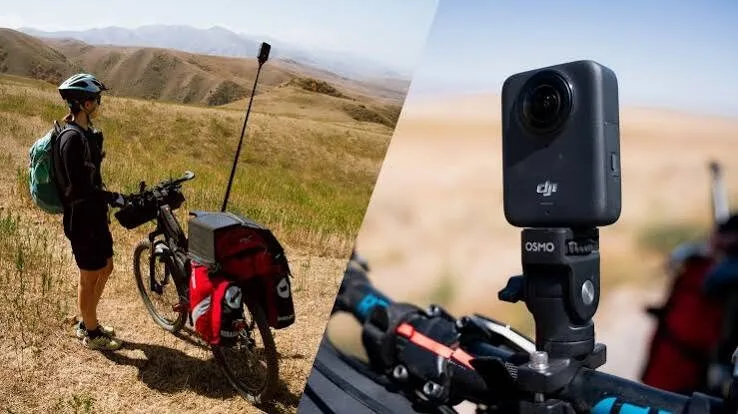
DJI entered the 360 market with a bang. The Osmo 360 ships with dual 1/1.1-inch square CMOS sensors — the largest surface area in any consumer 360 camera — and captures native 8K50 spherical video plus 4K120 single-lens footage. The 120MP still resolution beats every rival on paper. DJI markets the design as delivering “1-inch equivalent” panoramic imaging thanks to the square sensor shape.
Standout features:
- 10-bit D-Log M color profile for professional grading.
- 105 GB of built-in storage on the Adventure Combo — no scrambling for SD cards.
- Native compatibility with DJI Mic 2 and DJI Mic Mini — a game-changer for interview shooters.
- Roughly 100 minutes of battery life at 8K.
- Accepts existing DJI Osmo Action 4/5 batteries, saving money for current DJI owners.
Downsides: The US release lagged the global launch. The AppleInsider review also notes DJI’s mobile app remains less mature than Insta360 Studio.
Perfect for: Drone pilots and DJI owners who want a matching 360 companion. If you edit heavily and need clean 10-bit files, the Osmo 360 gives you the most headroom. Just size your storage strategy up front — the best cloud storage for photos guide covers your options.
🖼️ Post-processing your 360 stills? Professional photo retouching removes stitching lines, sensor spots, and skin blemishes in minutes.
4. Kandao QooCam 3 Ultra — Best 360 Camera for VR and Color Grading
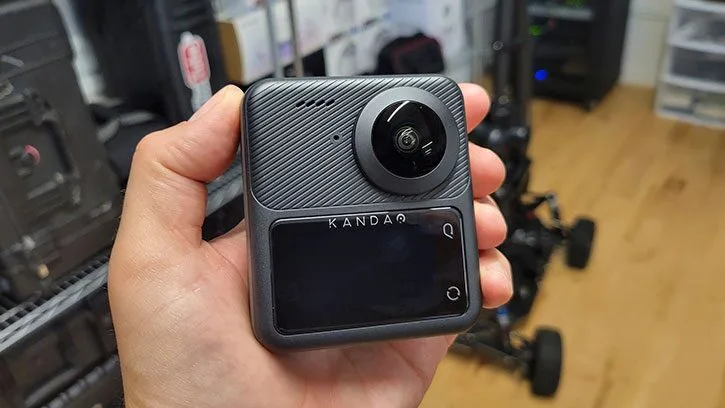
VR creators and colorists lean toward the Kandao QooCam 3 Ultra. It captures 8K30 spherical footage, records 10-bit HLG Rec.2020, and delivers 14-bit RAW photos — the widest editing latitude of any camera in this lineup. Kandao also fits f/1.6 lenses, the fastest glass in the category.
Core specs (via Kandao’s official spec sheet):
- Dual 1/1.7-inch 64MP CMOS sensors.
- 96MP 360 photos with DNG8 stacked mode for cleaner low-light stills.
- Built-in 128 GB storage plus microSD.
- 4-channel Ambisonic spatial audio.
- Robust magnesium-alloy body.
Considerations: The QooCam favors full daylight — some Reddit users flagged noise in dim conditions. Insta360’s PureVideo on the X5 still edges it after sunset.
Best for: Immersive video pros, 180° VR modders, and colorists who want maximum grading flexibility. If you juggle multiple output formats, our guide on HEIF vs JPEG helps you pick the right export.
5. Insta360 X4 Air — Best Lightweight 360 Camera for Beginners
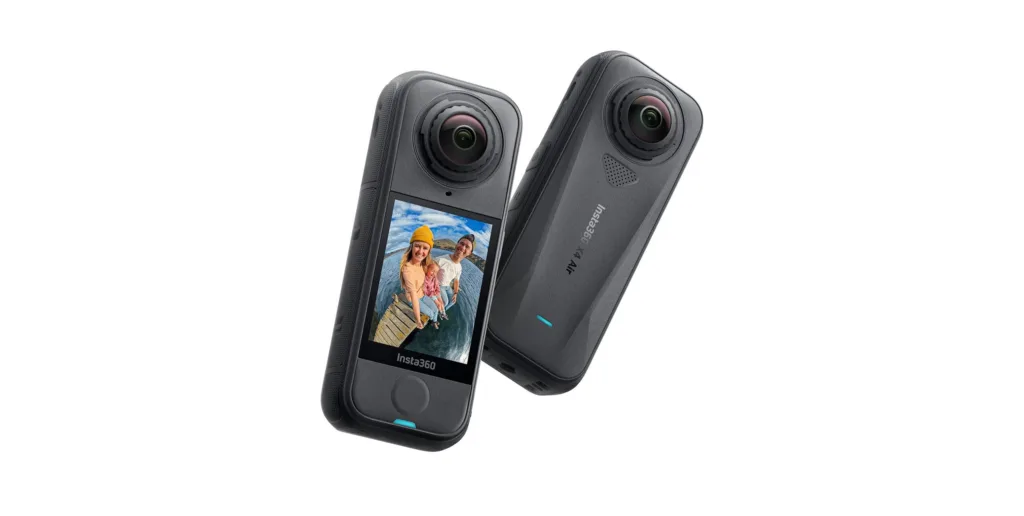
The Insta360 X4 Air landed as the beginner-friendly hero of 2026. It weighs just 165 grams — Insta360’s lightest 8K camera ever — and retails for $399. Twin f/1.95 lenses feed a single 5nm AI chip, keeping heat manageable and battery efficiency up.
Reasons beginners love it:
- Ultralight body clips onto helmets, drones, and backpacks without dragging.
- Familiar Insta360 Studio app with AI reframe, deep-track, and auto-cut.
- Replaceable lens design mirrors the X5.
- Waterproof to 33 feet (10 m) without a housing.
- 1/1.8-inch sensors deliver a real jump from the X3 in dynamic range.
What’s missing: No triple AI chip, no PureVideo mode, and 29MP stills instead of 72MP. For pure photography, look elsewhere.
Great pick for: First-time buyers, families, and travellers. If you also want a compact all-rounder for everyday snaps, our best compact zoom cameras roundup pairs nicely with the X4 Air.
👕 Running an apparel or e-commerce store? Ghost mannequin editing turns raw product shots into professional catalog images that convert.
6. Ricoh Theta X — Best 360 Camera for Real-Estate Photos
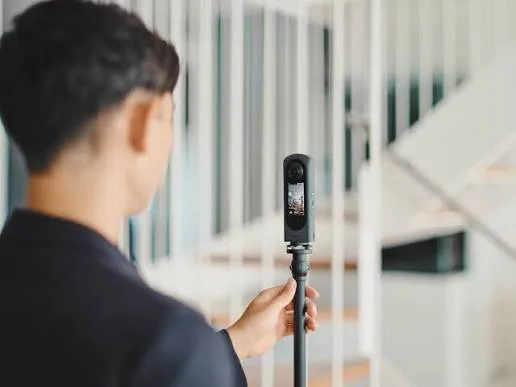
Real-estate agents, insurance adjusters, and virtual-tour photographers keep the Ricoh Theta X in their bags. It delivers 60MP stills at 11,008 × 5,504 pixels — huge files that print sharp for property listings — plus 5.7K 360 video at 30 fps.
Practical strengths:
- 2.25-inch touchscreen simplifies field shooting.
- Interchangeable battery and microSD support (rare in this class).
- Slim, tablet-like profile fits pockets or tripod plates.
- Auto HDR nails the tricky bright-window scenes common in interiors.
- Direct Google Street View publishing.
Limitations: The Theta X isn’t built for action, offers no waterproofing, and shows its age in video quality. Motorcycle Paradise’s long-term review confirms the small sensors struggle in low light.
Ideal buyer: Real-estate pros who need fast, high-resolution 360 stills. If you print the images later, know your dimensions — our standard photo sizes guide has the full chart.
7. AKASO 360 — Best Budget 360 Camera Under $200
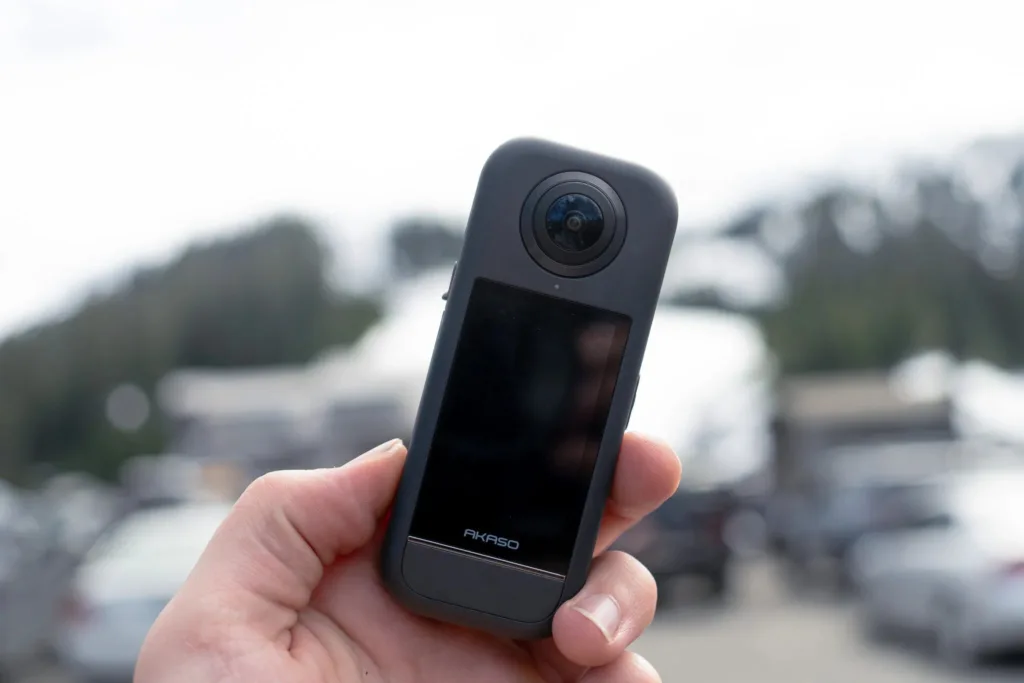
The AKASO 360 cracks a stubborn price ceiling. At $199 it delivers dual 1/2-inch 48MP sensors, 5.7K30 video, and 4K60 single-lens output. TechRadar calls it “the best budget 360 camera,” and Freeskier magazine highlights it as a legitimate entry-level pick for skiers and cyclists who don’t want to risk a $549 flagship.
What you get for the price:
- IPX7 splash-resistant body — fine for rain and light snow, but not for diving.
- Removable battery and microSD support.
- Basic AI reframing inside AKASO’s mobile app.
- 4K/60 slow motion.
- 2.29-inch touchscreen and 1350 mAh battery.
Compromises: Stitching seams show more clearly than on premium rivals. Low-light noise is heavy, and the mobile app lacks Insta360’s polish. Still, few sub-$200 competitors match the value.
Great for: First-time 360 users, gift buyers, and adventure shooters. If action cams are your thing generally, browse our list of best budget action cameras.
8. Insta360 X3 — Best Legacy Flagship Still on Sale
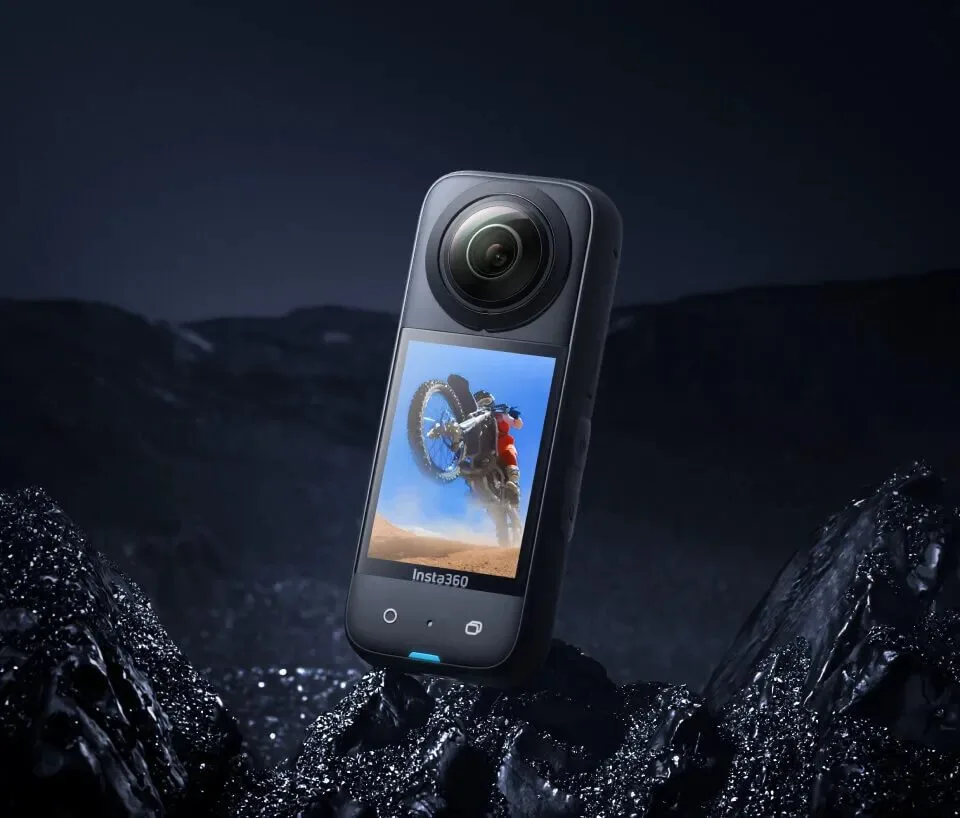
The now-two-generations-old Insta360 X3 still sells for $299 and remains PCMag’s pick for creators on a budget. It shoots 5.7K30 spherical video, 72MP photos, and taps into the same beloved app ecosystem as the X5.
Why it stays relevant:
- Mature firmware — every early bug got fixed years ago.
- Massive accessory library (invisible sticks, mounts, dive cases).
- Strong image quality for TikTok and Instagram viewers.
- Waterproof to 33 feet (10 m).
- Frequent Prime Day discounts drop it below $250.
Skip it if you need 8K, PureVideo, or the newer replaceable-lens design. But at $299, it’s arguably the best-value 360 camera of 2026.
Best 360 Degree Camera by Use Case
Different creators need different features. Use this quick decision matrix:
- 🚴 Action sports & motorcycling: Insta360 X5 or GoPro Max 2
- 🎬 Cinematic travel vlogs: Insta360 X5 or DJI Osmo 360
- 🏠 Real-estate & virtual tours: Ricoh Theta X or DJI Osmo 360
- 🎥 VR content & color grading: Kandao QooCam 3 Ultra
- ✈️ Family travel & first-timers: Insta360 X4 Air
- 💰 Under $250 budget: Insta360 X3 or AKASO 360
- 🌊 Diving & deep underwater: Insta360 X5 (49 ft native rating)
For adjacent categories, browse the best budget action cameras top 10 and the DJI Osmo Pocket 4 review for a gimbal-first alternative.
🌫️ Need natural shadows on your 360 product shots? Order realistic shadow creations that add depth without softening the subject.
What to Look for When Buying a 360 Degree Camera in 2026
Sensor Size and Low-Light Performance
Bigger sensors capture more light. The DJI Osmo 360’s 1/1.1-inch square sensors dominate on surface area, but Insta360’s PureVideo processing on the X5 often produces cleaner real-world footage. Always weigh sensor size against processing chops.
Resolution: Do You Really Need 8K?
Most Instagram viewers watch at 1080p. YouTube tops out at 4K for the vast majority of audiences. However, 8K helps you crop and reframe without visible quality loss — that’s the entire point of 360 workflows. If you plan to publish flat single-lens 4K clips, 8K sensors are worth the premium.
Battery Life
Plan for 60–100 minutes of 8K recording per battery. Carry two spares for a full-day shoot. Cameras with hot-swap batteries (Osmo 360, Theta X) save time in the field.
Stitching Quality
Watch review footage carefully. Look at hands near the camera and long selfie sticks — those areas expose stitching seams. As of 2026, Insta360 and DJI hold the lead. Kandao sits just behind, with Ricoh and AKASO trailing.
App and Editing Ecosystem
- Insta360 Studio — the gold standard; AI clips, deep-track, one-tap reframe.
- GoPro Quik — improved in 2026 but still less flexible.
- DJI Mimo — clean but limited compared to Insta360.
- Kandao QooCam Studio — pro grading, steeper learning curve.
Accessories Ecosystem
Selfie sticks, mounts, dive housings, and mods matter. Insta360 currently owns the largest catalogue, followed by GoPro. If you already own GoPro mounts, the Max 2 saves money.
Storage Considerations
8K files eat cards. A 30-minute 8K session consumes 15–20 GB. Grab UHS-I V30 microSD cards (or faster), and reference our data on how many pictures can 64GB hold to size your kit correctly.
Real-World Testing Notes from 2026 Reviews
Daylight Video Sharpness
CNET’s side-by-side test placed the Kandao QooCam 3 Ultra slightly ahead in daylight sharpness, followed by the DJI Osmo 360, Insta360 X5, and GoPro Max 2. Differences shrink at YouTube playback resolutions.
Low-Light Performance
Insta360 X5’s PureVideo mode wins after sunset, according to both WIRED and PCMag. The DJI Osmo 360 comes second thanks to its larger sensors. The GoPro Max 2 catches up in bright indoor scenes but loses ground in true night footage.
Audio Quality
DJI’s four-mic array plus native Osmo Mic support pushes the Osmo 360 ahead for interview shooters. GoPro Max 2 records excellent wind-cancelled audio. The Insta360 X5 sits mid-pack — plug in an Insta360 Mic Air for best results.
Stitching Line Visibility
Insta360 X5 and DJI Osmo 360 tie for cleanest stitching. Kandao’s stitching stays hidden except in extreme close-ups. GoPro Max 2 improves dramatically over the original Max but still shows lines near the selfie stick tip.
Ease of Use for Beginners
- Easiest: GoPro Max 2, Insta360 X4 Air.
- Middle: Insta360 X5, DJI Osmo 360.
- Steepest curve: Kandao QooCam 3 Ultra, Ricoh Theta X.
360 Camera Tips for Better Results
Getting the most out of a 360 camera takes practice. These field-tested tips speed up your learning curve:
- Use the invisible selfie stick. Extend the pole at least 45 cm for the drone-like third-person effect.
- Keep hands away from the lens seam. Fingers near the equator ruin stitching.
- Shoot in bright light whenever possible. Small sensors still struggle in dim scenes.
- Reframe in-app first. Insta360 Studio, DJI Mimo, and QooCam Studio handle reframing much faster than desktop apps.
- Export at your target platform’s resolution. No point exporting 8K for a 1080p TikTok.
- Master horizon lock. Every modern flagship offers it — turn it on for action shots.
- Learn keyframing. Blend wide, close, and Little Planet views inside a single reframe.
If you edit your final clips heavily, brushing up on Photoshop pays off — our Photoshop toolbar overview is a solid refresher.
🎨 Want to swap colors on your 360 stills for social media? Try our color-change service to test brand palettes and product variants instantly.
Common Mistakes New 360 Camera Buyers Make
- Buying the wrong storage. A microSD without V30/A2 rating drops frames during 8K recording.
- Skipping the invisible selfie stick. Without it, your 360 shots feel handheld and awkward.
- Ignoring battery accessories. Two spares plus a fast charger transform your shooting day.
- Editing on old computers. 8K 360 workflows need modern GPUs (Apple Silicon or RTX 30-series and above).
- Comparing specs only. Real-world stitching, app quality, and accessory ecosystems matter more than raw megapixels.
- Neglecting lens protection. Replaceable lenses on the X5 and X4 Air are cheap insurance — install lens caps from day one.
The Verdict: Which 360 Camera Should You Buy in 2026?
Based on hundreds of hours of hands-on reviews and side-by-side comparisons, three cameras stand out from the pack:
- Buy the Insta360 X5 if you want the most versatile, best-supported flagship with class-leading low-light performance and 3+ hours of battery life.
- Buy the GoPro Max 2 if you already live in the GoPro ecosystem or you prefer simple, rugged, one-button shooting.
- Buy the DJI Osmo 360 if you own DJI gear, want the biggest sensor area, or plan to color-grade professionally in 10-bit.
Budget-conscious buyers should grab the Insta360 X4 Air at $399 or the Insta360 X3 on sale for $299. Real-estate photographers stick with the Ricoh Theta X. VR enthusiasts pick the Kandao QooCam 3 Ultra. Absolute beginners on a tight budget can start with the AKASO 360 at $199 and upgrade later.
Whichever camera lands in your hands, the 360 format finally feels mainstream in 2026 — polished apps, honest 8K, replaceable lenses, and workflows that welcome beginners.
🎯 Turn every 360 frame into a scroll-stopping asset. Explore our full photo editing catalog and see how we help creators publish faster.
Frequently Asked Questions
1. What is the best 360 degree camera in 2026?
The Insta360 X5 is the best overall 360 camera in 2026, according to CNET, PCMag, and most hands-on reviewers. It combines 8K30 video, class-leading low-light performance via PureVideo, 49-foot waterproofing, replaceable lenses, and up to 208 minutes of battery life. The GoPro Max 2 and DJI Osmo 360 are close alternatives depending on your ecosystem.
2. Is a 360 camera worth buying in 2026?
Yes — especially for travelers, action-sports shooters, real-estate photographers, and social-media creators. Modern 360 cameras deliver true 8K quality, reliable single-lens 4K output, and AI-powered reframing that turns one shot into multiple platform-ready clips. The “shoot first, frame later” workflow saves hours during shoots.
3. What is the difference between Insta360 X5 and GoPro Max 2?
The Insta360 X5 uses larger 1/1.28-inch sensors, wins in low light, and offers longer battery life (up to 208 minutes at 5.7K endurance). The GoPro Max 2 ships with a simpler interface, tougher build, and the mature GoPro accessory ecosystem. Both shoot true 8K30 spherical video. Insta360 leads on editing app polish; GoPro leads on straightforward auto-mode results.
4. How much storage do I need for a 360 camera?
Plan for a 256 GB microSD card at minimum for casual 8K shooting, and 512 GB or 1 TB for daily creators. A 30-minute 8K session eats roughly 15–20 GB. Choose UHS-I V30 (or faster) cards to avoid dropped frames.
5. Can I use a 360 camera for VR content?
Absolutely. The Kandao QooCam 3 Ultra, DJI Osmo 360, and Insta360 X5 all export files compatible with Meta Quest 3, Apple Vision Pro, and YouTube VR. For serious VR pros, Kandao’s 10-bit HLG Rec.2020 workflow offers the most grading flexibility.
6. Are 360 cameras waterproof?
Most flagships are. The Insta360 X5 handles 49 feet (15 m) without a case. The GoPro Max 2 and DJI Osmo 360 both survive 16 feet (5 m) natively. The Insta360 X4 Air is rated to 33 feet (10 m). The Ricoh Theta X and AKASO 360 are not fully waterproof — the AKASO carries only an IPX7 splash rating.
7. What is the best budget 360 camera in 2026?
The AKASO 360 at $199 offers unbeatable value for entry-level users. If you can stretch to $299, the Insta360 X3 delivers premium image quality, a mature app, and the largest accessory ecosystem in the category.
8. Do 360 cameras replace traditional action cameras?
Not entirely. 360 cameras excel at reframing and immersive content, but dedicated action cams (like the Insta360 Ace Pro 2 or GoPro Hero 13 Black) produce sharper single-angle 4K footage with better slow motion. Many creators carry both — a 360 for versatility and a traditional action cam for focused shots.