Mirror vs Camera Accuracy: Why You Look Different in Photos
Mirror vs Camera: Which One Actually Shows the Real You?
A Science-Backed Look at Reflections, Lenses, and Self-Perception
You glance in the bathroom mirror and feel confident. Ten minutes later, a friend snaps a candid photo, and suddenly you barely recognize the person staring back. The nose looks bigger. The smile leans the wrong way. The lighting feels brutal. Same face, same day — completely different verdict.
So which one is more accurate, the mirror or the camera?
The short answer surprises most people: a high-quality flat mirror gives you a more physically accurate, real-time reflection of how you appear in three dimensions, while a camera produces a flattened, often distorted snapshot that more closely matches what other people see. Neither tool is perfect. Both lie a little. The science behind that gap blends optics, neuroscience, and a stubborn quirk of the human brain called the mere-exposure effect.
This guide breaks the whole debate down in plain English. You will learn exactly how mirrors and cameras capture an image, why selfies stretch your nose by roughly 30%, what peer-reviewed studies found when they compared both side by side, and how professional photographers close the gap every single day.
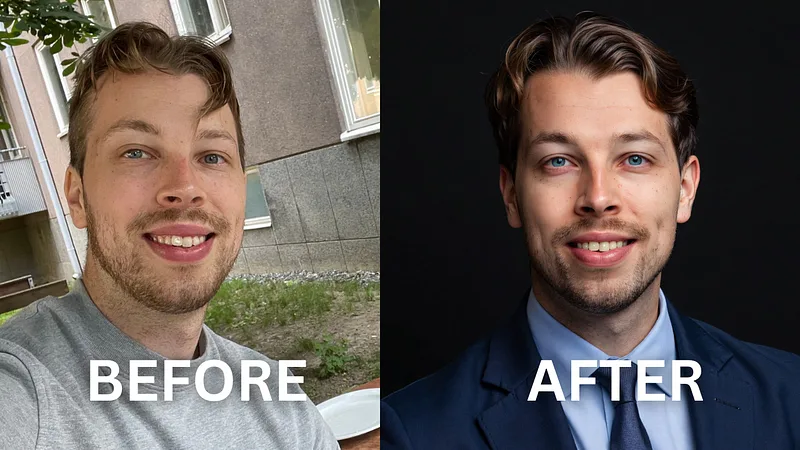
🎯 Need flawless portraits or product images that look exactly like real life? Explore our professional photo retouching service and let our editors polish every detail without distortion.
How a Mirror Actually Works (And Why It Feels So “Right”)
The simple physics behind your daily reflection
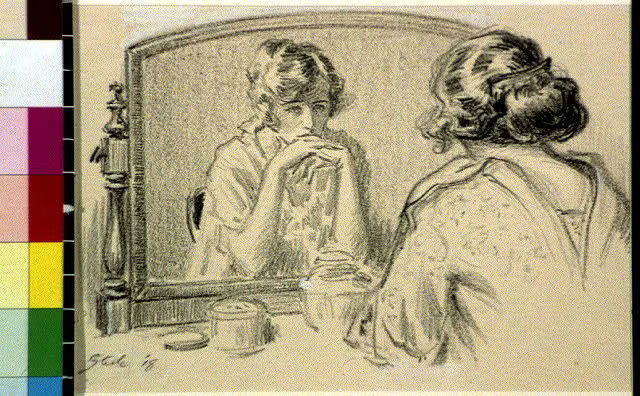
A flat mirror is one of the most honest optical devices ever invented. Light bounces off your face, hits the silvered glass at one angle, and bounces back at exactly the same angle. Physicists call this specular reflection, and it preserves every dimension, every shade, and every micro-expression with almost no loss of information.
There’s also a long-running myth that mirrors “flip left to right.” They don’t. Physics educators at West Texas A&M University explain that mirrors actually flip front to back — your nose, which sticks out toward the mirror, appears to point back at you. Our brains interpret that front-to-back reversal as a left-right swap because we instinctively imagine turning around to face the reflection.
Here is what makes a mirror feel uniquely accurate:
- Real-time reflection — zero shutter lag, zero processing.
- True 3D viewing — both eyes see the reflected image, so depth perception stays intact.
- No focal length — the mirror does not narrow, widen, or compress facial features.
- Full dynamic range — you see exactly the light your room actually produces.
- Continuous micro-adjustment — you tilt, smile, blink, and the image follows instantly.
Because your brain processes the reflection in stereo, it builds a richer, more forgiving picture than any single still frame can. Research on facial recognition published in ScienceDirect confirms that 3D faces are recognized more accurately and faster than 2D images, since the extra depth cues give the visual cortex more data to work with.
That said, a mirror still hands you a reversed version of yourself. Your slightly crooked smile leans the opposite way. The mole on your right cheek floats to your left. To you, that flipped version feels “normal” because you have seen it tens of thousands of times. To everyone else, it points the wrong way around.
How a Camera Actually Captures You
From photons to pixels — and where things start to bend
A camera is not a mirror with a memory. It is a complex optical machine that encodes light into a flat image through a curved lens, a sensor, and (these days) heavy computational processing. Each of those steps quietly changes how you look.
When you press the shutter, the camera performs four big jobs:
- Bends incoming light through a curved glass lens.
- Projects the scene onto a flat sensor — a 3D world squeezed onto a 2D plane.
- Freezes one fraction of a second of motion, expression, and lighting.
- Applies in-camera processing — sharpening, color balance, skin smoothing, lens correction, and AI tweaks.
That fourth step has expanded dramatically since 2020. Modern smartphone “cameras” are really small computers that predict what you should look like and rebuild the image accordingly. A 2023 study in the Laryngoscope journal — titled Quantifying Facial Distortion in Modern Digital Photography — measured how short-focal-length smartphone lenses produce visible distortion of facial features compared with clinical reference photographs taken at proper distance.
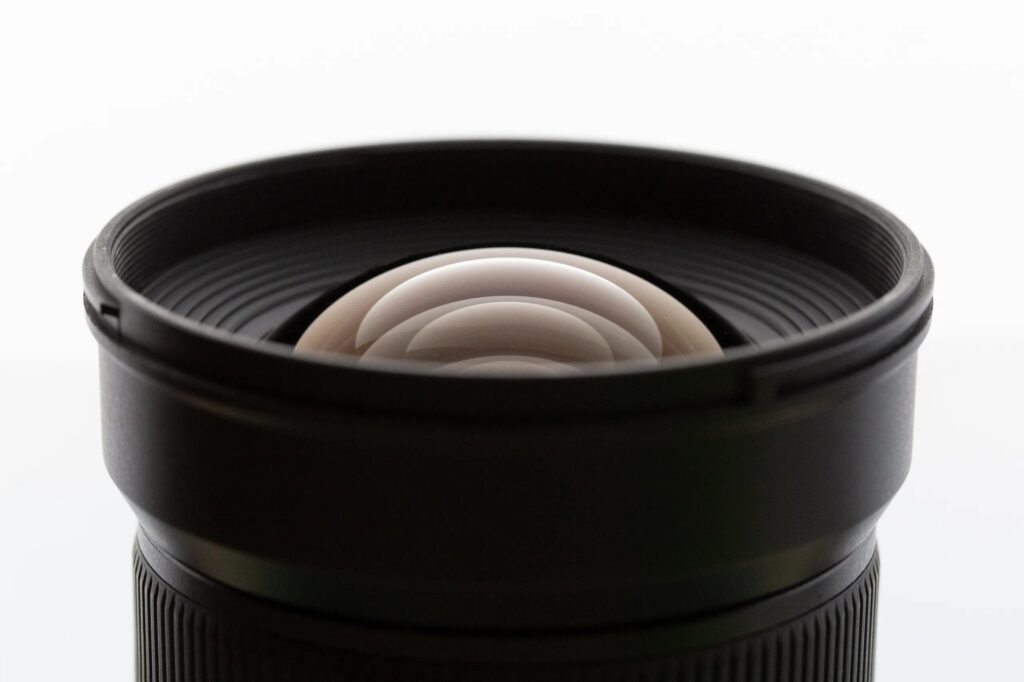
The takeaway is simple: a phone camera and a mirrorless camera can photograph the same person and produce two very different faces. The camera body, the lens, the focal length, and the distance from the subject all rewrite the truth in their own way.
The Big Distortion Problem: Selfies vs. Reality
This is the most studied piece of the mirror-versus-camera debate, and the numbers are striking. In a landmark 2018 study published in JAMA Facial Plastic Surgery by Boris Paskhover (Rutgers) and Ohad Fried (Stanford), researchers built a mathematical 3D model of the human face and simulated how it would project onto a camera at different distances. Their finding, summarized by Live Science and the Rutgers news office, is now widely cited: a selfie taken at the typical 12-inch arm’s length makes the nasal base appear roughly 30% wider and the nasal tip about 7% wider compared with a photograph taken at 5 feet.
A separate 2023 paper in the Laryngoscope journal extended that work using real clinical photographs. The team measured selfies at 12 inches and 18 inches and compared them with standard clinical photos at 60 inches. They found:
- Nasal length appeared 6.4% longer at 12 inches and 4.3% longer at 18 inches.
- The base of the nose looked wider, while the chin and forehead appeared smaller.
- Beyond 60 inches (5 feet), perspective distortion essentially disappeared.
This is perspective distortion at work — a purely geometric effect that has almost nothing to do with camera quality and almost everything to do with distance. The closer the lens sits to the tip of your nose, the more your nose dominates the frame compared to your ears. Engineers at Google and MIT’s CSAIL lab, led by YiChang Shih, even built a special algorithm to undistort wide-angle portraits because the problem is so universal on phones.
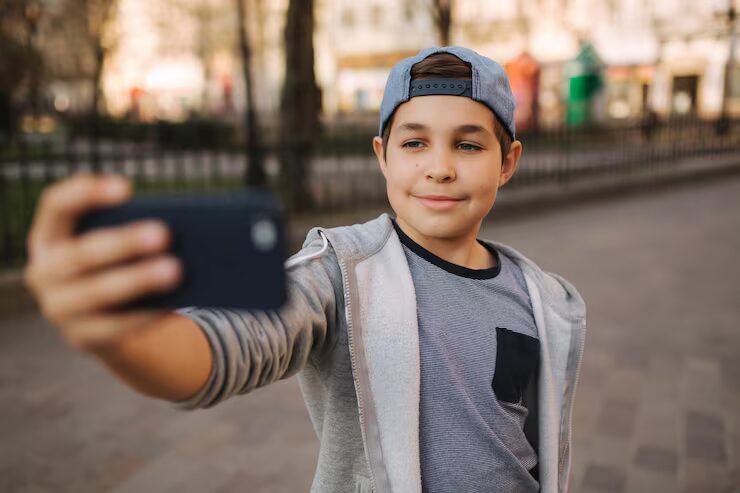
When you stand in front of a mirror, your face stays at its natural distance. When you hold a phone, your face becomes a funhouse-mirror version of itself. So if a selfie looks bad and a mirror looks good, the mirror is probably closer to the geometric truth.
📸 Selfies stretching your products too? Our background removal experts clean up every distorted edge so your photos finally match real life.
The Psychology: Why Your Brain Trusts the Mirror More
The mere-exposure effect and the comfort of familiarity
Optics only explains half the story. The other half lives inside your head.
In a now-classic 1977 paper archived by the American Psychological Association, psychologists Theodore Mita, Marshall Dermer, and Jeffrey Knight asked participants to choose between a true photograph of themselves and a mirror-flipped photograph of themselves. The result was striking — subjects consistently preferred the mirror image of their own face, while their friends preferred the true (unflipped) image. Each group preferred whichever version they had seen most often. That is the mere-exposure effect in a single sentence: familiarity feels like beauty.
Photos add a second psychological obstacle: the frozen face effect. A 2012 study by Robert Post and colleagues, published in Frontiers in Psychology, found that the same person rated as moderately attractive in a short video clip was rated less attractive when judges saw a still frame extracted from that exact same clip. Moving faces flatter you. Frozen faces — which is to say, every photograph ever taken — usually don’t.
Three psychological forces stack on top of each other when you look at yourself:
- Mere-exposure effect — you have seen your mirror image thousands of times, so you accept it as “you.”
- Frozen face effect — a camera freezes 1/60th of a second, often catching a half-blink or odd micro-expression your mirror never shows.
- 3D-to-2D collapse — the brain loses depth cues, shading, and motion when judging a flat image.
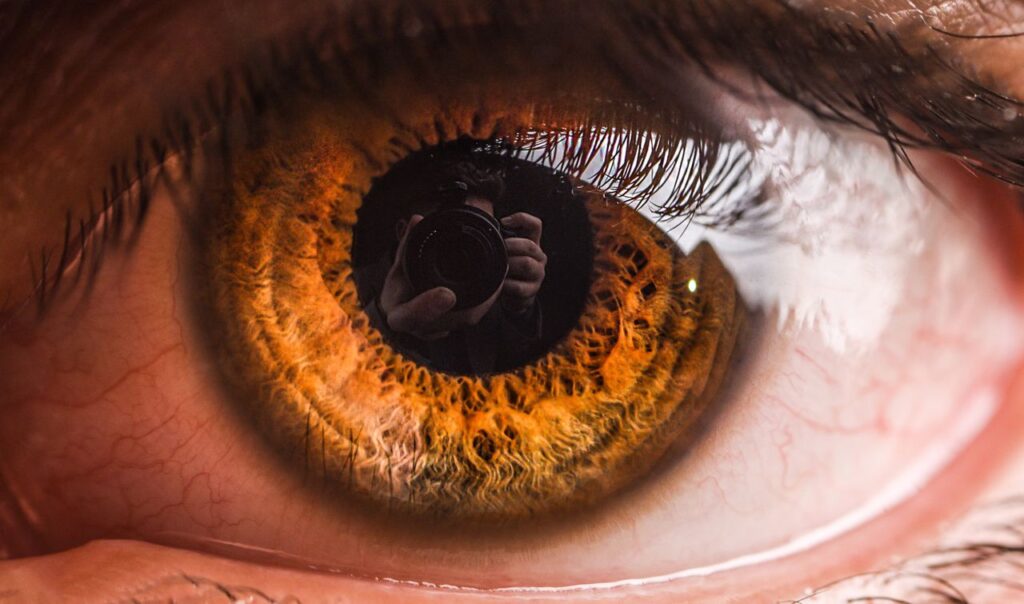
None of this means cameras lie. It means your brain has been trained to prefer the flipped, moving version that mirrors deliver. If a friend snapped a candid of you mid-laugh, you would probably hate it. Yet your friend, your partner, and strangers on the bus see that “true” version every single day. The camera, in many ways, captures the social you — the version other people actually know.
So Which One Is Actually More Accurate?
A direct comparison, broken down by metric
To settle the debate, it helps to score both tools on the dimensions that matter. Here is how the mirror and the camera stack up across the most important factors.
| Accuracy Factor | Mirror | Camera |
|---|---|---|
| Physical light reflection | Near-perfect | Lens-bent and sensor-mapped |
| Real-time movement | Yes | No (frozen frame) |
| 3D depth perception | Full stereo | Flat 2D projection |
| Reversed image | Yes (front-to-back, perceived as L/R) | No (true to others) |
| Focal length distortion | None | Significant at < 12 in |
| Color accuracy | Matches room light | Filtered by white balance |
| Resolution | Roughly 576 MP equivalent (human eye) | Sensor-dependent (12–100 MP) |
| What others see | No — reversed version | Yes — true orientation |
| Best for self-grooming | ✔️ | ❌ |
| Best for documenting how you look to others | ❌ | ✔️ |
The verdict in one line: A high-quality flat mirror shows the most physically accurate, 3D, real-time image of you — but a properly set up camera (correct distance, neutral lens, good lighting) shows the version of you the rest of the world actually sees.
If your goal is honest self-grooming, trust the mirror. If your goal is to know how you look in a Zoom call or in your friend’s wedding photos, trust a well-shot camera image. For a deeper dive into camera mechanics, our overview of the evolution of photography shows exactly how lenses developed to try to match human vision.
The Hidden Variables That Skew Both
Lighting, angles, expression, and processing
Even before we get into mirrors and cameras, two factors quietly bend reality on both sides: lighting and angle.
Lighting changes everything:
- Soft, frontal light flattens shadows and minimizes pores.
- Top-down or harsh light carves deep eye sockets, exaggerates nose shadows, and ages the face by years.
- Cool fluorescent tubes add greenish casts; warm tungsten bulbs push skin orange.
- Backlight from a window turns your face into a silhouette.
Angle adds another layer. Holding a phone slightly below your chin creates a “double chin” effect almost instantly, while raising it above eye level slims the jawline. Mirrors share this trick — a mirror tilted forward from the top of a hallway closet always looks more flattering than one mounted dead vertical.
Modern phone cameras add a third secret ingredient: computational photography. Apple, Google, and Samsung all apply skin smoothing, sharpening, HDR blending, and AI face reconstruction by default. That means your “raw” selfie is already an edited version before you even see it.
✨ Want every product shot to look exactly like the real item — no distortion, no weird shadows? Our clipping path service gives e-commerce sellers pixel-perfect cutouts that match reality.
How Mirrors and Cameras Compare to the Human Eye
Neither tool truly matches our biology
People often assume the human eye is essentially “a really good camera.” In reality, our visual system is far weirder and more capable. Astronomer and photographer Dr. Roger Clark, on his widely cited clarkvision.com reference page, calculates that the human eye resolves the equivalent of around 576 megapixels across its full field of view — though that resolution is distributed unevenly, with most detail packed into the tiny central fovea. Top consumer cameras now reach 60–100 MP with even distribution across the frame.
Key biological differences that matter for this debate:
- Two eyes, one brain — stereo vision builds true depth maps.
- Saccades — your eyes dart up to four times per second, stitching a wide composite image.
- Adaptive dynamic range — pupils adjust thousands of times per minute.
- Pre-processing in the retina — edges and motion sharpen before signals even reach the brain.
A camera captures one slice, in one direction, at one exposure. A mirror simply relays photons back to your two eyes, letting your visual system do what it does best. That is another reason mirrors feel more accurate — they hand the job back to the most sophisticated imaging system on Earth: you. If you are curious about how fast that system actually runs, our quick read on how many FPS the human eye can see goes deeper.
Special Mirrors: Are “True Mirrors” the Final Answer?
What happens when you remove the left-right flip
If a standard mirror’s only big flaw is reversing the image, a non-reversing mirror (often called a “True Mirror”) should be the perfect tool. The True Mirror Store sells them, and they work by joining two front-surface mirrors at a precise 90-degree angle, then placing the viewer in the center. Light bounces twice and exits in its original orientation.
People who look into a non-reversing mirror often describe the experience as deeply unsettling for the first minute. Suddenly:
- Their part appears on the “wrong” side.
- Their winking eye becomes the opposite eye.
- Their crooked smile leans the other direction.
- Small asymmetries they never noticed become loud.
That discomfort is the mere-exposure effect getting punched in the face. After a few sessions, most users adjust and report feeling like they finally “see themselves.” Functionally, a True Mirror plus good ambient light delivers the closest match to a camera-accurate, other-people-see-you image — but in real time and full 3D.
👔 Selling on Amazon, Shopify, or Etsy? Our ghost mannequin service makes apparel photos look symmetrical, dimensional, and crisp — exactly how customers expect.
What Photographers and Editors Actually Do About It
Practical fixes the pros use every day
Professionals who shoot people and products spend their careers minimizing the gap between camera output and physical reality. If you want your photos to look closer to “mirror-true,” steal their playbook.
Distance and focal length
- Shoot portraits at 6 to 10 feet away whenever possible.
- Use an 85 mm or 105 mm lens on full-frame cameras — these are the classic portrait focal lengths because they avoid both compression and wide-angle stretch.
- Skip front-facing phone selfies for anything important; turn around and use the rear camera with a timer.
Lighting
- Place a soft light source at 45 degrees to the face.
- Use a reflector or white wall on the opposite side to lift shadows.
- Match your color temperature to the room (warm with warm, cool with cool).
Posing
- Tilt your chin slightly down and forward to define the jaw.
- Turn your shoulders 15–30 degrees off-axis.
- Smile with your eyes, not just your mouth — frozen smiles read as fake on camera.
Post-processing
- Correct lens distortion in Lightroom or Photoshop before any retouching.
- Reverse the photo (mirror it horizontally) if you want to see the version you are used to.
- Keep skin texture; aggressive smoothing immediately looks fake.
A 5-Step Self-Assessment: Find Your “Real” Look
How to honestly evaluate your own appearance
If you really want to know how the world sees you, run this quick experiment instead of trusting any single image:
- Take a photo with your rear camera at arm’s length plus 50% more distance (about 5 feet).
- Use soft, even daylight without harsh shadows.
- Shoot at slightly above eye level, then again at eye level.
- Compare the result with a true-mirror reflection if available.
- Average the two perceptions — that’s roughly the real you.
This routine cancels out most of the optical and psychological biases working against you. The version that emerges is neither the flattering bathroom self nor the cruel selfie self — it’s the actual, three-dimensional, real-world you.
For practical gear advice, our list of the best beginner cameras helps you pick a body that handles portraits gracefully right out of the box.
Mirror vs Camera for Different Use Cases
Which tool to trust, and when
The “more accurate” tool depends on what you are trying to do.
Use a mirror for:
- Daily grooming, makeup, and outfit checks
- Hair styling and beard shaping
- Posture and body language practice
- Confidence and self-image work
- Real-time live-view tasks like dance and yoga
Use a camera for:
- Job applications, LinkedIn, dating profiles
- Product photography, e-commerce listings, and ghost mannequin photography
- Documenting medical or dental changes over time
- Practicing public speaking (video playback)
- Anything intended for other people to see
Use both when:
- Trying a new haircut — check the mirror, then take a rear-camera photo at 6 feet for an outside view.
- Buying clothes online — measure against a mirror, then check returns based on actual product photos.
- Practicing job interviews — rehearse in a mirror, then film yourself to see what recruiters will see.
For creators building a strong online presence, mastering the camera matters more — and a quick refresher on photography tips for beginners goes a long way.
E-commerce, Product Photography, and the Accuracy Question
Why this debate matters for your business
For online sellers, “mirror vs camera accuracy” is not a philosophical question — it directly affects returns, reviews, and revenue. A customer who receives a product that looks different from the listing photos is statistically more likely to return it and leave a negative review.
To bridge the gap between real-world appearance and on-screen appearance, e-commerce photographers use:
- Calibrated monitors and color charts (X-Rite ColorChecker is the industry standard).
- Diffused, color-balanced lighting (5500K daylight LEDs are the safest baseline).
- Macro and 50–85 mm prime lenses for true-to-life proportions.
- 360-degree spin photography and short video clips to restore depth.
- Professional editing — clipping paths, shadow creation, color correction, and image masking.
- AI-powered photo tools that match output to real-life expectations, as covered in our guide on the best AI photo editing software in 2026.
If you record your own product videos on a budget, our roundup of the best budget camcorders is a useful starting point. Pairing the right hardware with skilled post-processing closes the gap between “mirror reality” and “camera reality.”
📸 Make sure customers see exactly what they will receive. Try our multi-clipping path service for layered, color-accurate product images.
Common Myths About Mirrors and Cameras
Let’s clear the air
A lot of advice on this topic circulates without evidence. Here are the most stubborn myths.
Myth 1: “Cameras add 10 pounds.”
The phrase comes from low-resolution standard-definition TV, which used a 4:3 aspect ratio that horizontally stretched faces. Modern cameras do not “add weight.” Bad angles and short focal lengths can make features look broader, but the math is geometric, not gravitational.
Myth 2: “The front camera is the most honest camera.”
The opposite is true. Front-facing cameras use wide-angle lenses at short range, which is the worst combination for facial accuracy. The rear camera, held at arm’s length or further, distorts much less.
Myth 3: “Mirrors never lie.”
Mirrors do not lie about light, but they always reverse you. To everyone else in the world, that flipped face is the “wrong” face. Mirrors also reveal nothing about how light, angle, or movement will photograph.
Myth 4: “Higher megapixels = more accurate.”
Resolution captures more detail, but accuracy depends on focal length, distance, and processing. A 12 MP photo shot at the right distance beats a 100 MP selfie shot at 12 inches every single time.
Myth 5: “Filters make photos more honest.”
Beauty filters do the opposite — they erase pores, narrow noses, and enlarge eyes. If you want closer-to-mirror accuracy on your phone, turn off all beautification settings and use the rear camera.
Quick Wins to Look More “Like Yourself” in Photos
Small changes, big visual difference
If photos consistently feel off compared to your mirror, these adjustments help a lot:
- Use the rear camera, not the selfie cam.
- Stand at least 5–6 feet from the lens; zoom in instead of moving closer.
- Position your main light source slightly above and in front of your face.
- Tilt your chin down by 5–10 degrees.
- Take three to five frames so motion creates a flattering option.
- Mirror the final image horizontally if you want it to feel more familiar.
- Skip extreme wide-angle modes (0.5× and below) for any human subject.
The goal is not to fake a better version of yourself — it is to remove the technical distortions that make the camera disagree with the mirror. Once the optics line up, the gap closes fast.
So… Which One Wins?
A measured, honest answer
Here is the cleanest summary anyone can give:
- A good mirror is the most physically accurate device for seeing yourself in real time, in 3D, in your actual environment.
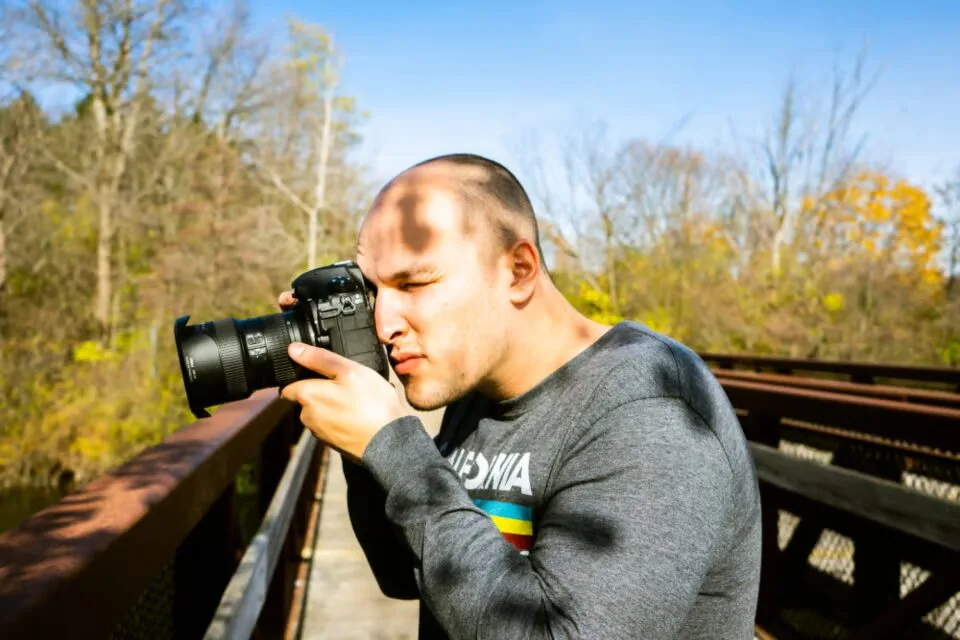
- A properly shot photograph (rear lens, 50–85 mm equivalent, 6+ feet away, good lighting) is the most accurate way to see how others perceive you.
- Selfies taken at arm’s length are the least accurate version of you — they exaggerate the nasal base by roughly 30% and freeze unflattering microseconds.
- Your brain prefers the mirror because it is familiar, not because it is necessarily more “true.”
Both tools are mirrors in their own way — one reflects light, the other reflects perception. The wisest move is to use them together: trust the mirror in the morning, trust a well-shot photo for everything you publish, and never trust an arm’s-length selfie to tell you the whole truth about your face.
Frequently Asked Questions
1. Is the mirror or the camera more accurate?
A flat mirror is more physically accurate in real time because it reflects light directly to both your eyes in 3D, with no distortion. A camera is more accurate at showing how other people see you, since it captures the unflipped, externally-viewable version of your face — though phone selfies introduce significant lens distortion at close range.
2. Why do I look better in the mirror than in photos?
Three reasons: the mere-exposure effect makes your flipped reflection feel familiar, mirrors deliver real-time 3D depth that flatters faces, and selfie cameras introduce perspective distortion at close range. Together, these factors stack to make mirrors look more “like you.”
3. Do front-facing phone cameras really distort faces?
Yes. The 2018 Rutgers-Stanford study published in JAMA Facial Plastic Surgery showed that selfies taken at 12 inches make the nasal base appear roughly 30% wider compared with photographs taken at 5 feet. A 2023 Laryngoscope paper confirmed the effect with real photographs and found nasal length looks 6.4% longer at 12 inches.
4. Is the back camera more accurate than the front camera?
Generally, yes — provided you stand far enough away. Rear cameras use better optics, less aggressive computational beauty processing, and usually sit at greater distance. The result is a face closer to what humans actually see in person.
5. What is a “True Mirror” and is it actually more accurate?
A True Mirror is a non-reversing mirror made by joining two flat mirrors at a 90-degree seam. It shows your face un-flipped — the way other people see it. It is more “objectively” accurate than a normal mirror, though it can feel strange at first because it breaks the mere-exposure pattern.
6. Why do I see myself differently than how other people see me?
You mostly see yourself in mirrors (reversed) and selfies (distorted), while others see you live, in 3D, from a distance, with full motion. Your “you” and their “you” are built from completely different visual inputs, which is why photos sometimes feel jarring.
7. Does camera megapixel count affect accuracy?
Megapixels affect detail, not accuracy. A higher-megapixel sensor captures more pixels, but if the focal length, distance, or lighting is wrong, the image will still look distorted. Distance and lens choice matter far more than resolution.
8. How can I take photos that look more like my mirror image?
Use the rear camera, stand 6 to 10 feet away, use a 50–85 mm equivalent focal length, light your face from the front-and-above, and tilt your chin slightly. Then flip the final image horizontally if you want it to feel familiar like your mirror.
Final Thoughts: Embracing Both Versions of You
The mirror-vs-camera debate is really a conversation about three things layered on top of each other: physics, perception, and identity. A mirror gives you raw reflected light. A camera gives you a processed snapshot. Your brain rewrites both of them in real time, biased toward whichever version it has seen most. None of those three layers is “the truth” on its own, but together they describe how you actually exist in the world.
The next time a photo catches you off guard, remember that you are not seeing a worse version of yourself. You are seeing an unfamiliar version. Give your brain a few seconds to adjust, then judge it the way you would judge a friend’s photo — generously. You are not a frozen 2D rectangle on someone’s phone, nor a flipped flat reflection. You are a moving, three-dimensional human who looks slightly different from every angle, in every light, in every moment. That variability is not a flaw. It is what makes you recognizable, expressive, and real.
The good news is that once you understand the science — focal lengths, mere exposure, the frozen face effect, 3D-to-2D collapse, computational processing — you stop blaming the camera for “lying” or the mirror for “flattering.” You start working with the tools instead of against them. Better lighting, better distance, better lenses, and better editing close the gap fast.
🚀 Ready to make every photo look exactly like the real product or person? Visit Clipping Expert Asia for expert editing that bridges the gap between mirror and camera — no distortion, no shortcuts, just photos that finally look true.