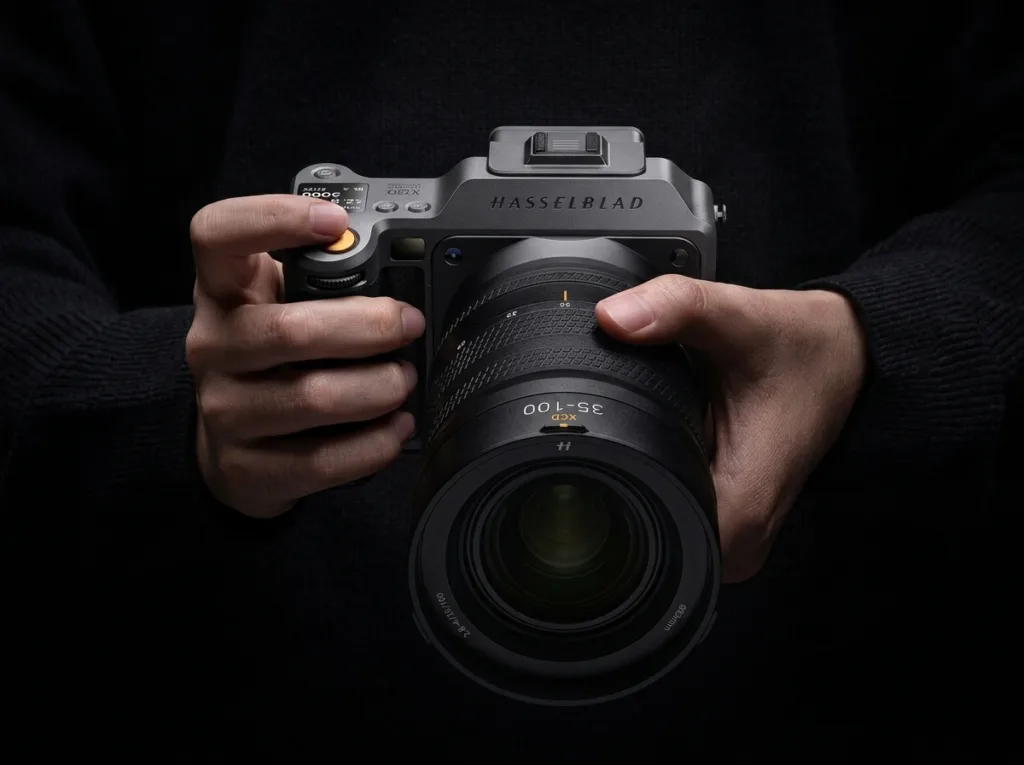
Introduction: The Race For The Highest Resolution Camera Never Slows Down
Photographers keep chasing more detail, and camera makers keep answering. In 2026, the highest resolution camera you can buy captures a jaw-dropping 400 megapixels in a single frame — enough to print a wall-sized landscape and still count individual leaves on distant trees. Even mainstream mirrorless flagships now push past 45MP without breaking a sweat.
But raw megapixel counts hide a bigger story. Sensor size, pixel-shift technology, autofocus intelligence, and lens quality all shape what a highest megapixel camera can actually deliver in real conditions. A 400MP medium-format monster serves a very different photographer than a nimble 60MP full-frame body, and picking the wrong tool wastes both money and creative energy.
This guide ranks the top highest resolution cameras of 2026, backed by manufacturer specs and hands-on testing from the biggest names in camera reviewing. You’ll see medium-format monsters, full-frame all-rounders, and pixel-shift wizards side by side. Along the way, we explain what those huge megapixel numbers really mean for print, cropping, commercial work, and post-processing.
By the end, you’ll know exactly which highest megapixel camera matches your workflow — and where every extra pixel actually pays off.
📸 Shooting 100MP files? Sharpen every subject edge with our pro image masking service — pixel-perfect selections that keep every detail intact.
What Counts As A “High Resolution Camera” In 2026?
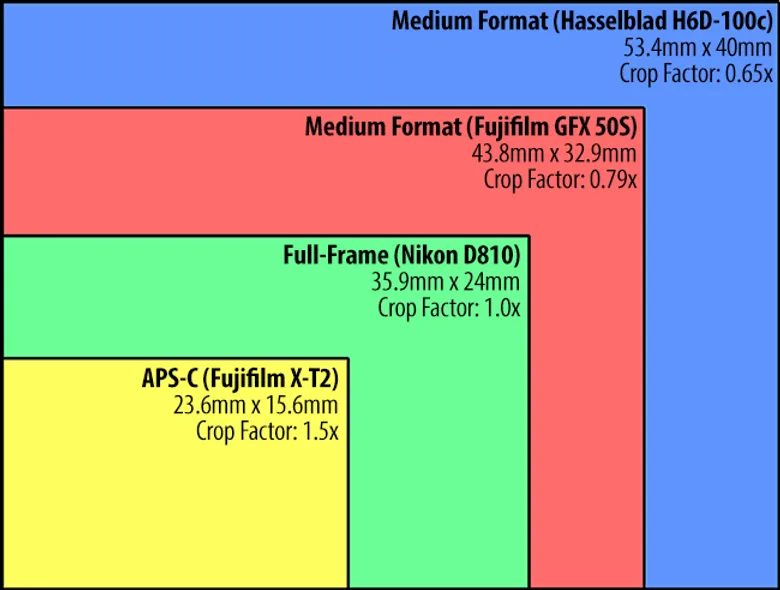
A high resolution camera in 2026 generally means a body with 40 megapixels or more. That threshold has climbed steadily as sensor makers push pixel density and readout speeds. Ten years ago, 24MP felt premium; today it sits firmly in the entry-level to mid-range full-frame class.
Here’s how the market roughly splits today:
- Ultra-high resolution: 100MP and above — almost exclusively medium format (Fujifilm GFX, Hasselblad, Phase One).
- High resolution: 60–99MP — Sony A7R V, Leica M11, Leica Q3.
- Enthusiast high-res: 44–50MP — Canon EOS R5 II, Panasonic S1R II, Nikon Z8/Z9, Sony A1 II.
- Pixel-shift super-resolution: 177MP–400MP composite files created from multiple sensor-shifted captures.
Resolution alone never tells the full story. Dynamic range, color science, autofocus, and lens sharpness all decide whether those pixels resolve real detail — or just record noise larger. That’s why our ranking blends megapixel count with sensor size, real-world performance, and value.
Why Megapixels Matter — And When They Don’t
Megapixels shine when you need to:
- Print big. A 100MP file prints beautifully at 40×60 inches or larger.
- Crop aggressively. Wildlife, sports, and journalism shooters gain “digital zoom” without losing detail.
- Sell commercially. Fashion, product, and architectural clients demand billboard-ready files.
- Future-proof archives. Higher resolution now means better upscaling and re-editing potential later.
But more pixels also mean:
- Bigger files (RAWs of 100–500MB are common at 100MP+).
- Slower buffer clearing and reduced burst rates.
- Heavier post-processing loads.
- Stricter demands on lens sharpness, focus accuracy, and shutter discipline.
If you shoot 4×6 prints or Instagram, a 24MP body already exceeds what most viewers can distinguish at normal viewing distances. Our deep dive into human eye resolution breaks down the math behind that visual limit.
How I Ranked The Highest Megapixel Cameras of 2026
I ranked cameras primarily by maximum output resolution (whether native or via pixel shift), then by effective single-shot resolution, and finally by real-world usability. Pricing, availability, and sensor size served as tiebreakers. Every model listed here remains in production or widely available through official channels in 2026.
Sources include manufacturer specification pages, DPReview lab tests, and independent hands-on reviews. Where a camera offers multiple resolution modes, I list its maximum native resolution first and note pixel-shift capabilities separately.
The Top 10 Highest Resolution Cameras You Can Buy Today
1. Hasselblad H6D-400c Multi-Shot — 400MP Pixel-Shift Output (The Absolute Megapixel King)
The Hasselblad H6D-400c Multi-Shot still holds the crown as the world’s highest resolution camera in commercial availability. It pairs a 100MP medium-format CMOS sensor (53.4 × 40mm) with a six-shot pixel-shift system that fires the sensor in half-pixel and full-pixel steps, then merges the results into a 16-bit TIFF of 23,200 × 17,400 pixels — roughly 2.4GB per file. Single-shot capture stays at 100MP.
Key specs:
- Sensor: 100MP CMOS, 53.4 × 40mm medium format
- Modes: Single-shot 100MP, 4-shot 400MP, 6-shot 400MP with full color completion
- Dynamic range: 15 stops
- Native ISO: 64–12,800
- Approximate body price: $47,995 USD
- Target user: museum reproduction, high-end commercial, cultural heritage
The trade-off is obvious: the H6D-400c requires a tethered, tripod-locked setup with perfectly still subjects. It is not a camera you carry to a portrait session or a wedding. But for scientific imaging, art reproduction, and ultra-large-format print work, nothing else touches it.
2. Phase One IQ4 150MP / Phase One XT — 151MP Native (Landscape & Studio Royalty)
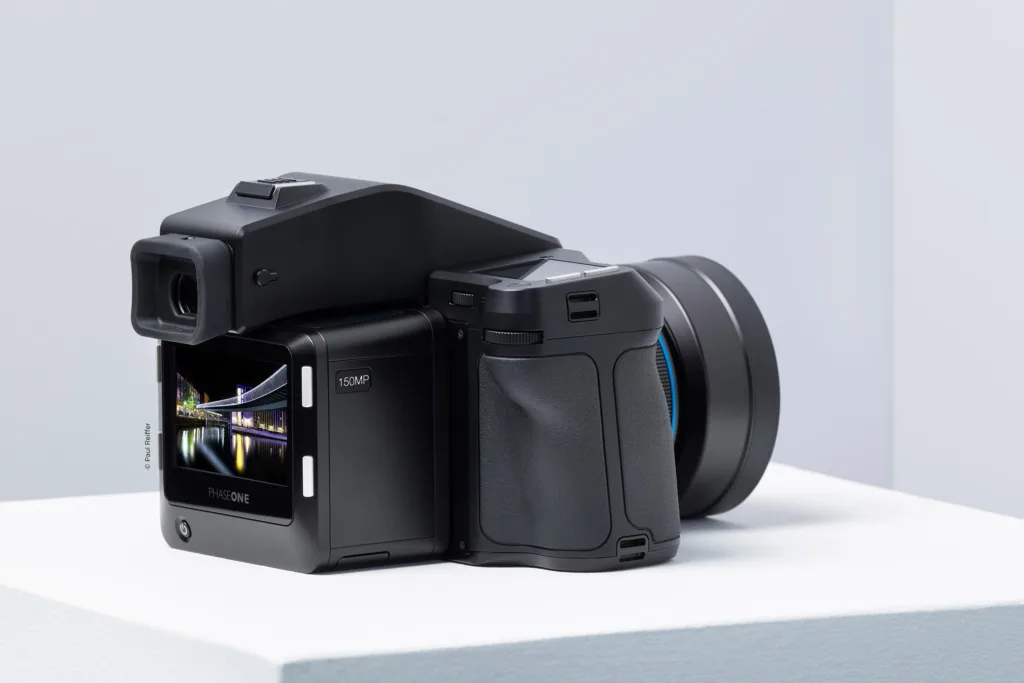
The Phase One IQ4 150MP digital back sits behind two of the most sought-after camera systems in professional photography: the XF IQ4 150MP studio camera and the XT IQ4 150MP field camera. Both deliver a native 151-megapixel image (14,204 × 10,652 pixels) from a full-size medium-format BSI sensor with an ISO range of 50–25,600 and exposures up to 60 minutes. Phase One’s official IQ4 digital backs page lists Frame Averaging and Automated Frame Averaging tools that turn handheld captures into ultra-clean long exposures.
.
Highlights:
- Native resolution: 151MP (14,204 × 10,652 pixels)
- Sensor: 53.4 × 40mm BSI CMOS
- Dynamic range: 15 stops
- Price: XF IQ4 150MP body ≈ $51,990 USD; XT IQ4 150MP with 23mm lens ≈ $62,490 USD
- Standout feature: X-Shutter technology and integrated Rodenstock lenses on the XT
Landscape photographers gravitate to the XT camera because its X-Shutter and integrated Rodenstock lenses deliver truly usable detail edge to edge. Commercial studios lean on the XF for tethered fashion, jewelry, and product work. Both systems require serious investment, but resale value stays remarkably strong.
3. Fujifilm GFX100 II — 102MP Native (400MP via Pixel Shift) — Best Overall Value in Medium Format
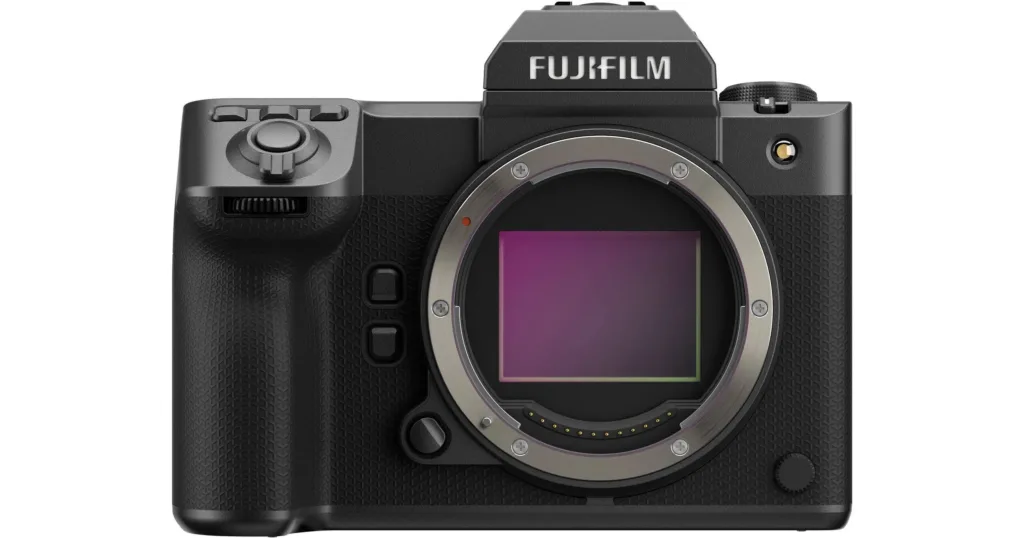
The Fujifilm GFX100 II delivers the most practical high-resolution experience in 2026. Its 43.8 × 32.9mm 102MP BSI CMOS II HS sensor reads out roughly twice as fast as the previous GFX100S, enabling 8 fps stills, 8K/30p ProRes video, and phase-detect autofocus that finally feels responsive on medium format. You can dig into the full spec sheet on the official Fujifilm GFX100 II page.
Key specs:
- 102MP single shot | 400MP via 16-frame Pixel Shift Multi-Shot | 4-shot “accurate color” mode also available
- 8K/30p Apple ProRes internal recording; 4K/60p full sensor width
- 5-axis IBIS rated up to 8 stops
- 9.44M-dot EVF with 120fps refresh
- Body price: MSRP $7,499 USD (recently discounted to $6,999)
Real-world reviewers consistently praise its staggering detail, color rendition, and dynamic range. The GFX100 II hits the sweet spot for high-end weddings, editorial fashion, landscapes, and product photography where clients demand medium-format quality but shooters still need speed.
💎 Capturing jewelry at 100MP? Our jewelry photo editing service refines every reflection so listings truly sparkle.
4. Fujifilm GFX100RF — 102MP Fixed-Lens Medium-Format Compact
Fujifilm shocked the industry in April 2025 with the GFX100RF, a rangefinder-style fixed-lens medium-format camera weighing barely more than a Leica Q3. It pairs the same 102MP GFX sensor with a 35mm-equivalent f/4 lens in a machined aluminum body.
Why it matters:
- 102MP resolution in a truly portable body
- Fixed lens keeps optical performance ruthlessly optimized
- Digital teleconverter modes (28/36/50/63mm equivalents)
- Silent leaf shutter and dedicated aspect ratio dial
- MSRP: $4,899.95 USD (street prices sometimes hit $5,599)
Street photographers and travelers who once had to compromise now get medium-format detail at nearly full-frame portability. Files stay enormous — RAWs push 208MB each — so pair it with fast cloud storage before shooting a long trip.
5. Hasselblad X2D II 100C — 100MP Mirrorless Flagship
Released August 26, 2025, the Hasselblad X2D II 100C modernized Hasselblad’s mirrorless flagship with faster autofocus, upgraded stabilization, and true HDR still capture. The 100MP BSI CMOS sensor keeps native ISO 64 and 15 stops of dynamic range, while adding LiDAR-assisted focus that finally makes handheld medium-format shooting genuinely usable. DPReview’s full X2D II 100C review crowned it their 2025 gear-of-the-year pick.
Key specs:
- 100MP 44 × 33mm BSI CMOS sensor
- 1TB internal SSD storage
- HDR still capture with 16-bit RAW
- Hybrid autofocus (phase detection + LiDAR)
- Current price: $7,799 USD (increased from launch price of $7,399 on June 30, 2026)
If image quality outranks speed on your priority list, the X2D II 100C stays the most beautiful tool on this list — literally and technically.
🖼️ Turn high-res captures into clean, sales-ready product photos with our expert clipping path service — fast turnaround, unbeatable quality.
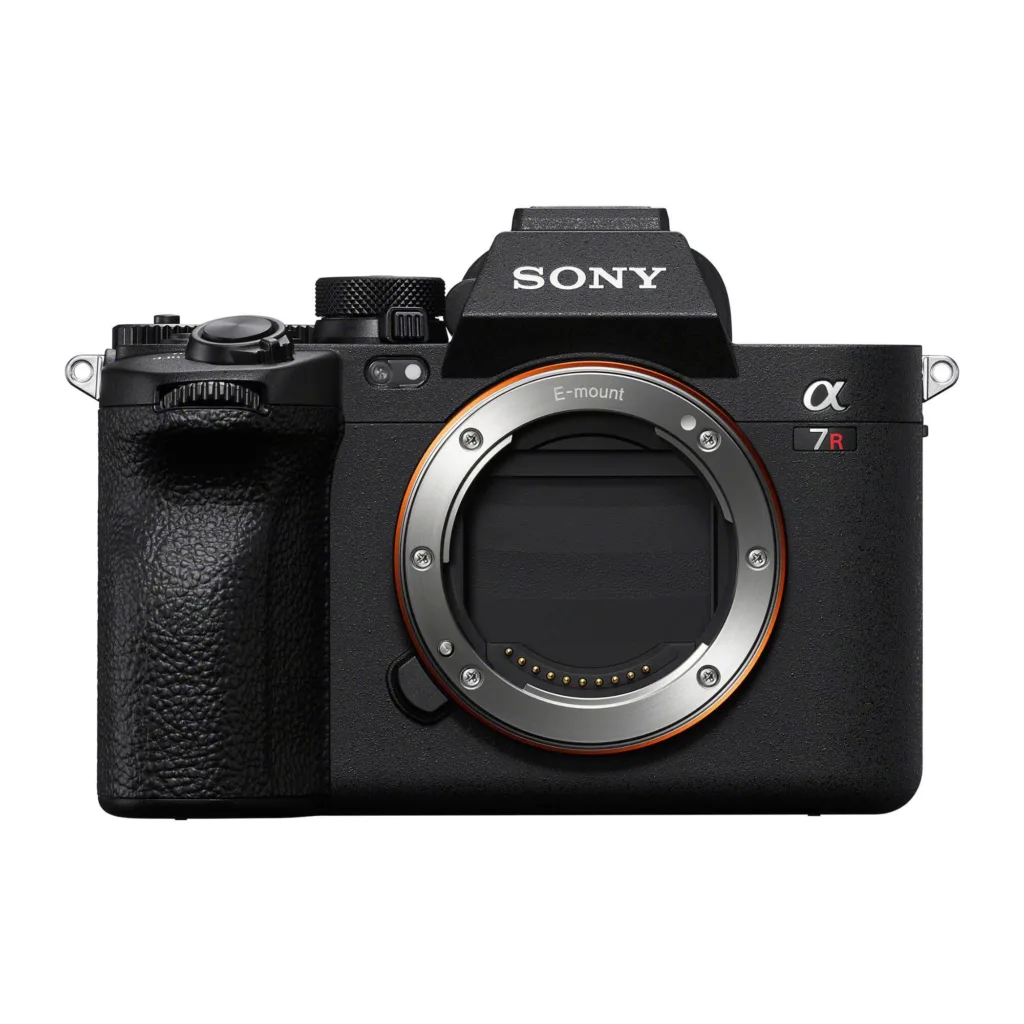
6. Sony A7R V — 61MP Full-Frame (240.8MP via Pixel Shift)
The Sony A7R V remains the reigning full-frame resolution champion in 2026, even with the newly announced Sony A7R VI arriving in June 2026 at $4,499.99. The A7R V’s 61MP BSI CMOS sensor delivers 9,504 × 6,336-pixel files with 15 stops of dynamic range, and its Pixel Shift Multi Shooting mode combines 16 exposures into a 240.8MP composite ready for gallery-scale prints. Sony’s Alpha Universe pixel-shift walkthrough explains the workflow in detail.
Key specs:
- 61MP full-frame BSI CMOS sensor
- 240.8MP Pixel Shift Multi Shooting composite
- 8K/24p and 4K/60p video
- 8-stop 5-axis IBIS with AI-based autofocus
- ISO 100–32,000 native
- Price: MSRP $3,900 USD, commonly discounted to around $3,298
The A7R V blends resolution with speed you can genuinely shoot handheld. AI subject recognition tracks humans, animals, birds, cars, insects, and more. Landscape, portrait, wedding, and commercial shooters all thrive on it. If you’re weighing brands, our roundup of the best mirrorless cameras puts the A7R V in broader context.
7. Leica M11 / Q3 — 60MP Full-Frame (Rangefinder and Compact)
The Leica M11 and its cousin the Leica Q3 share the same 60MP full-frame BSI CMOS sensor and Maestro IV processor, but each serves a very different photographer.
- Leica M11 — Manual-focus rangefinder icon; body around $8,995 USD; triple-resolution 60MP/36MP/18MP modes.
- Leica Q3 — Compact camera with fixed 28mm f/1.7 Summilux lens; body around $7,350 USD (after March 2026 price increase); adds phase-detect AF and 8K video.
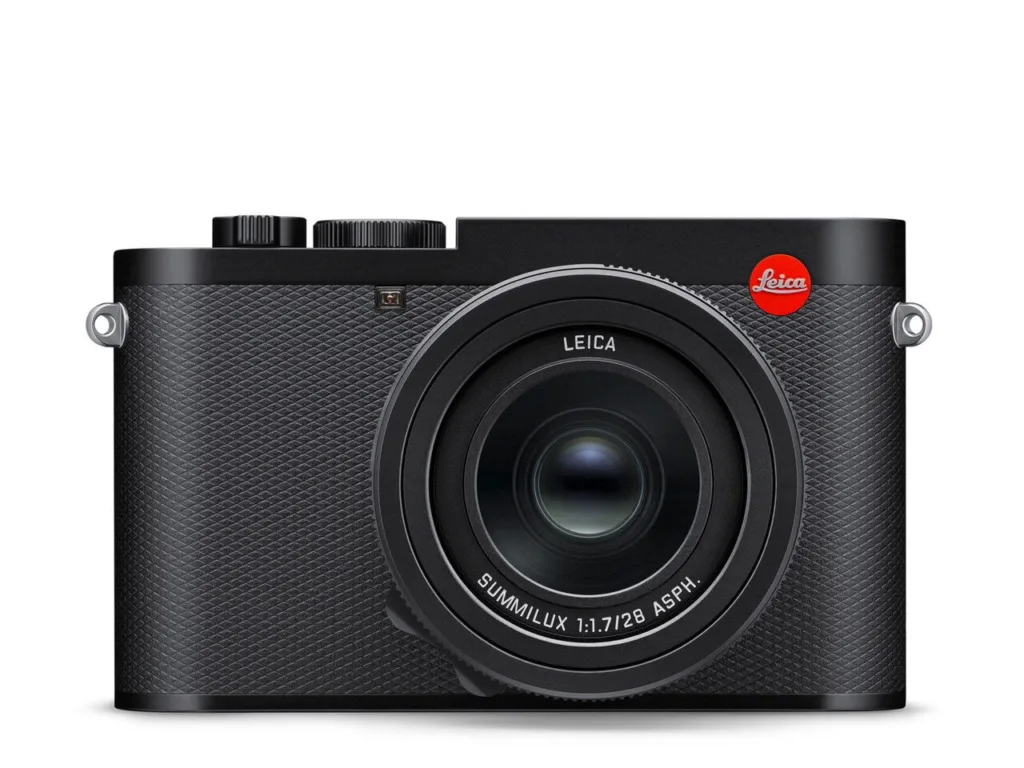
Reviewers repeatedly call the M11 the best digital M-series camera Leica has ever built, thanks to its lower weight, longer battery life, and finally-arriving multi-point metering. The Q3 gives street and travel photographers a compact 60MP tool with a legendary Leica lens permanently attached. Neither model excels at fast-action work, but both produce files with a rendering signature that most competitors still chase.
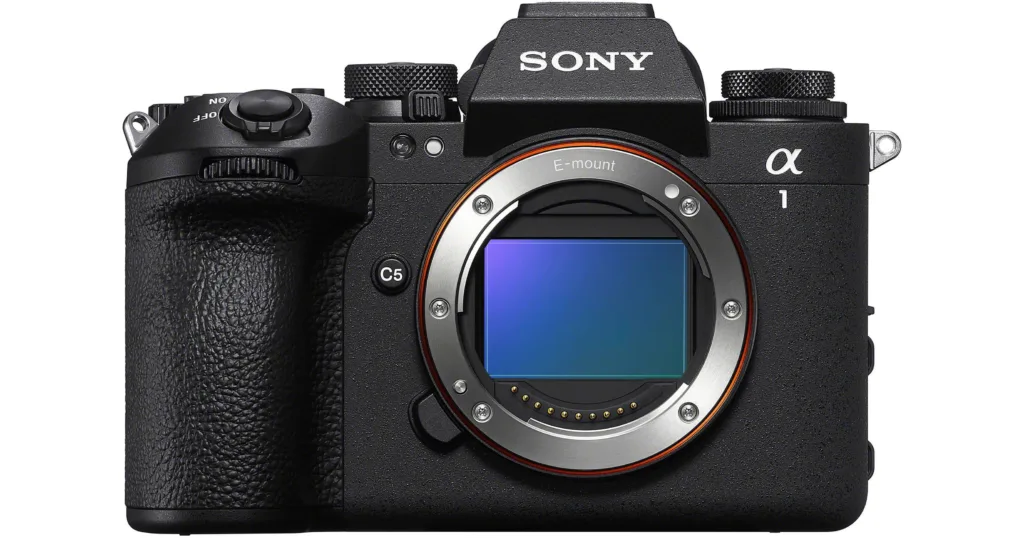
8. Sony A1 II — 50MP Flagship All-Rounder
Sony’s A1 II proves that “highest resolution” and “blazing speed” no longer conflict. It packs a 50.1MP stacked BSI CMOS sensor capable of 30 fps continuous shooting with autofocus and exposure tracking, plus AI-based human pose estimation and 8K/30p 10-bit video.
Highlights:
- 50.1MP stacked full-frame sensor
- 30 fps continuous with AF/AE
- 8K/30p and 4K/120p 10-bit video
- 8.5-stop 5-axis IBIS
- Dedicated AI Processing Unit
- Body price: $6,499 USD
Sports, wildlife, and journalism pros gravitate to the A1 II because it never forces a choice between speed and resolution. It’s the closest thing to a true “do-it-all” flagship on the market. For a broader tour of manufacturers, browse our roundup of popular camera brands.
👗 Selling apparel at 50MP+? Our ghost mannequin service delivers hollow-body catalog photos that turn browsers into confident buyers.
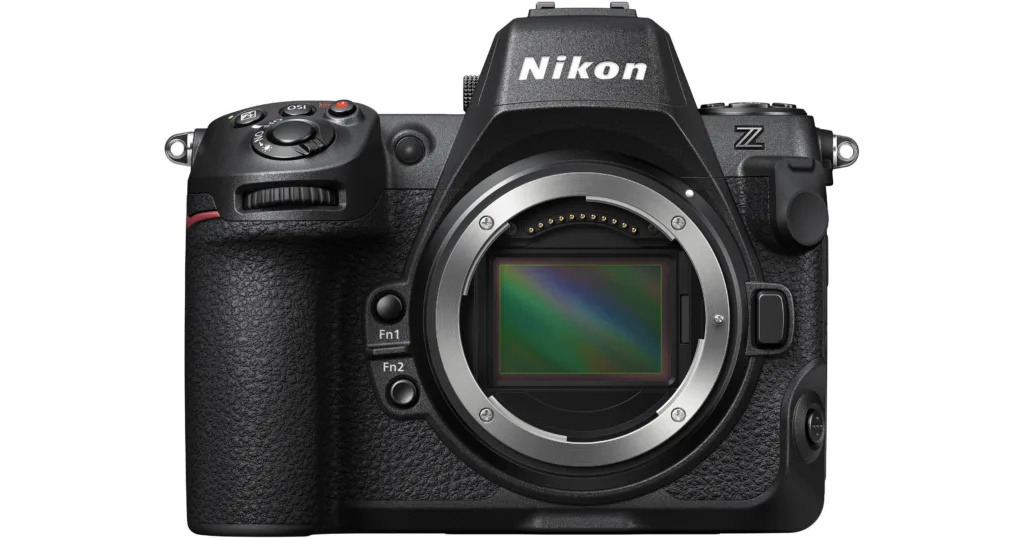
9. Nikon Z8 / Z9 — 45.7MP Stacked Sensor Powerhouses
Nikon’s flagship duo — the Z9 professional body and its compact sibling, the Z8 — share the same 45.7MP stacked CMOS sensor and EXPEED 7 processing engine. Both shoot up to 20 fps in full-resolution RAW, and up to 120 fps in reduced-resolution JPEG, while recording internal 8.3K RAW video. Nikon’s 3D subject tracking now competes head-to-head with Sony’s AI system.
Key differences:
- Z8: smaller body, single grip; roughly $3,497 USD in 2026 (MSRP was $3,996)
- Z9: integrated vertical grip, longer battery life; roughly $5,497 USD
- Both deliver identical image quality and 45.7MP files
Wildlife, wedding, and event professionals love the Nikon Z8/Z9 combo because the sensor never slows down — even during 120 fps burst captures. If you’re evaluating Nikon’s broader lineup, our Nikon Zf review shows how far the brand has come across formats.
10. Canon EOS R5 Mark II / Panasonic Lumix S1R II — 45MP & 44.3MP Hybrid Flagships
Rounding out our top ten, two hybrid flagships prove that “high resolution” and “attainable price” now belong in the same sentence.
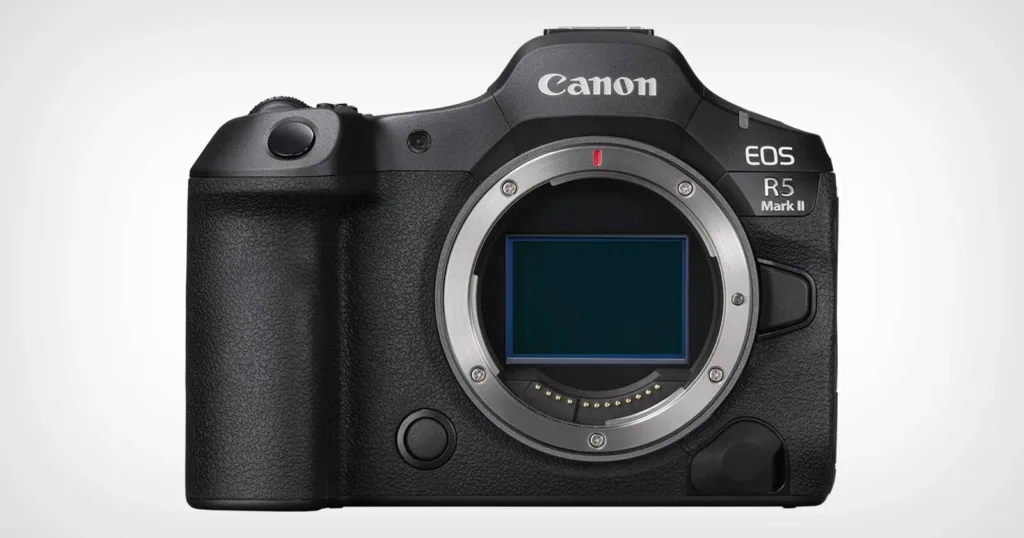
Canon EOS R5 Mark II — 45MP full-frame stacked BSI CMOS sensor, eye-controlled autofocus, 8K/60p RAW video, and up to 30 fps electronic burst. Price: MSRP $4,299 USD, often on sale near $3,899.
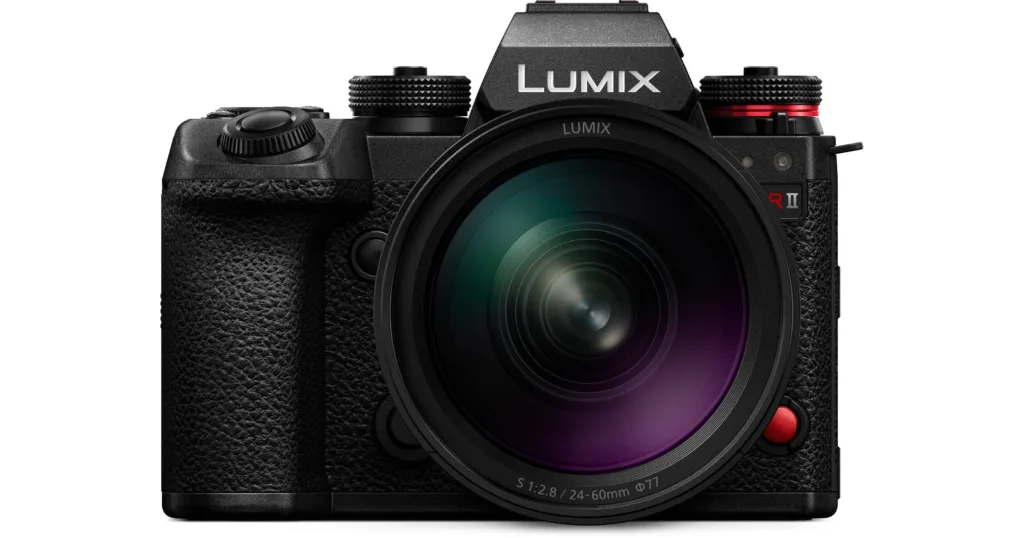
Panasonic Lumix S1R II — 44.3MP full-frame sensor, 40 fps burst, 8.1K video, and 8-stop IBIS. High-Resolution mode produces 177MP composited stills, even handheld thanks to its updated IBIS system. Price: $2,997 USD (currently on sale from $3,299 MSRP).
Both bodies suit hybrid creators who need resolution for stills but also professional-grade cinema tools for video. The S1R II especially punches above its price bracket thanks to open-gate 8K recording and dual-native ISO.
🌑 High-megapixel product shots deserve realistic depth — our shadow creation service adds natural shadows that make listings pop.
Medium Format vs Full-Frame: Which Path Fits Your Work?
Many photographers assume that “highest megapixel” automatically equals “medium format.” That’s mostly true — but the gap has narrowed sharply in 2026.
Medium format wins when you need:
- 100MP+ single-shot resolution
- Maximum dynamic range (15+ stops)
- Shallow depth of field with wide-aperture medium-format glass
- Fine detail for print reproduction, museums, and fashion editorial
Full-frame wins when you need:
- Fast autofocus and burst rates for action
- Long native lens catalogs across genres
- Better battery life and lighter bodies
- Lower price entry (often three to five times cheaper)
For most wedding, portrait, and commercial photographers, a 61MP Sony A7R V or 45MP Canon EOS R5 II covers 95% of client demands. Medium format earns its cost only when clients specifically request it or when print sizes exceed 40 inches. Digital Camera World’s medium format buyer’s guide offers a deeper dive if you’re weighing the leap.
Pixel-Shift Multi-Shot: Getting 177MP–400MP From a Smaller Sensor
Pixel-shift technology deserves its own spotlight because it dramatically stretches what “highest resolution camera” means in 2026.
How pixel shift works:
- The camera uses IBIS to shift the sensor by half a pixel or a full pixel between frames.
- It captures 4, 8, or 16 exposures in rapid sequence.
- Software then combines the frames into a single ultra-high-resolution file.
- Bonus: the technique also eliminates Bayer color interpolation, producing true RGB data at every pixel.
Real-world pixel-shift outputs in 2026:
- Hasselblad H6D-400c MS: 100MP → 400MP
- Fujifilm GFX100 II: 102MP → 400MP (16-frame mode)
- Sony A7R V: 61MP → 240.8MP
- Panasonic S1R II: 44.3MP → 177MP (works handheld)
- Pentax K-3 III, Ricoh GR IIIx, and Olympus OM-1 also offer their own pixel-shift modes.
The catch: traditional pixel shift demands a locked tripod and a completely static subject. Any breeze, water ripple, or moving cloud creates artifacts. Handheld pixel-shift modes now exist (Sony A1 II, Panasonic S1R II), but tripod-based captures still produce cleaner results.
Who Actually Needs A Highest Resolution Camera?
Not every photographer benefits from 100MP+ files. Here’s an honest breakdown by shooting genre:
- Landscape and architecture — Almost always benefits from more resolution.
- Fashion and editorial — Frequently benefits, especially for magazine and large-print work.
- Product and jewelry — Nearly always benefits since clients demand pixel-level detail.
- Wedding and portrait — Sometimes benefits for large prints and premium albums.
- Sports and wildlife — Benefits for cropping reach, but speed still matters more.
- Street and documentary — Rarely benefits; smaller files help you work faster.
- Video-first creators — Higher resolution helps 4K/8K oversampling only up to a point.
If you photograph products, our roundup of the best product photography lenses pairs perfectly with any of the high-resolution bodies above.
Ready to make your highest-resolution product shots truly shine? Explore our full photo retouching service and see the professional finishing difference.
Post-Processing Considerations You Can’t Ignore
Owning a highest megapixel camera changes your entire post-processing pipeline. Expect these realities:
- Storage explodes. A single 100MP RAW hits 100–200MB. A 400MP TIFF exceeds 2GB.
- Backups multiply. A single wedding at 100MP might fill 500GB or more.
- Editing hardware needs upgrading. Aim for 32GB+ RAM, a dedicated GPU, and NVMe SSDs.
- Sharpening changes. Higher resolutions reveal every focus miss and every lens flaw.
- Skin retouching becomes essential. Every pore shows up in full detail.
- Cropping becomes freedom. You can reframe aggressively without visible quality loss.
If you accidentally lose an important high-res capture, the practical guide from Photofixal on how to find recently deleted photos is a lifesaver. Cloud sync, redundant local backups, and disciplined culling all matter far more once your files quadruple in size.
Curious about how we reached 400MP capture in the first place? Our overview of the evolution of photography traces every leap that shaped today’s megapixel race.
Frequently Asked Questions
1. What is the highest resolution camera you can buy in 2026?
The Hasselblad H6D-400c Multi-Shot remains the highest resolution camera commercially available, producing 400MP images through six-shot pixel-shift capture on a 100MP medium-format sensor. For a single-shot capture, the Phase One IQ4 150MP leads the pack at 151 megapixels native.
2. How many megapixels are enough for professional photography?
For roughly 90% of professional work — weddings, portraits, editorial, and commercial — 24MP to 45MP covers virtually every print size and client requirement. You genuinely need 60MP+ only for large-format prints, aggressive cropping, or ultra-detailed product work.
3. Is a 100MP camera worth it for landscape photography?
Yes, if you print large or license fine-art work. A 100MP file prints beautifully at 40×60 inches, and medium-format sensors add roughly two extra stops of dynamic range compared to full-frame — which matters immensely for sunrise and sunset scenes.
4. Does more megapixels mean better image quality?
Not by itself. Sensor size, pixel size, dynamic range, lens quality, and color science all shape image quality. A 24MP full-frame body often outperforms a 40MP crop-sensor body in low light because each pixel gathers more light.
5. How much does the highest resolution camera cost?
Prices range from around $2,997 (Panasonic S1R II 44MP) to $62,490 (Phase One XT IQ4 150MP with lens). The Hasselblad H6D-400c MS body alone exceeds $47,000 USD, and full Phase One studio kits regularly top $80,000.
6. Can you shoot handheld with a 100MP medium format camera?
Yes — modern medium-format cameras like the Fujifilm GFX100 II and Hasselblad X2D II 100C include powerful IBIS rated up to 8 stops, making handheld shooting genuinely usable. Pixel-shift modes, however, still require a tripod for best results.
7. What’s the difference between native resolution and pixel-shift resolution?
Native resolution measures what the sensor captures in a single exposure. Pixel-shift resolution combines multiple exposures with sensor movement to produce a higher-resolution composite. Pixel-shift files typically look sharper and offer true RGB per pixel, but they require static subjects and a stable tripod.
8. Is the Sony A7R V still worth buying with the A7R VI now available?
Absolutely. The new Sony A7R VI launched in June 2026 at $4,499.99 with a 66.8MP sensor, but the A7R V remains one of the best-value 60MP+ full-frame cameras and often sells at deep discounts near $3,298 as the newer model ships.
Final Verdict: The Highest Megapixel Camera For You
Picking the right highest resolution camera in 2026 depends less on the raw number and more on how you shoot. If you’re a studio commercial pro, the Phase One IQ4 150MP or Hasselblad H6D-400c MS deliver unmatched fidelity. If you’re a hybrid creator who values speed and resolution, the Fujifilm GFX100 II sets the medium-format standard. Full-frame shooters thrive with the Sony A7R V, Nikon Z8, Canon EOS R5 II, or Panasonic S1R II — each around 45–61MP with modern autofocus and video.
Whatever body you choose, remember that higher resolution amplifies every decision you make: sharper focus, cleaner backgrounds, stronger post-processing. The gear only unlocks half the picture — your editing pipeline does the rest.
🎯 Ready to make every pixel count? Explore all our professional photo editing services and turn your highest-resolution captures into portfolio-worthy final images.
Quick-Reference Comparison Table
| Rank | Camera | Native MP | Max Pixel-Shift MP | Sensor | Approx. Price (2026 USD) |
|---|---|---|---|---|---|
| 1 | Hasselblad H6D-400c MS | 100 | 400 | Medium format | ~$47,995 |
| 2 | Phase One IQ4 150MP (XF system) | 151 | 151 | Medium format | ~$51,990 |
| 3 | Fujifilm GFX100 II | 102 | 400 | Medium format | $7,499 |
| 4 | Fujifilm GFX100RF | 102 | — | Medium format | $4,899 |
| 5 | Hasselblad X2D II 100C | 100 | — | Medium format | $7,799 |
| 6 | Sony A7R V | 61 | 240.8 | Full-frame | $3,298–$3,900 |
| 7 | Leica M11 / Q3 | 60 | — | Full-frame | $7,350–$8,995 |
| 8 | Sony A1 II | 50.1 | — | Full-frame | $6,499 |
| 9 | Nikon Z8 / Z9 | 45.7 | — | Full-frame | $3,497 / $5,497 |
| 10 | Canon EOS R5 II / Lumix S1R II | 45 / 44.3 | 177 (S1R II) | Full-frame | $2,997–$4,299 |