How Big Is a 3×5 Picture? Exact Size in Inches, cm, mm, Pixels, and Uses
TL;DR: The Short Answer
A literal 3×5 (3×5) picture measures exactly 3 inches wide × 5 inches tall — that is 7.62 × 12.7 cm, or 76.2 × 127 mm — in portrait orientation, with a 3:5 aspect ratio. Turned sideways, it is 5 × 3 inches (5:3). For a crisp print at the standard 300 PPI, the file should be 900 × 1500 pixels.
One important catch: most photo labs label their 3.5 × 5 inch print (8.89 × 12.7 cm; 1050 × 1500 pixels at 300 PPI) as “3×5.” That format is also known as 3R or L size. Before ordering, always check the lab’s stated inch or millimeter dimensions rather than trusting the nickname.
1. What Is a 3×5 Picture, Exactly?
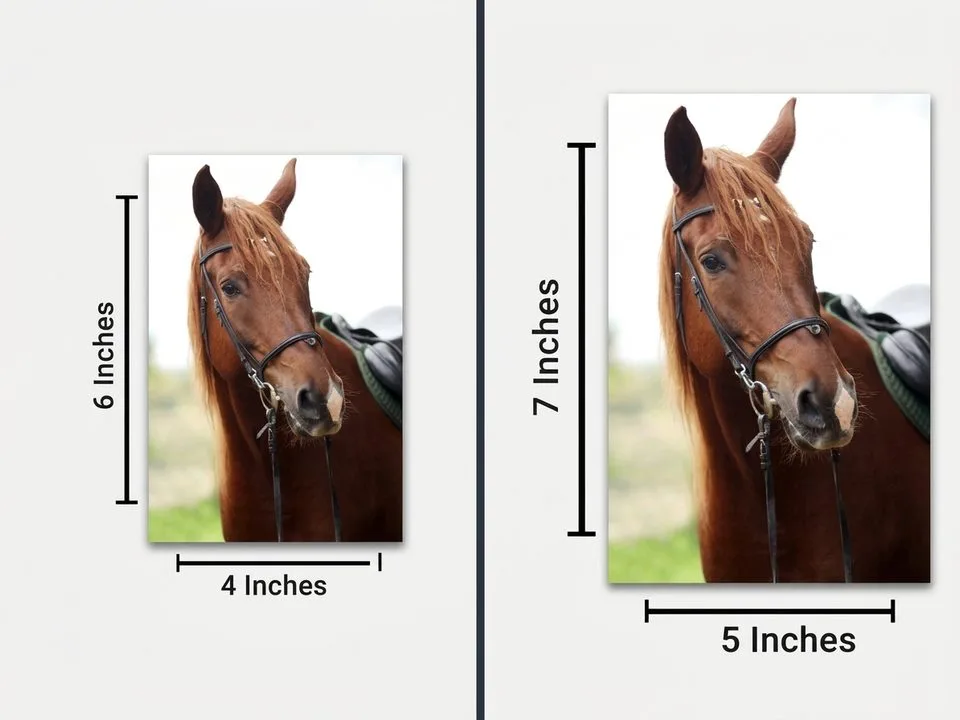
A 3×5 photo is a small rectangular print whose two sides are three inches and five inches long. In the usual portrait orientation, the short side (width) is 3 inches and the long side (height) is 5 inches; landscape photos simply swap the numbers. The shape ratio, called the aspect ratio, is 3:5 (about 0.6 when expressed as width divided by height).
Held in your hand, a 3×5 print is noticeably smaller than the familiar 4×6 snapshot. It sits close to postcard and index-card territory, which explains why it has been popular for cards, crafts, and keepsakes rather than wall display. Because the print is small, even a modest camera file looks sharp, and a slight focus or compression flaw is far less visible than it would be on a larger enlargement.
Two ideas get mixed up whenever people ask this question. The first is the true, literal 3 × 5 inch card size, common for index cards and custom prints. The second is the lab shorthand “3×5,” which historically means the 3.5 × 5 inch consumer print (3R). Sections 3 and 4 untangle both, because the pixel file you send differs between the two.
2. 3×5 Size in Every Unit
Print suppliers around the world use inches, centimeters, millimeters, and pixel counts, so here is the full conversion for a portrait-oriented 3×5 picture. The conversion factor is fixed: 1 inch = 25.4 mm = 2.54 cm.
| Measurement unit | Portrait (3 × 5) | Landscape (5 × 3) | Notes |
|---|---|---|---|
| Inches | 3 × 5 in | 5 × 3 in | The literal print size |
| Centimeters | 7.62 × 12.7 cm | 12.7 × 7.62 cm | Used by most online labs outside the US |
| Millimeters | 76.2 × 127 mm | 127 × 76.2 mm | ISO print specs and lab order forms |
| Aspect ratio | 3:5 (0.60) | 5:3 (1.67) | Must match before cropping |
| Area | 15 sq in (≈96.8 cm²) | — | About the size of three stacked credit cards |
A few quick practical notes:
- Portrait vs landscape: people, pets, and vertical scenes print best at 3 × 5. Wide landscapes need the 5 × 3 orientation, or the scenery will be cropped hard.
- Millimeter orders: when a lab lists “76 × 127 mm,” that is a true 3×5. “89 × 127 mm” is the 3.5×5 lab size explained below.
- Comparison points: a US index card is 3 × 5 inches, and a standard greeting card is roughly 5 × 7 inches — so a 3×5 photo fits neatly on top of or beside those craft materials.
3. The Confusion: True 3×5 vs the Lab “3×5” (3R / 3.5×5)
This is the part that causes most wrong orders, so it is worth a close look. In photo-lab terminology, a code like 3R roughly tracks the short edge in inches; the long edge runs about two inches longer for sizes up to 10 inches (see the R-series naming system explained by Print For Fun). Under that system, 3R prints measure 3.5 × 5 inches, not 3 × 5.
Where the nickname came from
Kodak popularized the 3.5 × 5 print for consumer film during the era of 110 and 126 cartridges and early 35 mm processing, before 4×6 became the dominant snapshot size in the late 1980s and 1990s. The photo print sizes entry on Wikipedia lists 3R (Japan: L; China: 5 inch; Europe: 9 × 13 cm) at 3½ × 5 inches (89 × 127 mm), standardized under ISO 1008, with a minimum file of about 1.58 megapixels. The 3R trade-standard page confirms the same dimensions and notes that European labs call it a 9 × 13 cm print.
Because decades of customers heard “3×5 prints” at the drugstore counter, the nickname stuck even though the paper was actually a half-inch wider. Today, dotPhoto, Nations Photo Lab, and similar services still list their 3.5×5 product under the shorthand “3×5.”
Side-by-side: literal size versus lab size
| Detail | Literal 3 × 5 | Lab “3×5” = 3R / 3.5 × 5 |
|---|---|---|
| Inches | 3 × 5 | 3.5 × 5 |
| Centimeters | 7.62 × 12.7 | 8.89 × 12.7 |
| Millimeters | 76.2 × 127 | 88.9 × 127 |
| Aspect ratio | 3:5 | 7:10 (1.43) |
| Pixels at 300 PPI | 900 × 1500 | 1050 × 1500 |
| Most common use | Index cards, custom crafts, fine-card inserts | Wallet-adjacent prints, small frames, school photos, mini albums |
| Typical frame | True 3×5 frames (less common) | 3.5×5 frames (widely stocked) |
Before you upload anything, read the product specification on the ordering page. If it says 3.5 × 5 inches or 89 × 127 mm, crop and export the 1050 × 1500 file. If it truly says 3 × 5 inches or 76 × 127 mm, use 900 × 1500. Sending the wrong crop ratio is the most common reason a lab preview shows a chopped-off head or a thin white stripe.
4. Pixel Resolution: How Many Pixels Is a 3×5 Photo?
Physical size and pixel count are linked through print density, measured in PPI (pixels per inch) for image files. The basic formula is simple:
Pixel width = width in inches × PPI; pixel height = height in inches × PPI.
For a true 3×5 at 300 PPI: 3 × 300 = 900 pixels wide; 5 × 300 = 1500 pixels high. The same math at other densities gives the table below.
Pixel requirements for a literal 3×5 print
| Density (PPI) | Width × Height (pixels) | Practical quality |
|---|---|---|
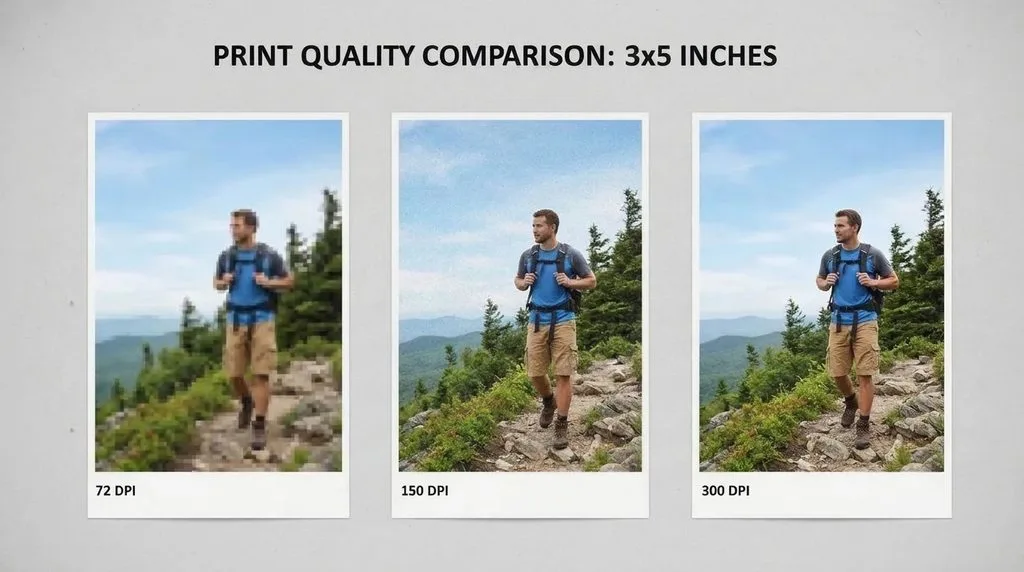
| 72 | 216 × 360 | Web/screen only; visibly pixelated in print |
| 96 | 288 × 480 | Screen display; not print-ready |
| 150 | 450 × 750 | Acceptable draft quality; fine for quick drafts |
| 200 | 600 × 1000 | Good enough for casual, arm’s-length viewing |
| 240 | 720 × 1200 | Near-print quality; common lab floor |
| 300 | 900 × 1500 | Recommended standard for crisp prints |
| 600 | 1800 × 3000 | Archival or extreme-detail uses; rarely necessary |
For the lab’s 3.5×5 (3R), shift every number to 1050 × 1500 at 300 PPI, 700 × 1000 at 200 PPI, and 525 × 750 at 150 PPI, as this dedicated 3×5 pixels guide lays out for both card sizes.
PPI is not the same as printer DPI
A file’s PPI describes how many image pixels feed each printed inch. A printer’s DPI describes how many ink droplets it can lay down per inch; printers routinely run far higher DPI (600 or more) than the image PPI. Changing the PPI metadata without adding real pixels does not create detail, and a 600 DPI printer setting will not rescue a soft file. This PPI versus DPI explainer covers the distinction in plain terms, and our own guide to the best DPI for printing walks through choosing density by output size.
How many megapixels do you really need?
At 300 PPI, 900 × 1500 pixels equals about 1.35 megapixels; the 3R file needs about 1.58 MP, matching Wikipedia’s minimum-megapixel figure for 3R. Every smartphone made in the last decade shoots well above that, so camera megapixels are not the bottleneck for a 3×5 print. Focus, sharpness, lighting, and file compression matter more. Keep your original file intact and crop a working copy; you can track the trade-offs in our guide to pixel dimensions.
5. How 3×5 Compares with Other Common Photo Sizes
How the common sizes stack up
The table below places 3×5 next to the sizes people actually order most often. All pixel figures assume 300 PPI; ratios show what will fit a camera photo without cropping.
| Print size | Inches | Centimeters | Ratio | Pixels @ 300 PPI | Typical use |
|---|---|---|---|---|---|
| Wallet | 2.5 × 3.5 | 6.35 × 8.89 | 5:7 | 750 × 1050 | Wallets, school photo sheets, gift tags |
| True 3×5 | 3 × 5 | 7.62 × 12.7 | 3:5 | 900 × 1500 | Cards, crafts, custom inserts |
| Lab 3R | 3.5 × 5 | 8.89 × 12.7 | 7:10 | 1050 × 1500 | Small frames, mini albums, scrapbooks |
| 4×6 (4R) | 4 × 6 | 10.16 × 15.24 | 2:3 | 1200 × 1800 | Everyday snapshots and album pages |
| 5×7 (5R) | 5 × 7 | 12.7 × 17.78 | 5:7 | 1500 × 2100 | Desk frames, greeting-card size prints |
| 8×10 (8R) | 8 × 10 | 20.32 × 25.4 | 4:5 | 2400 × 3000 | Framed portraits and wall display |
The complete photo and frame size reference adds wallet, 11×14, and 16×20 figures; our own roundup of standard print sizes organizes the same formats for quick ordering. If you eventually move up to wall formats, our guide to 16×20 prints explains the resolution those larger sizes demand.
Why cropping comes up so often here
Most DSLR and mirrorless cameras capture a 3:2 frame, and most smartphones capture 4:3. Neither shape is exactly 3:5 or 7:10, so a print order at 3×5 or 3R trims the top/bottom or the sides of the source photo. Review the common camera aspect ratios before you crop, and move the crop box rather than accepting a centered default — faces, hands, and horizon lines usually need manual placement.
6. Is a 3×5 Photo a Wallet-Size Photo?
Not quite, and this mix-up produces a lot of wrong prints. The classic wallet print measures roughly 2.5 × 3.5 inches (63.5 × 88.9 mm); some labs also offer a smaller 2 × 3 inch version. It is shorter and narrower than a true 3×5, and its 5:7 ratio differs from the 3:5 ratio of a 3×5. A wallet photo slips into a leather photo sleeve or a purse; a 3×5 print sits better on a card, a desk, or an album page. The wallet-size photo reference lists the exact lab dimensions, sheet layouts, and typical uses for the smaller format.
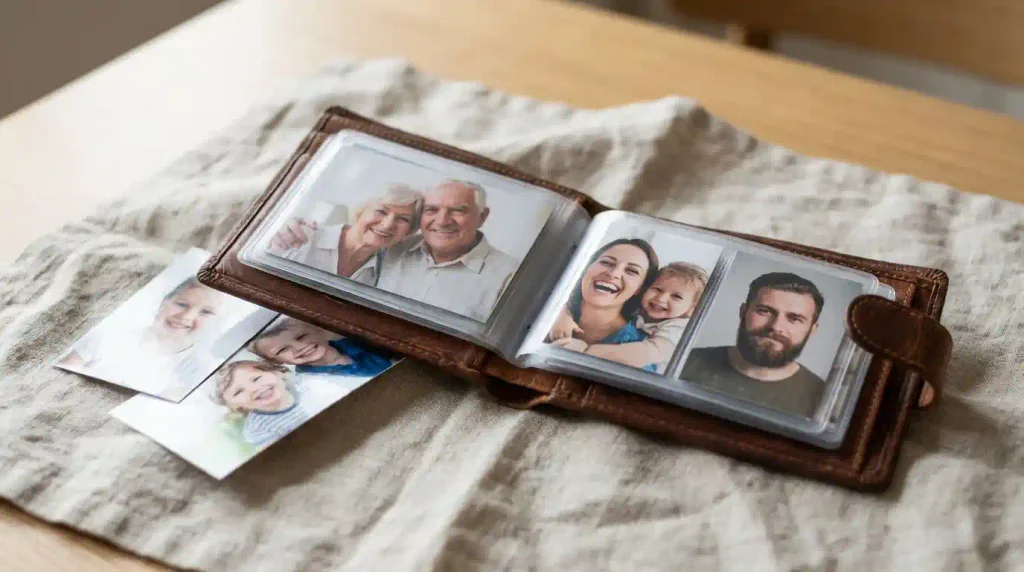
As a rough rule: if the goal is carrying a photo in a pocket, order wallet size; if the goal is mailing a card, filling a scrapbook pocket, or decorating a small frame, the 3×5 (or the lab’s 3R 3.5×5) is the more sensible choice.
7. Where a 3×5 Photo Works Best
The 3×5 format thrives in small-format, hands-on projects. Common uses include:
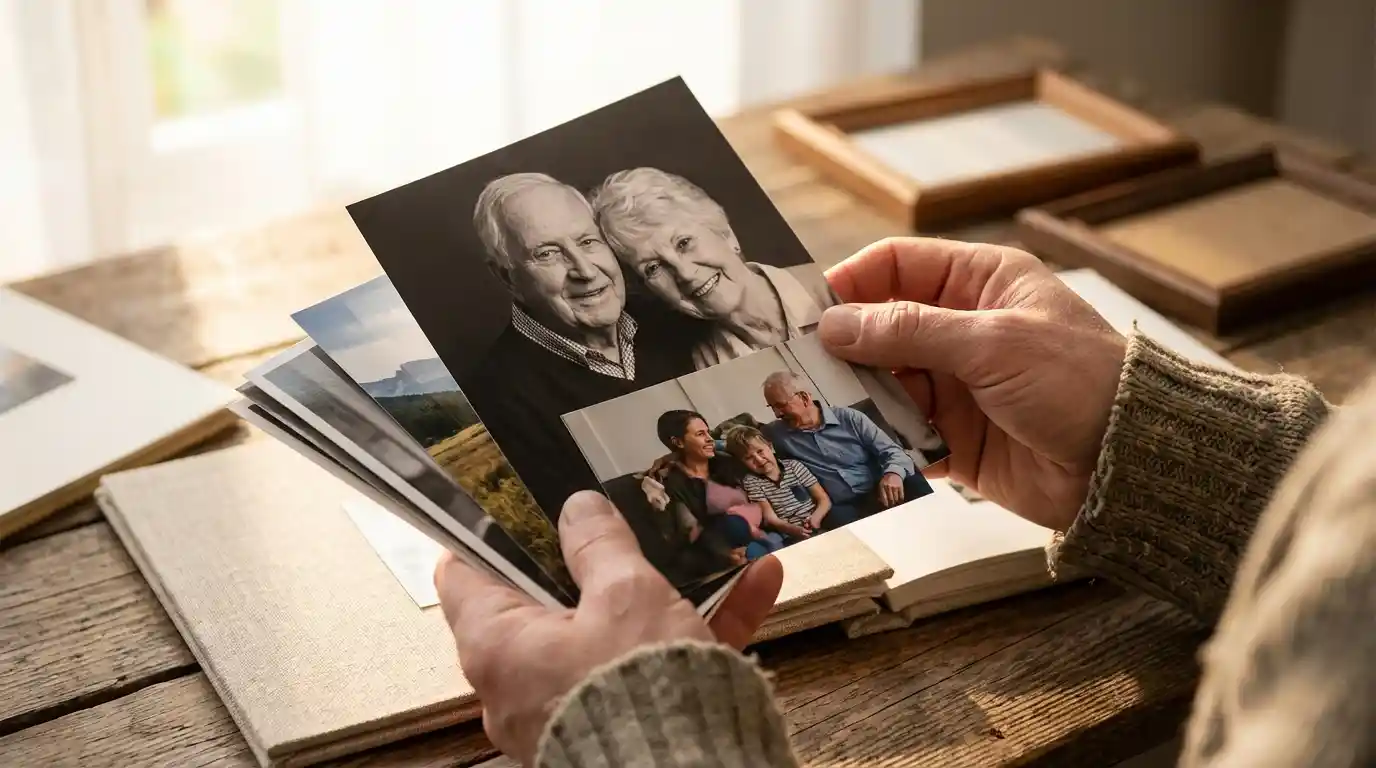
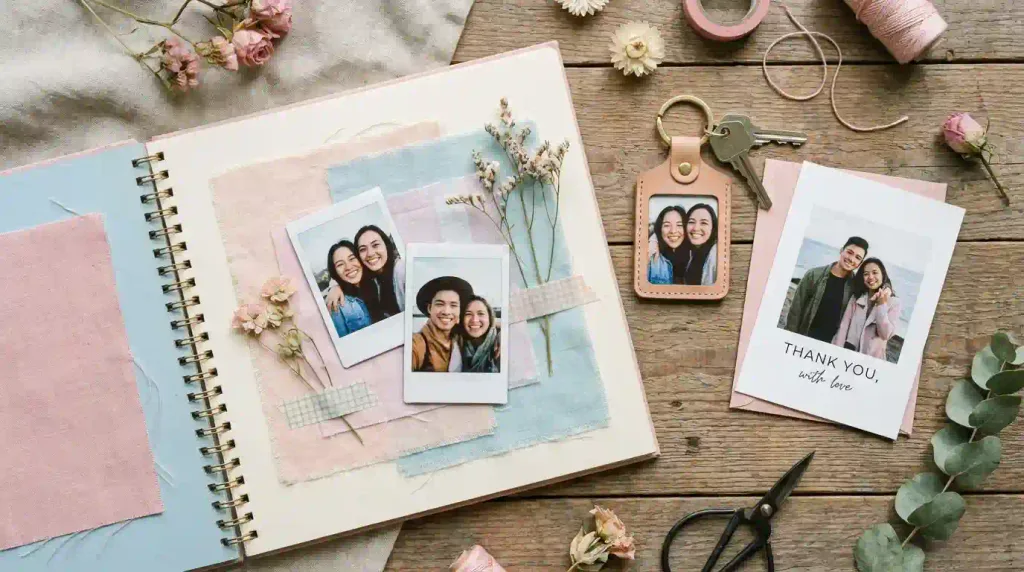
- Scrapbooks and mini albums: small pockets and traveler’s-notebook layouts are built for prints this size.
- Cards and crafts: index-card displays, recipe cards, journaling cards, and handmade greeting cards.
- Desk and shelf displays: narrow ledges, cubbies, and tiered shelf frames where a 4×6 would crowd the space.
- Keepsake gifts: luggage-tag and keychain inserts, thank-you note enclosures, and party favor prints.
- Travel journals and memory books: pocket-sized travel diaries that photograph a scene per page.
- Collage clusters and gallery walls: a grid of small prints balances larger frames on a wall.
- Vintage-style snapshots: film-inspired strips, school-photo albums, and heritage reprints that mimic 1970s and 1980s lab prints.
8. When a 3×5 Print Is the Wrong Choice
Small size is a strength, but it is not universal. Skip 3×5 when:
- You need fine detail: dense landscapes, pet fur, group portraits, or product close-ups show more at 4×6 and above.
- Subjects sit near the edges: the crop to 3:5 or 7:10 can cut hands, heads, or horizon lines.
- You are filling standard album pages: most pocket pages are sized for 4×6, so a 3×5 slips around or leaves gaps.
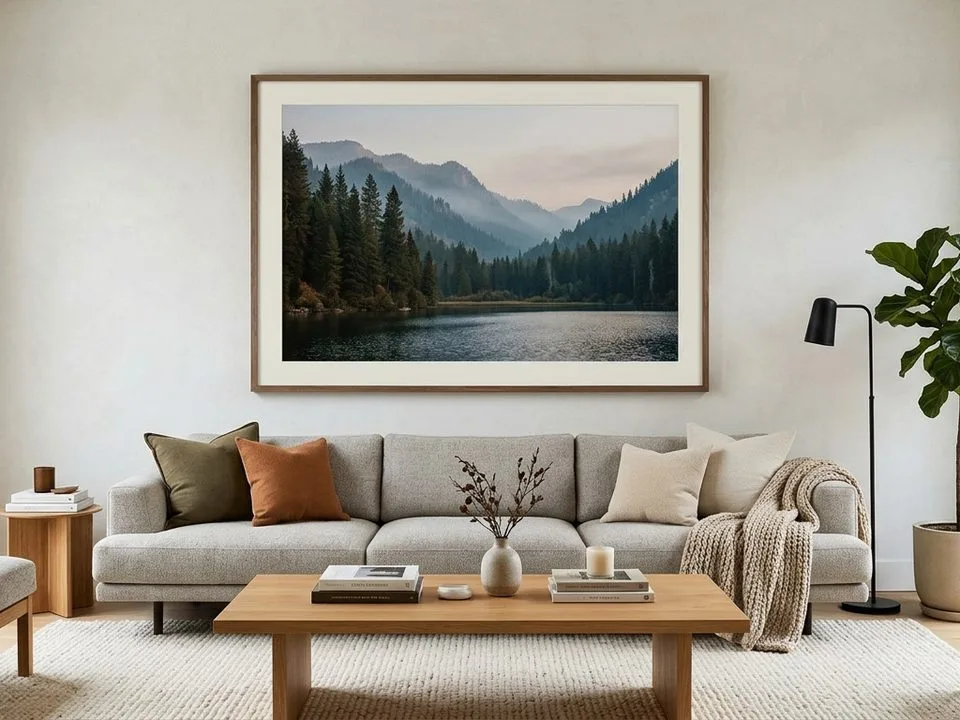
- You want a wall statement: a desk-sized print disappears on an empty wall; plan large prints separately with proportionally more pixels.
- Your source file is weak: heavy noise, motion blur, or upscaled screenshots rarely improve when printed small at high density.
9. Framing a 3×5 Picture
Frame listings label the size of the opening, not the outer wooden edge, and the frame’s lip usually overlaps the paper by a few millimeters, so the visible window is slightly smaller than the print itself. Measure the inside opening after removing the back rather than trusting the exterior dimensions.
Practical options:
- True 3×5 frames exist but are less common in retail stores; search for “3 × 5 picture frame” and compare the listed opening.
- 3.5 × 5 frames are widely stocked because they match the 3R lab print — the natural choice if your print came from a drugstore or online lab.
- Mat openings in bigger frames: a 4×6, 5×7, or even 8×10 frame with a mat cut for 3×5 gives a polished, gallery-like look and protects the print.
- Multi-opening collage frames: two-, three-, or four-window frames are sold for sets of small family and school portraits.
Keep important faces and fingers about 5 mm away from any edge that the mat or frame lip will cover. A sample print in the actual frame removes all guesswork about trim and overlap.
10. How to Prepare and Print a Sharp 3×5 Photo
Whether you print at home or upload to a lab, the same preparation steps apply.
Step-by-step preparation
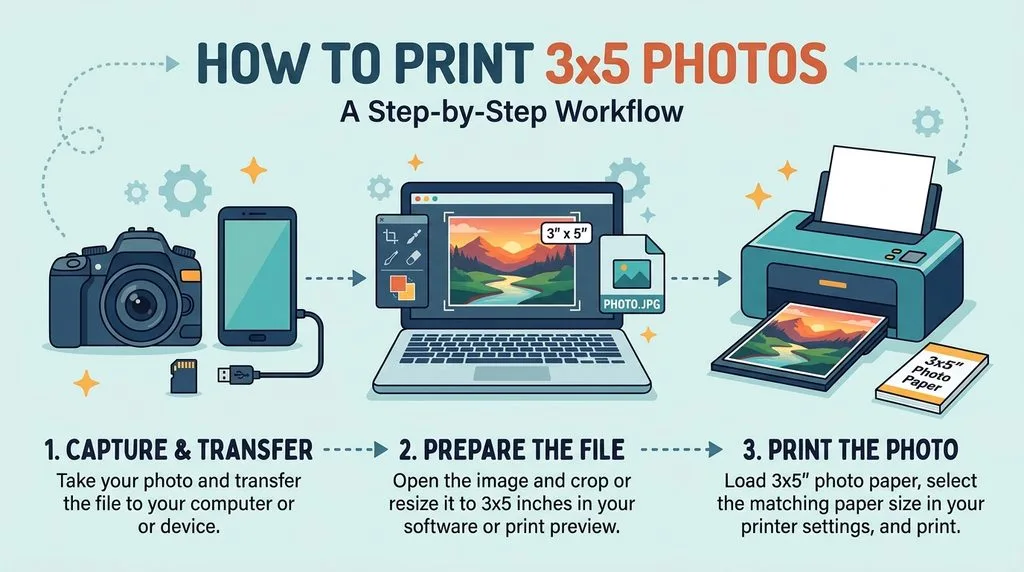
- Confirm the target size. Write down whether the order is a true 3 × 5 or the lab’s 3.5 × 5 (3R), plus portrait or landscape orientation.
- Crop to the correct ratio. Use a 3:5 crop for true 3×5 and a 7:10 crop for 3R. Lock the ratio in your editor and drag the crop so faces stay clear of the edges; never stretch the image to force the dimensions.
- Set 300 PPI and check pixels. Aim for 900 × 1500 (true) or 1050 × 1500 (3R). If your source has more pixels, keep the extra detail for cropping room; do not upscale a small file to hit the number.
- Export in a print-friendly file. Use high-quality JPEG, TIFF, or PNG in the lab’s requested color space, usually sRGB. Our breakdown of common file formats explains when PNG or TIFF helps.
- Review the order preview. Labs often auto-fill crops; verify that the preview matches your crop before paying, and choose borders explicitly if you want white edges rather than edge-to-edge printing.
- Choose paper and method. Home inkjet users should pick genuine photo paper; glossy paper boosts color punch while matte paper resists fingerprints and suits black-and-white portraits. Online labs handle paper, ink, and consistent calibration in one step, and dedicated printing software can batch several small prints onto one sheet.
Home printing quick checklist
- Load 4×6 or letter-size glossy/matte photo paper; many home printers arrange four wallet-size or two small prints per sheet.
- Select the “photo” paper profile and the highest quality setting in the printer driver.
- Turn off “borderless” if your crop includes white margins you want to keep.
- Do a single test print before a batch, especially for a framed gift.
11. Frequently Asked Questions
How big is a 3×5 photo in centimeters and millimeters?
The standard 3×5 picture size in a true print is 7.62 × 12.7 cm, equal to 76.2 × 127 mm, in portrait orientation. The lab’s common “3×5” (3R) measures 8.89 × 12.7 cm (88.9 × 127 mm), so check the order form’s metric figures before uploading.
How many pixels is a 3×5 photo at 300 DPI?
At 300 PPI, a true 3×5 needs 900 × 1500 pixels. The lab 3R (3.5×5) needs 1050 × 1500 pixels. At 150 PPI the same prints need 450 × 750 and 525 × 750 pixels respectively, but quality is noticeably softer at close viewing distance.
Is 3×5 the same as a wallet-size photo?
No. Standard wallet prints are about 2.5 × 3.5 inches (63.5 × 88.9 mm), smaller than a 3×5 and shaped at 5:7. Wallet photos go in pocket sleeves; 3×5 prints suit cards, crafts, and small frames.
Can I print a phone photo at 3×5 without cropping?
Usually a small crop is unavoidable. Phones shoot 4:3, and 3×5 prints are 3:5 (or 7:10 for 3R). Crop deliberately to 3:5, keep faces inside the frame, and save the original uncropped file.
What size frame fits a 3×5 picture?
For a true 3×5, look for a 3×5 frame; for the common lab 3R print, use a 3.5×5 frame. A larger 4×6 or 5×7 frame with a mat also works well, and the mat opening should cover only a narrow margin around the print.
Why do some labs call 3.5×5 “3×5”?
It is decades-old shorthand from the film era, when Kodak and drugstore labs offered the 3.5×5 consumer snapshot (3R) and customers remembered it loosely as “3×5.” The paper dimensions never matched the nickname, so rely on inches or millimeters on the product page.
Is 3×5 still a standard photo size today?
It is a niche rather than a mainstream size: 4×6 dominates consumer printing, but 3×5 and 3R remain common for scrapbooks, school-photo keepsakes, greeting cards, small frames, and custom gift prints.
What resolution camera do I need for a 3×5 print?
About 1.35–1.6 megapixels at 300 PPI covers the true size and 3R respectively. Every modern phone and camera exceeds that, so focus and lighting matter far more than the megapixel count for this small format.
12. Final Takeaway
Asking how big the 3×5 picture size really is has two honest answers. The literal answer is 3 × 5 inches (7.62 × 12.7 cm; 76.2 × 127 mm), 3:5 ratio, 900 × 1500 pixels at 300 PPI. The practical answer for most lab orders is the historical 3.5 × 5 inch 3R print, 1050 × 1500 pixels at 300 PPI. Measure the spec on the order page, crop to the right ratio, keep your faces clear of the edges, and the small format becomes an easy, inexpensive way to print keepsakes, cards, and shelf-sized memories.