What Does DSLR Stand For? DSLR Camera Meaning & Definition (2026 Guide)
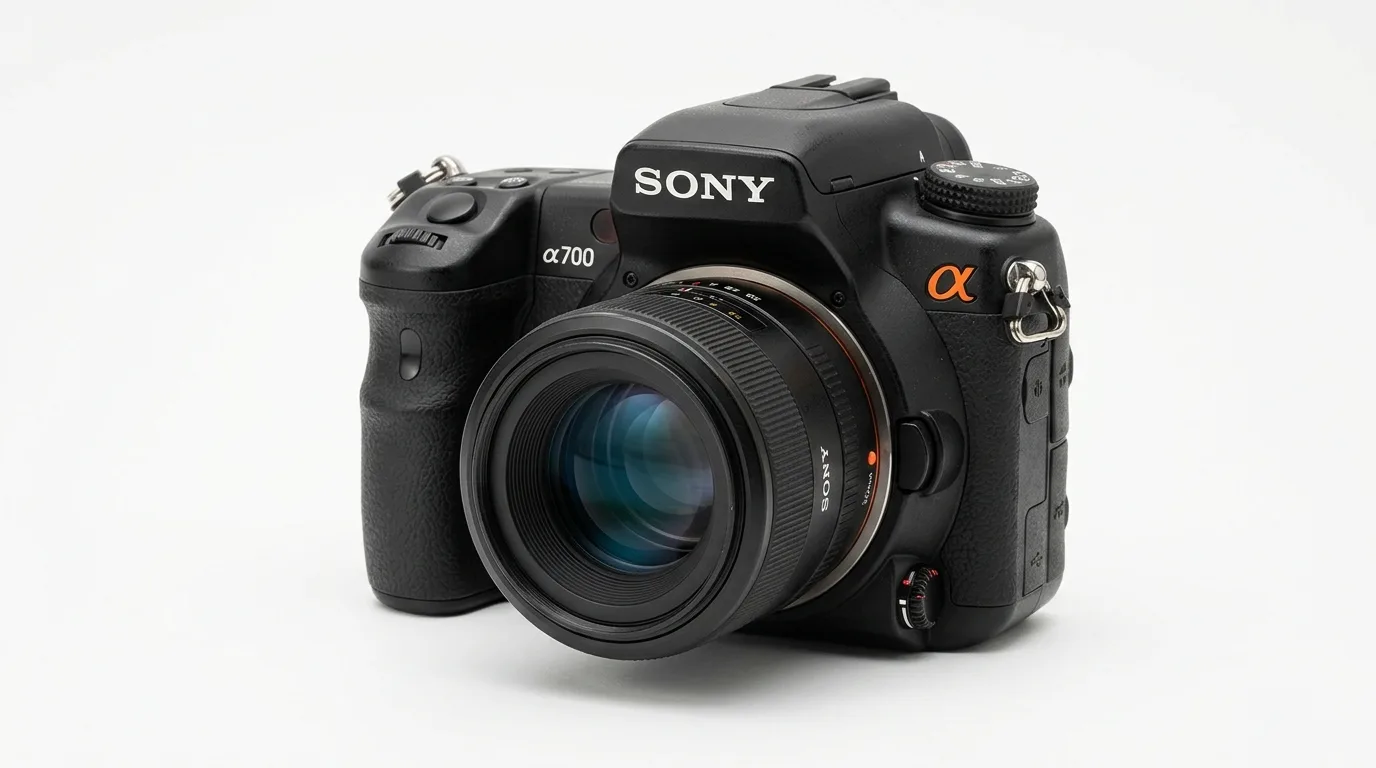
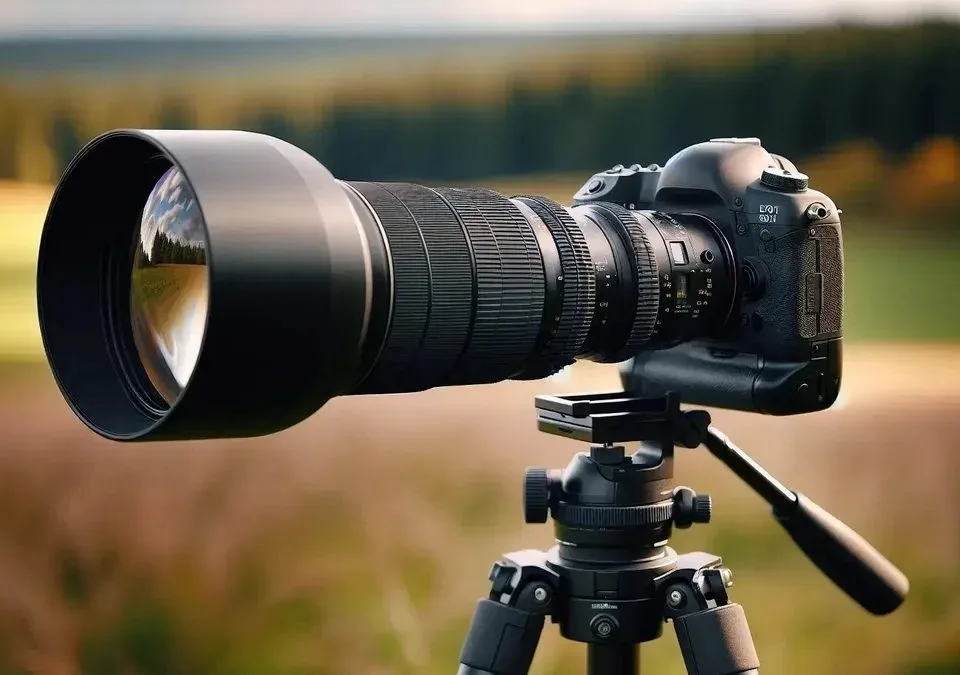
Short answer: DSLR stands for Digital Single-Lens Reflex. A DSLR camera is a digital camera that uses a movable mirror inside the body to reflect light from the lens up into an optical viewfinder, so you frame your shot through the exact same lens that captures the photo. When you press the shutter button, the mirror flips up out of the way and light travels straight to the image sensor.
If you have shopped for a “real camera,” you have almost certainly seen the acronym DSLR. For two decades it was the default for everyone from wedding photographers to hobbyists. But the market has shifted fast: mirrorless cameras now dominate new sales, and in September 2026 even Pentax — long the last holdout — announced it was ending production of its current K-series DSLRs.
So what does DSLR actually mean, how does one work, and is it still worth buying in 2026? This guide breaks down the DSLR meaning, the mirror and viewfinder mechanism, compares DSLRs to mirrorless and point-and-shoot cameras, and gives honest 2026 buying advice.
What Does DSLR Stand For?
The DSLR acronym expands to Digital Single-Lens Reflex. Each word describes a specific part of the design:
- Digital — Instead of film, a solid-state image sensor (CMOS, in every modern model) records the picture and saves it as a digital file to a memory card.
- Single-Lens — The same lens is used both for framing (through the viewfinder) and for taking the picture. This eliminates the parallax error you get with rangefinders or twin-lens reflex cameras, where the viewing lens and taking lens are separate. Note that “single-lens” does not mean the camera only accepts one lens — DSLRs have interchangeable lenses.
- Reflex — A hinged mirror sits at a 45-degree angle behind the lens and reflects (bounces) light upward into the viewfinder. The word “reflex” comes from this reflection of light.
A DSLR is therefore a type of SLR (Single-Lens Reflex) camera. “SLR” usually means the film version; “DSLR” specifies digital. Sensor size does not change the definition — both APS-C crop bodies and full-frame bodies are DSLRs, as long as they use the reflex-mirror optical viewfinder. For a deeper technical breakdown, see DSLR on Wikipedia; for a beginner walkthrough, try this DSLR beginner guide.
How a DSLR Works
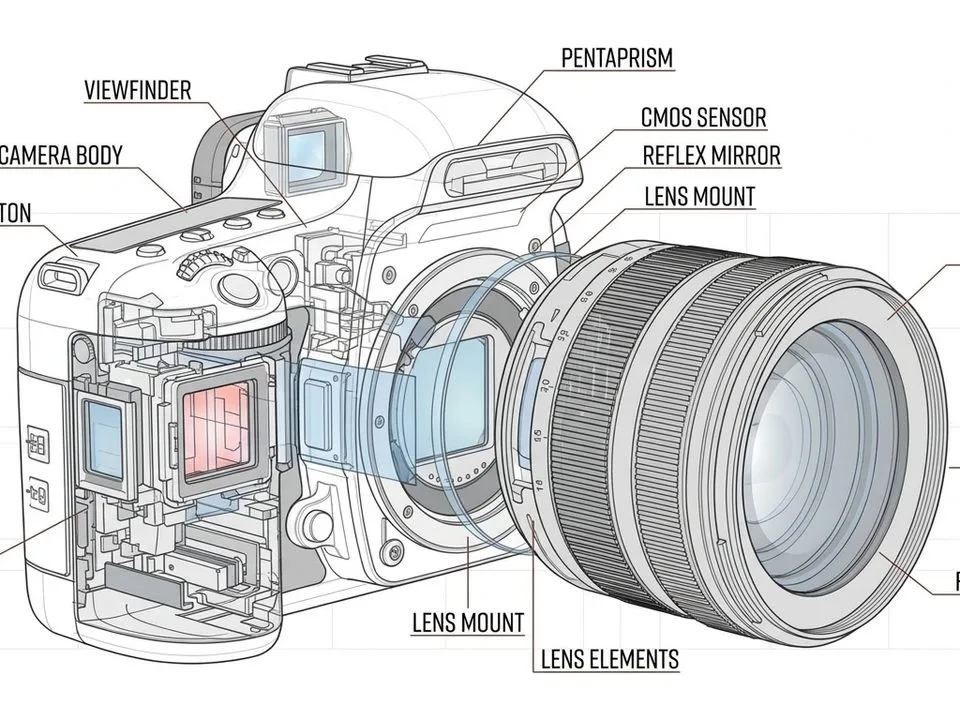
The magic of a DSLR is the light path. Here is exactly what happens from the moment light enters the lens to the moment the photo is saved.
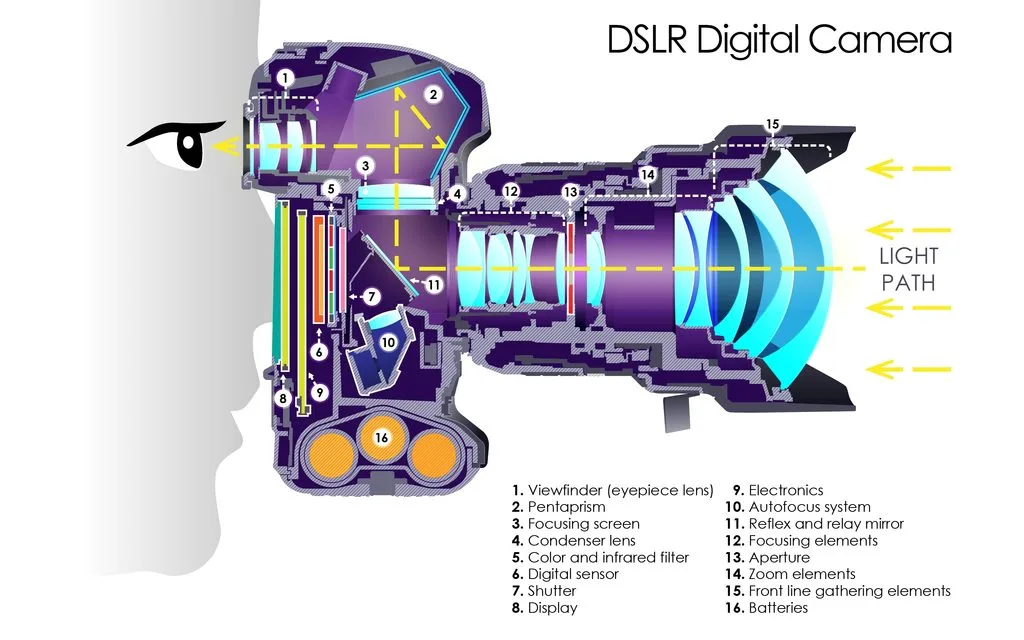
- Light enters through the interchangeable lens. The aperture blades inside the lens control how much light gets through, just like the pupil of your eye.
- The reflex mirror, sitting at 45 degrees, reflects most of that light upward. It is semi-transparent, so a small portion passes straight through it.
- The reflected light passes through a matte focusing screen and a condenser lens, then hits a pentaprism (or a cheaper, lighter, slightly dimmer pentamirror on entry-level bodies). The prism bounces the light around several times to correct the upside-down, left-right-flipped image and send it to the optical viewfinder (OVF) eyepiece. This is what you see when you put your eye to the camera.
- The small portion of light that passed through the main mirror hits a secondary sub-mirror behind it, which directs that light downward to a dedicated phase-detection autofocus sensor — a separate chip from the imaging sensor. This is the detail most beginner explanations skip, and it is why DSLR autofocus through the viewfinder is fast but tends to cover only the central part of the frame and can occasionally need micro-adjustment for front- or back-focus.
- When you press the shutter, the mirror flips up. You see a brief viewfinder blackout and hear the characteristic “clack.” The focal-plane shutter opens, and light strikes the imaging sensor for the set exposure time.
- The image processor converts sensor data into a JPEG or RAW file and writes it to the memory card. The shutter closes, the mirror drops back to 45 degrees, and the viewfinder goes live again. Pro bodies repeat this at 11 to 14 frames per second.
In Live View mode, the mirror locks up and the rear LCD shows a live feed from the sensor. Autofocus in Live View was historically slower because it relied on contrast detection, though Canon’s Dual Pixel CMOS AF (introduced in 2013) brought on-sensor phase detection to many later DSLRs. The processor writes both JPEG and RAW files; if you are unsure which to shoot, this RAW vs JPEG breakdown helps you decide. Canon’s own technology page explains how Canon DSLRs work in terms of four core components: the lens, the optical viewfinder, the image sensor, and the image processor.
Key Components of a DSLR
Every DSLR shares the same core parts. For a deeper tour of every button and dial, this guide to the parts of a camera covers them in detail.
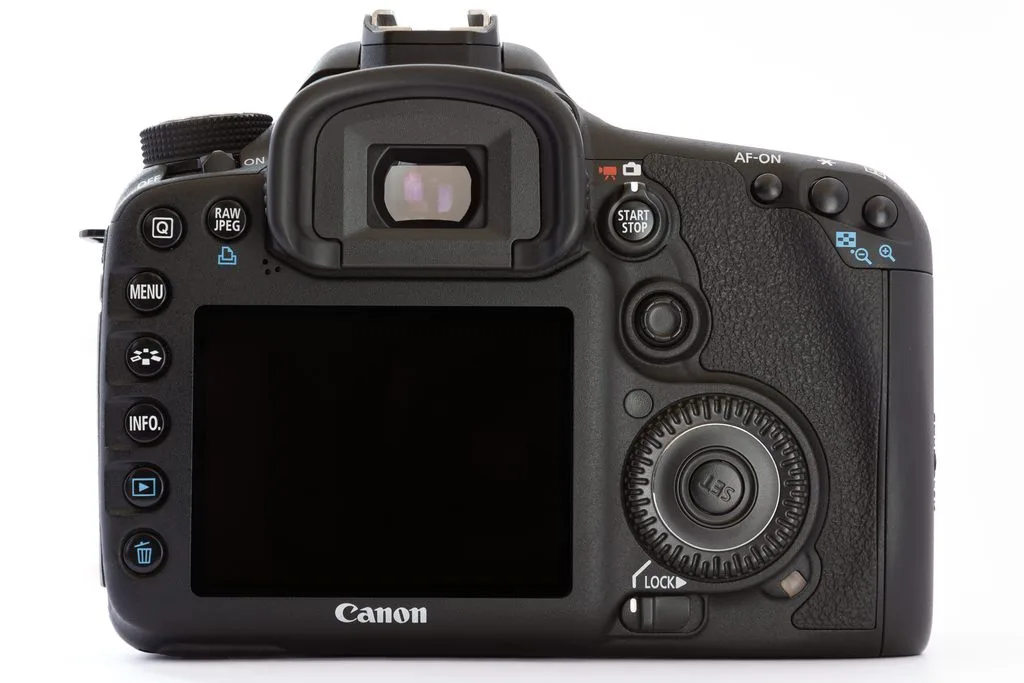
- Interchangeable lens and lens mount — The metal bayonet on the front of the body (Canon EF/EF-S, Nikon F, Pentax K, Sony A) accepts lenses from the manufacturer and third parties like Sigma and Tamron.
- Reflex mirror and secondary sub-mirror — The 45-degree hinged mirror that flips up on exposure, plus the smaller mirror behind it that feeds light to the AF sensor.
- Pentaprism or pentamirror — The block (glass prism or mirrored box) on top of the body that corrects and redirects the image to the viewfinder. Pro bodies use glass pentaprisms; entry bodies use lighter pentamirrors.
- Optical viewfinder (OVF) eyepiece — The window you look through. It shows a true optical image with zero lag and no battery drain, but it cannot preview exposure or white balance.
- Dedicated phase-detect AF module — The separate autofocus sensor at the bottom of the mirror box.
- Focal-plane shutter — The curtain in front of the sensor that opens and closes to control exposure time.
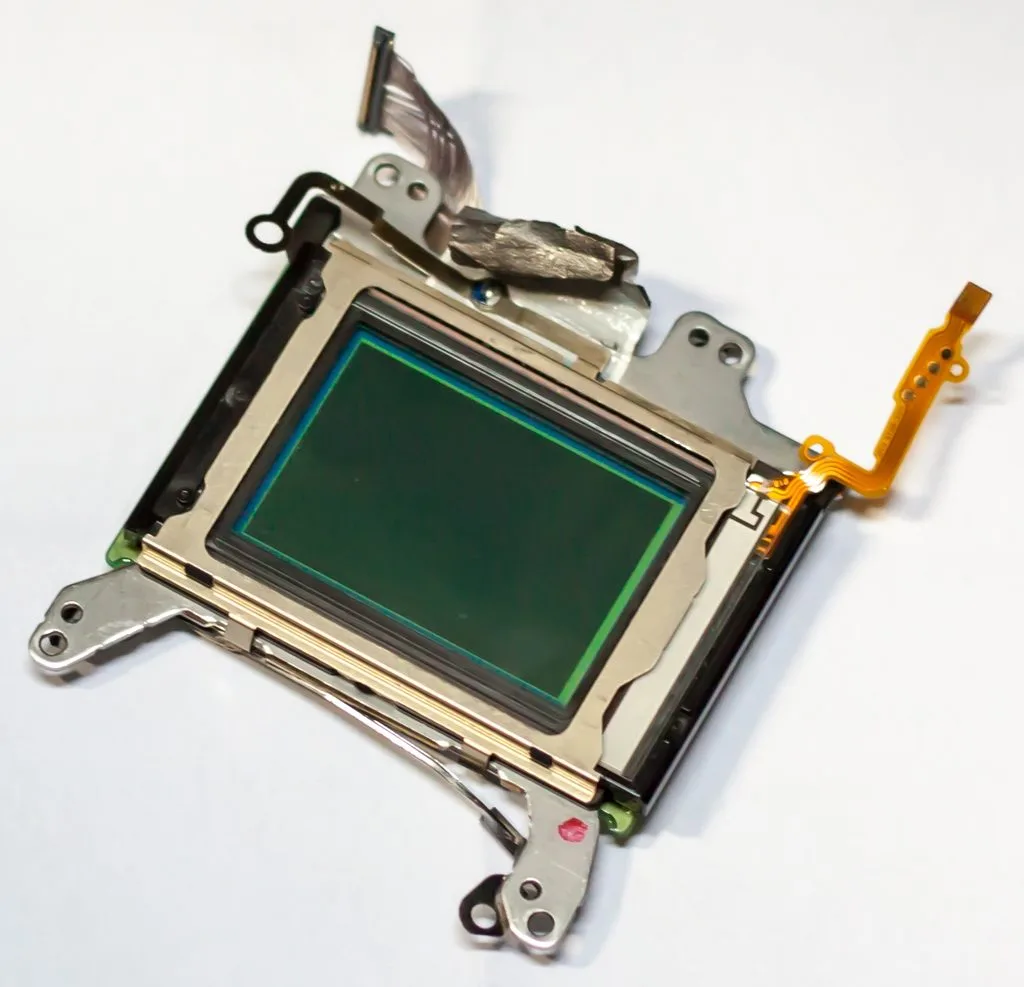
- Imaging sensor — The CMOS chip that captures the image, either full-frame (36 x 24 mm) or APS-C crop.
- Image processor — The chip that converts sensor data into files, applies noise reduction, and handles video encoding.
- Memory card slot, battery, rear LCD, hot shoe, mode dial, and control dials — The supporting hardware. Pro bodies add magnesium alloy frames and weather sealing; entry bodies use polycarbonate.
If you are just starting out, learning what is ISO — alongside aperture and shutter speed — is the fastest way to take control of those dials.
DSLR Pros and Cons
The DSLR design is half a century old, refined to near-perfection. That maturity is both its biggest strength and its biggest limitation.
| Pros | Cons |
|---|---|
| Optical viewfinder with zero lag, no pixel structure, and no battery drain | Larger and heavier due to the mirror box and pentaprism hump |
| Excellent battery life — commonly 800–3,000 shots per charge vs 300–700 for mirrorless | Mirror blackout and audible “clack” — bad for quiet events or skittish wildlife |
| Rugged magnesium-alloy, weather-sealed pro bodies with long-lasting mechanical shutters | OVF is not WYSIWYG — you cannot preview exposure, white balance, or picture style; you must chimp on the rear LCD |
| Massive used market — pro bodies and legacy lenses at a fraction of original price | Video was an afterthought; older models have slow Live View AF and limited 4K codecs |
| Deep grips, dedicated buttons, and tactile muscle-memory controls | No in-body stabilization on most models (Pentax is the exception) — only lens-based IS |
| Fast, proven phase-detect AF through the viewfinder | Manufacturers have stopped development — no new bodies, lenses, or firmware features are coming |
The optical viewfinder is what loyalists love most. Pure glass means it never refreshes, never shows pixels, and never drains the battery. But it also means you are not seeing what the sensor sees — exposure, white balance, and creative filters are invisible until you review the shot on the rear LCD.
DSLR vs Mirrorless vs Point-and-Shoot
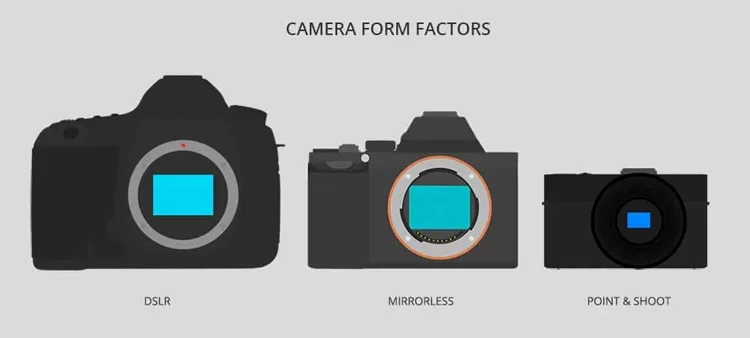
The single most common question alongside “what’s a DSLR” is whether to buy a DSLR or go mirrorless. Here is how the three main camera types compare.
| Feature | DSLR | Mirrorless | Point-and-Shoot / Compact |
|---|---|---|---|
| Reflex mirror + OVF | Yes | No — uses electronic viewfinder or rear LCD | No |
| Interchangeable lenses | Yes | Yes | No (fixed lens) |
| Autofocus | Dedicated phase-detect sensor, central coverage | On-sensor phase detect, ~90–100% frame coverage, AI eye/animal/vehicle tracking | Contrast or on-sensor, limited |
| Preview of exposure | No (OVF is optical) | Yes (WYSIWYG EVF/LCD) | Yes (LCD) |
| In-body stabilization | Rare (Pentax only) | Standard on most models above ~$1,000 | Rare |
| Video capability | Limited on older bodies; 4K on later models | Superior — 4K60/120, 10-bit, LOG, ProRes, active cooling | Basic 4K on premium compacts |
| Shutter sound | Audible mirror slap | Silent electronic shutter option | Usually quiet |
| Size and weight | Larger, heavier | Smaller, lighter | Smallest |
| Battery life | 800–3,000 shots | 300–700 shots | 200–400 shots |
| Used lens ecosystem | Enormous and cheap | Growing but smaller | Not applicable |
The critical distinction is not “DSLR vs mirrorless” but “camera with a reflex mirror vs camera without one.” A removable lens alone does not make a camera a DSLR — mirrorless cameras also have interchangeable lenses. What separates a DSLR is the mirror and optical viewfinder. Point-and-shoot compacts, by contrast, have a fixed lens and fully automatic operation, though a few advanced compacts like the Ricoh GR IIIx pack an APS-C sensor and RAW capture.
For a deeper 2026 breakdown of who still makes each type, see this mirrorless vs DSLR 2026 comparison. If mirrorless fits you better, these are the best mirrorless cameras available now.
Sensor Sizes & Lens Ecosystem
Two specs matter more than any other when you pick a DSLR: the sensor size and the lens mount. They determine everything from low-light image quality to how much you will spend on glass over the next decade.
| Format | Dimensions | Crop factor | Notes |
|---|---|---|---|
| Full-frame (35mm) | 36 x 24 mm | 1.0x | Matches the classic 35mm film frame; best low-light performance, shallowest depth of field, widest wide-angle options |
| APS-C (Nikon DX, Pentax, Sony) | ~23.5 x 15.6 mm | ~1.5x | Roughly 10% larger in area than Canon APS-C |
| APS-C (Canon) | ~22.3 x 14.9 mm | ~1.6x | Canon EF-S lenses project a smaller image circle and will not fit full-frame Canon bodies |
Both produce a 3:2 aspect ratio. A full-frame sensor is about 63% larger in area than Canon’s APS-C — more light gathering, cleaner high-ISO images, shallower background blur. Crop factor is an effective focal-length multiplier: a 50mm lens on Canon APS-C gives roughly the field of view of an 80mm lens on full-frame, which is why crop bodies suit wildlife and sports shooters wanting extra telephoto reach. If megapixels and print size matter, see where current models rank among the highest resolution cameras and what best DPI for printing means for your prints
The lens mount is your long-term commitment. Canon EF (full-frame) and EF-S (APS-C) dominated the 2000s and 2010s, though Canon wound down EF lens production in 2023. Nikon’s F mount dates back to 1959, giving it one of the largest lens catalogs in history. Pentax’s K mount has been around since 1975, and Sony’s A mount was discontinued after the A99 II in 2016. Because DSLRs require a long flange focal distance (the gap from mount to sensor, roughly 44–46.5 mm) to fit the mirror, while mirrorless bodies need only 16–20 mm, adapters like Canon’s EF-to-RF, Nikon’s FTZ II, and Sony’s LA-EA5 let you use beloved DSLR lenses on modern mirrorless bodies — a key reason the used DSLR lens market stays so liquid.
Who Should Buy a DSLR in 2026 (and Who Should Go Mirrorless)
This is where the 2026 market reality matters most. As of late 2026, every major camera manufacturer has stopped developing new DSLRs. Canon’s last new DSLR was the EOS-1D X Mark III in January 2020; Nikon’s were the D6 and D780 in February 2020; Sony went mirrorless-only after the A99 II in 2016. The biggest news came on September 8–9, 2026, when Ricoh Imaging published “PENTAX Digital SLR Cameras Aim for a New Stage,” officially ending production of all current Pentax K-series DSLRs — the KF, K-3 Mark III, K-3 Mark III Monochrome, and K-1 II — while promising a future K-mount DSLR series based on an “entirely new concept,” with no specs or release date. You can read the full Pentax K-series production end coverage for the details.
CIPA shipment data tells the same story: in 2025, roughly 6.3 million mirrorless cameras shipped versus about 691,000 DSLRs — DSLRs are now only around 10% of interchangeable-lens volume and falling fast. Pentax’s own DSLR definition page still champions optical viewfinders and rugged bodies, but it has not caught up with its own September announcement.
So are DSLRs dead? Not as products — millions are in use and the used market is thriving — but they are dead as a category of new development. That changes the buying calculus.
Buy a DSLR in 2026 if:
- You find a used pro body (Nikon D850, Canon 5D Mark IV, Pentax K-1 II) at a steep discount and you shoot mostly stills.
- You already own a collection of EF, F, or K-mount lenses and want to keep using them natively.
- You value optical viewfinder purity, long battery life, and tactile controls over the latest autofocus and video features.
- You shoot in harsh conditions and want a weather-sealed tank of a body.
Go mirrorless if:
- You shoot video regularly or want modern features like AI subject tracking, in-body stabilization, silent shutter, and a WYSIWYG viewfinder.
- You are starting from scratch with no existing lens investment.
- You want a smaller, lighter kit for travel or street photography.
- You care about future firmware updates and new lens releases.
Brief History & Future of DSLRs
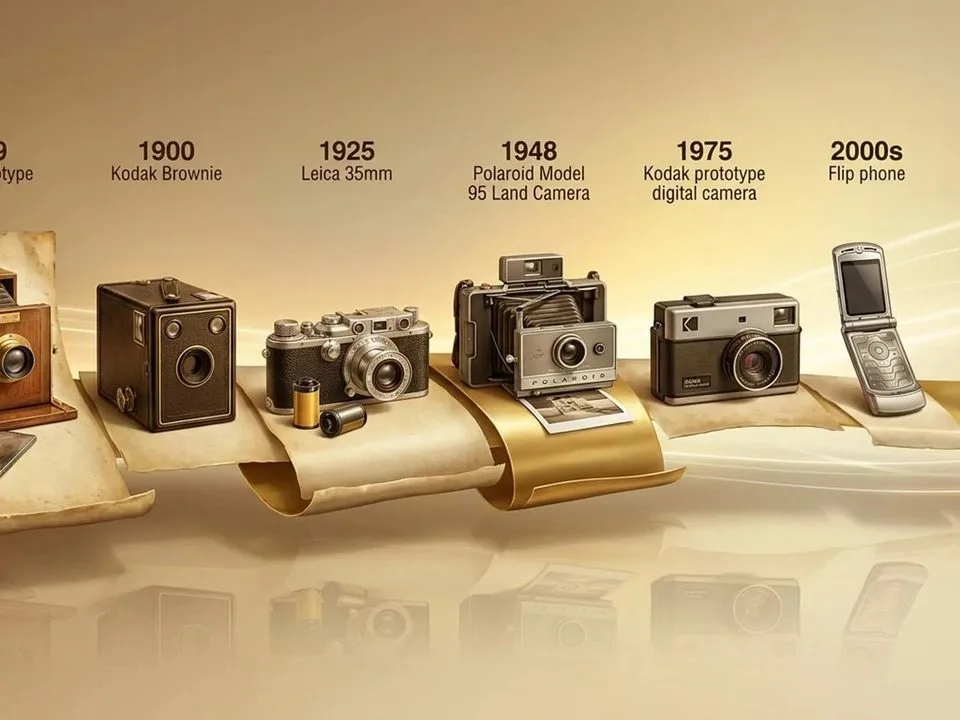
The DSLR story bridges the film and digital eras. Here is the condensed timeline
- 1975 — The first digital camera. Kodak engineer Steven Sasson builds a portable, battery-operated digital still camera using a Fairchild 100-by-100-pixel CCD, a Super 8 movie-camera zoom lens, and a cassette tape for storage. It weighs about 3.6 kilograms and is not a DSLR, but it proves the digital concept.
- 1991 — The first commercial DSLR. Kodak releases the DCS 100, a modified Nikon F3 film body with a 1.3-megapixel Kodak CCD. It sells for roughly $20,000–25,000 and stores images on a separate shoulder-mounted digital storage unit.
- 1999 — Nikon changes the game. The Nikon D1, released June 15, is the first DSLR designed and built from scratch by a major camera maker rather than a converted film body. Its 2.74-megapixel APS-C sensor and roughly $5,500 price tag displace Kodak in the professional market.
- 2003 — The consumer boom. Canon’s EOS 300D / Digital Rebel arrives at 6.3 megapixels and $999, putting DSLRs within reach of hobbyists. Nikon’s D70 follows as its main rival.
- 2008 — Video arrives. The Nikon D90 becomes the first DSLR to record video, and later that year the Canon 5D Mark II launches full-HD video, sparking the “DSLR video revolution” that upended independent filmmaking.
- 2010s — Mirrorless rises. Sony, Fujifilm, Olympus, and Panasonic pour resources into mirrorless. By the end of the decade, Canon and Nikon both launch their own mirrorless mounts (RF and Z).
- 2020 — The last new DSLRs. Canon’s 1D X Mark III and Nikon’s D6/D780 are the final all-new DSLRs from the big two.
- September 2026 — Pentax ends current K-series production. Every manufacturer has now wound down its current DSLR lines. Ricoh promises a future new-concept K-mount DSLR, but no specs or timeline have been announced. The DSLR’s future, if it has one, is niche and enthusiast-driven.
Buying Tips for a DSLR in 2026
If you decide a DSLR is right for you, the used market is where the value is. New DSLRs in 2026 are largely residual stock from discontinued lines.
New (while supplies last): Canon EOS Rebel T8i / 850D (entry); Nikon D7500 (mid-range APS-C); Nikon D850 (high-res full-frame); Nikon D6 (pro sports); Pentax K-3 Mark III and K-1 II (weather-sealed, stabilized — out of production since September 2026, so remaining stock is your last chance).
Used (where the smart money goes):
- Beginner: Nikon D3500 or Canon Rebel series — cheap, light, excellent image quality for learning.
- Enthusiast full-frame: Nikon D750, D810, or D850; Canon 5D Mark III or IV. The D850’s 45.7-megapixel backside-illuminated sensor still competes with bodies costing twice as much.
- APS-C wildlife/sports: Nikon D500 or Canon 90D — fast, rugged, and the crop factor gives you free telephoto reach.
- Landscape/stabilized: Pentax K-1 II — full-frame with in-body stabilization and Pixel Shift, unique among DSLRs.
Used-market checklist: check shutter count (pro shutters are rated 150,000–400,000 actuations), inspect the mirror and focusing screen, test viewfinder AF for front/back focus, verify the sensor has no dead pixels or stains, and buy from a seller with a return window. Factor in memory cards — a 32GB card holds far fewer RAW files than JPEGs, so size up if you shoot RAW. For capacities across sizes, this memory card capacity guide covers 32GB through 256GB.
After the shoot, back up your keepers to cloud photo storage, and when exporting for the web you can resize without quality loss to keep files fast-loading.
Frequently Asked Questions
What does DSLR stand for?
DSLR stands for Digital Single-Lens Reflex. It describes a digital camera that uses a movable mirror to reflect light from the lens into an optical viewfinder.
What is the difference between SLR and DSLR?
An SLR (Single-Lens Reflex) uses film, while a DSLR (Digital Single-Lens Reflex) uses a digital image sensor. Both use the same mirror-and-optical-viewfinder design.
Is a DSLR better than a mirrorless camera?
Not in 2026. Mirrorless cameras offer better autofocus coverage, in-body stabilization, superior video, silent shooting, and WYSIWYG previews. DSLRs still win on battery life, optical viewfinder purity, ergonomics, and used-market value. Which is “better” depends on what you shoot.
Do DSLRs still exist in 2026?
Yes, but no manufacturer is developing new ones. Canon and Nikon stopped after early 2020, and in September 2026 Ricoh ended production of all current Pentax K-series DSLRs while promising a future new-concept K-mount model. New DSLRs are residual stock; the used market is thriving.
Can I shoot video on a DSLR?
Yes. Video has been standard on DSLRs since the Nikon D90 in 2008, and later models like the Canon 5D Mark IV shoot 4K. However, mirrorless cameras now offer far better video features — faster autofocus, 10-bit color, LOG profiles, and active cooling — so if video is a priority, choose mirrorless.
What does “reflex” mean in DSLR?
“Reflex” refers to the reflection of light. A hinged mirror at 45 degrees reflects (bounces) light from the lens upward into the viewfinder. When you take a photo, the mirror flips up and light goes straight to the sensor.
How long does a DSLR last?
A well-maintained DSLR can last a decade or more. The mechanical shutter is the main wear item, rated for roughly 150,000–400,000 actuations on pro bodies. Because manufacturers have stopped development, the bigger limit for modern shooters is outdated autofocus and video technology, not hardware failure.
Do professionals still use DSLRs?
Some do, especially wedding, sports, and wildlife photographers who invested heavily in lenses and prefer the optical viewfinder. But most working professionals have migrated to mirrorless for its autofocus, video, and silent-shooting advantages.