Best Professional Camera in 2026: Top Picks for Wedding, Sports, Portrait and Commercial Work
TL;DR — The Short Answer
The best professional camera for most working photographers in 2026 is the Nikon Z8: a 45.7MP stacked-sensor body with flagship AF, 8K-class video and a price near $3,400. For mixed weddings, portraits and commercial work, the Canon EOS R5 Mark II is the safest hybrid. For detail, the Sony Alpha a7R VI (66.8MP) leads full-frame resolution, while the Fujifilm GFX 100S II delivers 102MP medium-format detail near $5,400. Choose the Canon R1, Nikon Z9 or Sony Alpha 1 II for sports and wildlife; a used Canon R5 or Panasonic S1R II suits budget pros.
Why Buying a Pro Camera Is Different in 2026
The professional market has settled into mirrorless. CIPA’s official 2025 report records 9,438,876 total camera shipments, including 7,001,965 interchangeable-lens cameras; mirrorless bodies make up the large majority, while DSLR volumes are now a small share of the category (CIPA 2025 statistics). Roughly 10.6 million lenses also shipped, reinforcing that today’s body purchase is an ecosystem choice, not an isolated box (market share analysis).
That changes the buying question. “Professional” no longer means the biggest DSLR; it means stacked sensors, AI subject AF, log video and dual card slots that survive a paid assignment. The right camera now depends on your genres, your lens budget and your delivery workflow. This guide compares the current leaders, explains the specs that change results, and recommends bodies by genre so you can choose without endless scrolling.
What Makes a Camera “Professional”?
A pro camera earns the label through reliability and output, not a badge on the front. Four traits separate a good professional camera from a premium enthusiast body.
Sensor and processing
Pro bodies use full-frame, flagship APS-C or medium-format silicon, often stacked for fast readout. Stacked sensors enable silent high-speed bursts, minimal rolling shutter and modern AI tracking for faces, eyes, animals, birds and vehicles. The processor behind the sensor decides whether a fast-moving subject stays locked for ten frames or ten seconds.
Build and workflow
Look for weather-sealed magnesium bodies, dual memory-card slots, deep burst buffers, long battery life and ports for tethering, HDMI and audio. A wedding or sports shoot cannot be rescued later if the camera overheats or loses files halfway through, so durability and redundancy outrank novelty features.
Lens ecosystem
The major systems now offer dozens of native lenses plus mature third-party options from Sigma, Tamron and Samyang. Before choosing a body, map the focal lengths you shoot most: pro telephotos, wide primes and tilt-shift optics differ a lot between Canon RF, Nikon Z, Sony E and Fujifilm GFX mounts.
How This Guide Was Built
We compared hands-on reviews, manufacturer specifications and current street prices, judging bodies by the criteria below. The same factors drive specialist roundups such as Digital Camera World’s pro guide and TechRadar’s professional camera roundup.
- Image quality: resolution, dynamic range, high-ISO files and RAW flexibility.
- Autofocus: subject detection, eye AF, low-light performance and tracking.
- Speed: frame rate, buffer depth and blackout-free shooting.
- Video: resolution, frame rates, log profiles and overheating behavior.
- Reliability: grip, controls, sealing, battery life and dual slots.
- Value: new price, used availability and total system cost.
- Genre fit: weddings, sports, portraits, landscape or commercial work.
Prices reflect late-2026 street prices; check current retailer listings, since flagship bodies often drop after new announcements.
Best Professional Cameras at a Glance
| Model | Sensor / Resolution | Key Strength | Typical Body Price | Best For |
|---|---|---|---|---|
| Nikon Z8 | Full frame, 45.7MP stacked | Flagship features in a compact body | ~$3,400 | All-round pro |
| Canon EOS R5 Mark II | Full frame, 45MP stacked | Strong AF, 8K RAW, hybrid shooting | ~$4,300 | Weddings, video hybrids |
| Sony Alpha a7R VI | Full frame, 66.8MP stacked | Highest full-frame detail, great DR | ~$4,500 | Studios, landscape, prints |
| Sony Alpha 1 II | Full frame, 50.1MP stacked | 30fps blackout-free, AI tracking | ~$7,000 | Speed plus resolution |
| Canon EOS R1 | Full frame, 24.2MP stacked | 40fps, cross-type AF, integrated grip | ~$6,800 | Sports, press, wildlife |
| Fujifilm GFX 100S II | Medium format, 102MP | Large-sensor detail at near-pro-FX price | ~$5,400 | Portrait, studio, commercial |
| Sony Alpha a7CR | Full frame, 61MP | Compact high-resolution body | ~$3,400 | Travel, street, detail work |
Top Picks: The Best Professional Camera for 2026
Best All-Rounder: Nikon Z8
The Z8 packs the Z9’s image engine into a smaller body, and that makes it the easiest recommendation here. Its 45.7MP stacked CMOS sensor shoots 20fps raw and 30fps JPEG bursts, records 8.3K/60p N-RAW and 4K/120p, and writes to both CFexpress Type B and SD UHS-II cards. Tracking for people, animals and vehicles stays dependable in dim wedding light, and the grip balances short primes and long telephotos alike.
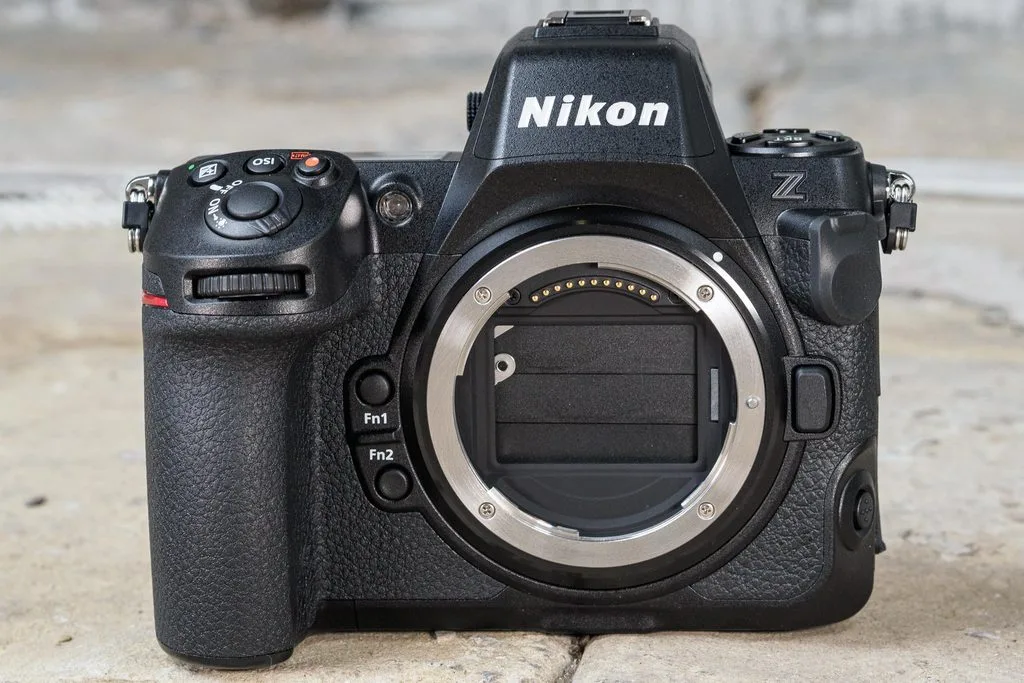
Why it wins: near-Z9 quality at roughly 910 grams; dual slots and deep buffer; new prices near $3,400 with used examples around $2,800–3,100. Trade-offs: the Z telephoto lineup is shallower than Sony’s, and the menus take practice. It suits wedding shooters, photojournalists and landscape pros wanting one body for everything.
Best Hybrid Flagship: Canon EOS R5 Mark II
The R5 Mark II pairs a 45MP stacked sensor with a dual-processor AF system delivering 30fps electronic bursts, eye-controlled AF and simultaneous photo-plus-video capture. Its 8K RAW recording, Canon Log 2 and 13-stop video dynamic range make it a favorite when clients expect both stills and clips from one shoot.
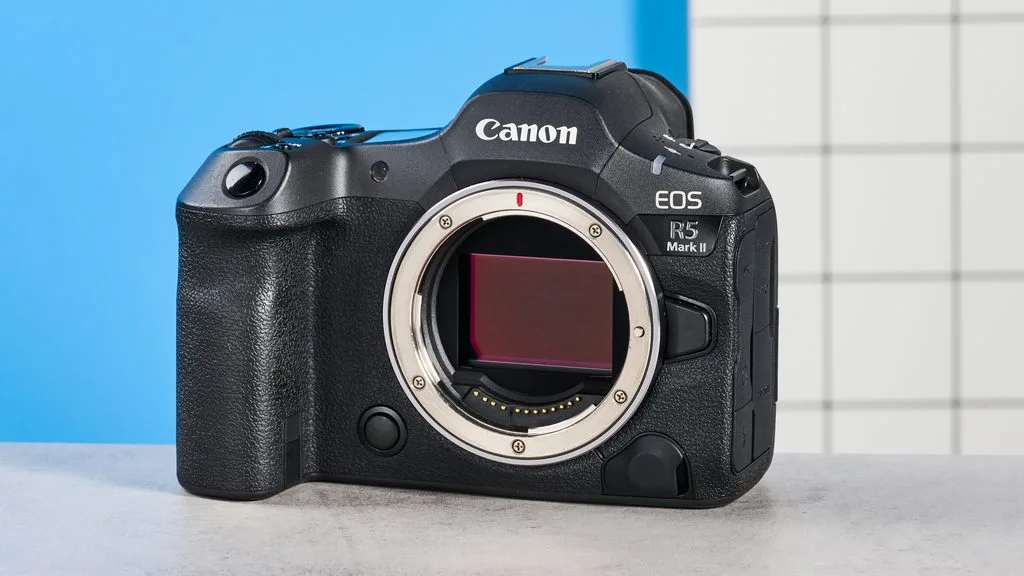
Why it wins: People Priority and Action Priority AF track moving subjects with little manual work; the RF lens system spans wide primes to 600mm telephotos; estimated retail around $4,299, often promoted near $3,999. Trade-offs: long 8K runs can heat the body, and spare batteries are wise. It leads for wedding films, commercial hybrids and Canon studios.
Best Resolution: Sony Alpha a7R VI
Sony’s newest R-series uses a 66.8MP fully stacked Exmor RS sensor with a BIONZ XR2 processor and built-in AI, finally adding speed to the line’s resolution strength. It runs 30fps-plus blackout-free bursts at full pixels, records 4K/120p, and retains class-leading dynamic range for skies, skin tones and product detail. For more options across this category, compare the wider field of resolution leaders.
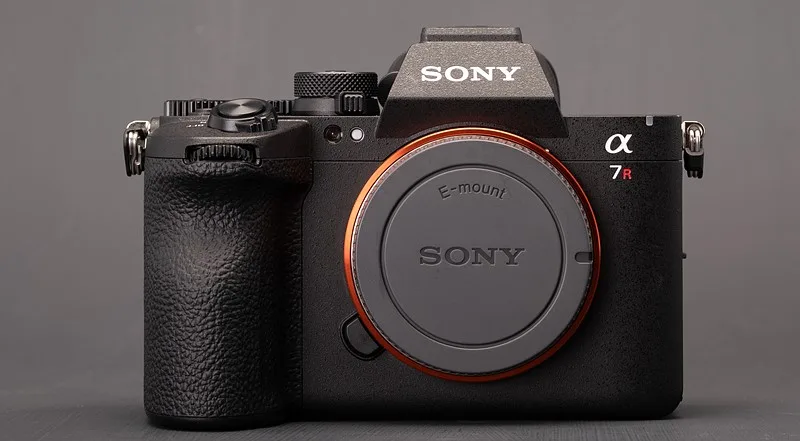
Why it wins: outstanding pixel density for large prints and heavy retouching; modern subject AF; $4,499.99 launch pricing. Trade-offs: very fast electronic bursts show some rolling shutter, and 66MP files demand fast cards and strong editing hardware. It fits studios, fine-art printers and detail-heavy landscape work.
Best Speed-and-Resolution Flagship: Sony Alpha 1 II
The A1 II targets sports and wildlife photographers who refuse to choose between speed and pixels. Its 50.1MP stacked sensor delivers 30fps blackout-free bursts, AI recognition for humans, animals, birds, insects, cars, trains and airplanes, plus about one second of Pre-Capture before the shutter fires. Official pricing starts at $6,999.99.
Why it wins: high resolution plus pro speed in a roughly 743g body; 8K/30p and 4K/120p video; deep Sony GM telephoto options. Trade-offs: expensive and menu-heavy for switchers. It best serves action pros who sell both stills and video.
Best Sports Flagship: Canon EOS R1
The R1 pairs a 24.2MP stacked sensor with the first cross-type on-sensor AF points, 40fps electronic bursts, a 9.44-million-dot EVF and an integrated vertical grip. It records 6K/60p RAW and 4K/120p, offers pre-continuous capture for about half a second, and currently sits near $6,799 in the US.
Why it wins: reliable tracking for erratic action; built-in grip and broadcast ports; consistent color science editors retouch quickly. Trade-offs: lower resolution than the R5 Mark II, so it favors action over studio prints. For more action systems, see CameraLookout’s sports guide.
Best Medium-Format Value: Fujifilm GFX 100S II
The GFX 100S II pairs a 102MP 43.8 × 32.9mm sensor with an X-Processor 5, AF down to -6EV, eight-stop IBIS and dual SD UHS-II slots. It shoots 7fps mechanically, offers 16-bit HQ RAW, F-Log2 video above 13 stops of dynamic range and a 400MP pixel-shift mode. Street prices cluster near $5,399, far below traditional medium format (Fstoppers’ medium format roundup).
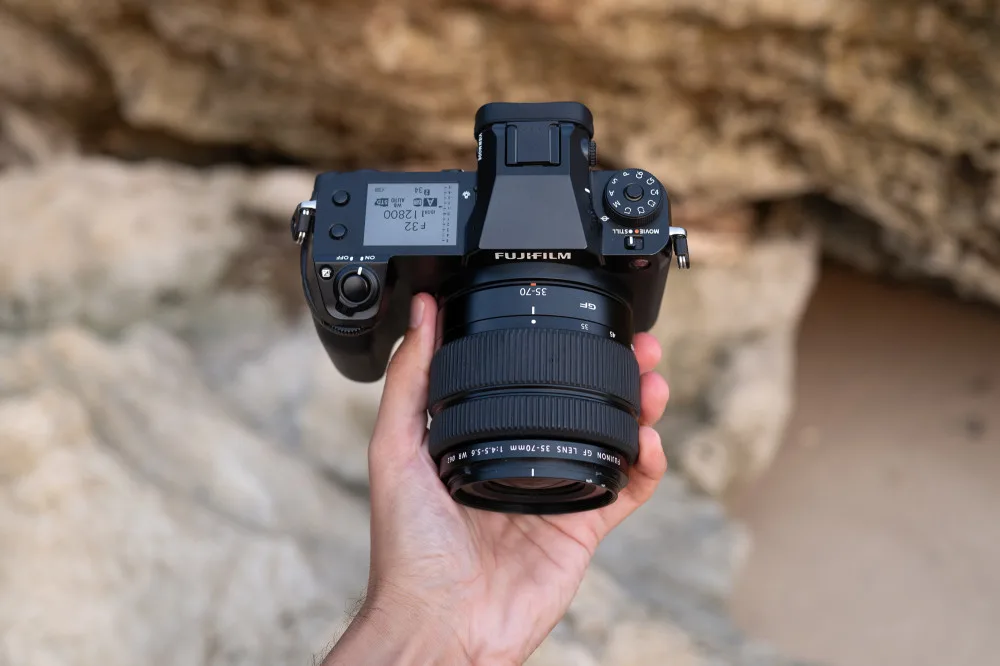
Why it wins: medium-format tonal depth and skin texture; handheld size; reliable stabilized AF. Trade-offs: burst speed trails full-frame flagships and GF lenses are pricey. Portrait, fashion and commercial studios benefit most.
Best Compact High-Res Option: Sony Alpha a7CR
The a7CR packs a 61MP BSI sensor into a small rangefinder-style body with 4K/60 10-bit video, typically near $3,398. Its modest EVF and lack of a mechanical shutter limit action use, but it makes an excellent travel, street or editorial second body.
Best Budget Professional Route
Used gear remains a legitimate pro path. The original Canon R5 still works as a 45MP workhorse, with used units often from roughly $1,800–2,600, while the Panasonic Lumix S1R II offers high resolution and pro video features around $3,300, though its AF trails the big three. Spending more on lenses than bodies usually improves image quality sooner.
Best Professional Camera by Genre
The “best camera” changes with the job. The table maps genres to strong current bodies, with short notes below.
| Genre | Top Recommendations | Why |
|---|---|---|
| Weddings & events | Nikon Z8, Canon R5 Mark II, Sony A7 IV | Fast AF, dual slots, low-light stability |
| Sports & wildlife | Canon R1, Nikon Z9, Sony A1 II, Sony A9 III | High fps, tracking, telephoto support |
| Portraits & studio | GFX 100S II, Canon R5 II, Sony a7R VI | Resolution, tonal depth, tethering |
| Landscape & architecture | Sony a7R VI, GFX 100S II, Nikon Z8 | Dynamic range, detail, tilt-shift options |
| Commercial & e-commerce | GFX 100S II, Canon R5 II, Sony a7R VI | Pixel density, color consistency |
| Photo + video hybrid | Canon R5 II, Sony A7S III, Nikon Z6 III | Log video, high frame rates, IBIS |
| Street & travel | Sony a7CR, Fujifilm X100VI, Leica Q3 | Size, discretion, fast primes |
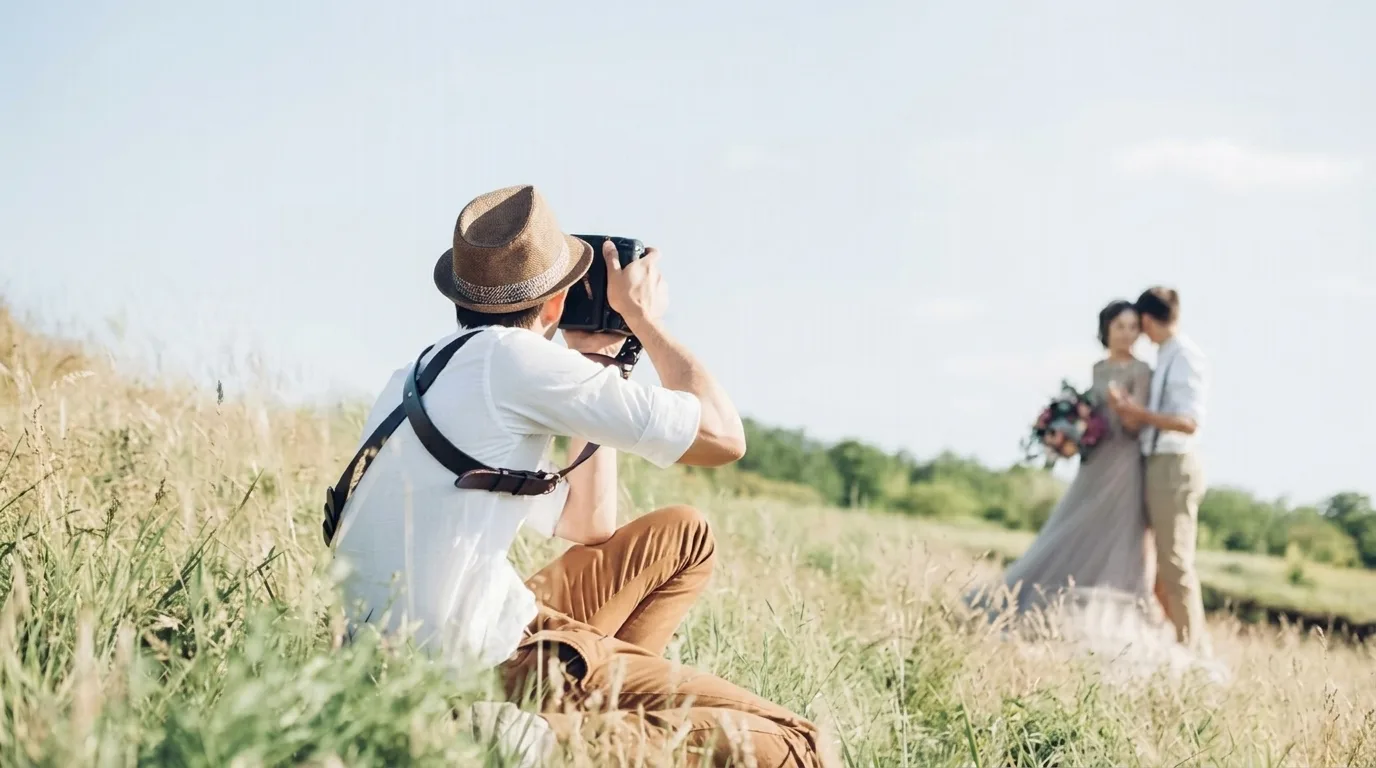
Weddings and events
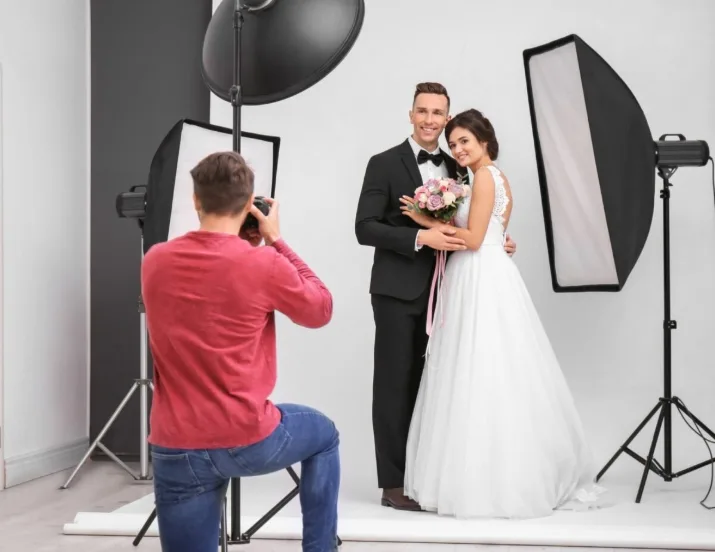
Wedding bodies need eye AF in dim reception light, weather sealing, dual slots and batteries for ten-hour days. The Z8 and R5 Mark II lead because they track moving guests while capturing video for highlight films; the Sony A7 IV remains a capable budget workhorse. Client posing and delivery workflows are explored in portrait photography guidance.
Sports and wildlife
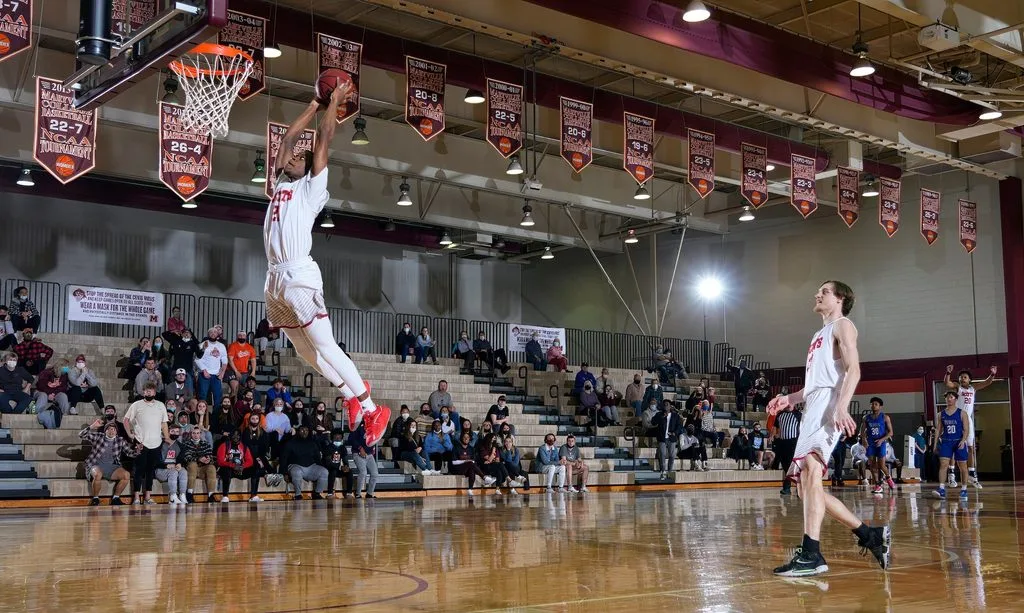
This genre is defined by frame rate, tracking and buffer depth. The R1 and Z9 are endurance flagships with grips and deep buffers; the A1 II adds 50MP at 30fps; the A9 III’s global shutter reaches 120fps with no rolling distortion. Pair the body with a fast f/2.8 telephoto—glass matters more than a small sensor upgrade here.
Portraits and studio work
Studio work rewards resolution and tonal smoothness over speed. The GFX 100S II renders skin and fabric detail full-frame cameras must fight for, while the R5 Mark II and a7R VI deliver excellent results with tethered shooting. Lighting and retouching matter as much as the sensor; a typical pipeline is covered in retouching guidance.
Landscape and architecture
Landscape work needs dynamic range, resolution and disciplined lenses rather than speed. The a7R VI and GFX 100S II dominate detail; the Z8 offers a lighter option with strong highlight retention. Tilt-shift lenses, filters and focus stacking usually improve the final image more than a flagship body upgrade.
Commercial and e-commerce
Product photography demands repeatable color, sharp detail and efficient capture-to-delivery flow. High-megapixel full-frame or medium-format bodies handle catalog work well, and a standardized product workflow produces consistency no sensor can supply alone. Online sellers also need fast turnaround, so tethering software and storage matter as much as pixels.
Video-first hybrids
When half the brief is video, check 10-bit log recording, stabilized sensors, clean HDMI and cooling behavior. The R5 Mark II, Sony A7S III, Nikon Z6 III and Panasonic S5 IIX balance codec and ergonomics differently; cinematographers prioritize video specs, stills photographers the reverse.
Key Buying Decisions Before You Spend
Sensor size
Full frame measures roughly 36 × 24mm; APS-C around 24 × 16mm with a 1.5–1.6x crop; Fujifilm GFX medium format measures 43.8 × 32.9mm, about 1.7 times full-frame area. Full frame remains the pro default, medium format trades speed for tonal depth, and APS-C flagships offer reach and value for travel and wildlife.
Megapixels
Forty-five megapixels cover most professional uses; 60–67MP suits studios and large prints; 100MP-class medium format rewards tripods and controlled light. A 24MP sports camera can out-earn a 100MP studio camera because resolution must match the final output size.
Autofocus, burst and buffer
Subject-detection AF now tracks eyes, animals, birds and vehicles across the major brands. Compare sustained buffer depth in real reviews rather than peak frame rates, and look for blackout-free bursts plus pre-capture for fleeting moments.
Video capabilities
Check maximum resolution, frame rates to 120p, 10-bit depth, log profiles such as C-Log 2, S-Log3 or N-RAW, and real-world overheating. A camera that throttles after twenty minutes of 8K remains a fine stills tool but a risky video purchase.
High ISO and low light
Dim weddings and indoor sports push ISO hard; current flagships handle clean files through ISO 6,400–12,800, but shadow noise still appears during retouching. For grain that survives editing, these tips for fixing noisy photos cover noise reduction without destroying detail.
Color management
Consistent color across capture, editing and delivery separates professionals from amateurs. Choosing between color spaces such as sRGB and AdobeRGB prevents dull prints or washed-out web files; confirm the client’s required profile before the shoot.
Budget: body or lenses first
Many buyers overspend on the body and underbuy glass. Allocate roughly 55–65% of a starting camera budget to lenses for your most-used focal lengths, keep fast cards and spare batteries in the plan, and upgrade the body only when its AF, low-light quality or video codec blocks paid work.
The Workflow Around the Camera
RAW files and backup
Shoot RAW files rather than in-camera JPEGs to preserve highlight and shadow detail for demanding edits. After each shoot, copy cards to an external drive and automated cloud backups before formatting; lost wedding originals cannot be re-shot.
Processing and delivery
Import, cull, develop consistently, then retouch selectively for skin and product flaws. Many studios outsource cleanup to specialists; this commercial photography guide covers lighting and editing expectations for product clients. For final albums and prints, use printing software with soft-proofing so screen colors match the output.
Specialty tools
Main pro bodies do most jobs, but action cameras, 360 cameras and compact viewfinder bodies fill niches such as behind-the-scenes clips and travel street shots. They complement the primary system rather than replace it.
Final Recommendation Cheat Sheet
| If You Are… | Choose… | Budget Tier |
|---|---|---|
| Wedding photographer needing one body | Nikon Z8 or Canon R5 Mark II | $3,400–4,300 |
| Sports or wildlife specialist | Canon R1, Nikon Z9 or Sony A1 II | $5,000–7,000+ |
| Studio portrait or fashion shooter | Fujifilm GFX 100S II | ~$5,400 |
| Landscape / fine-art printer | Sony a7R VI | ~$4,500 |
| Travel / street high-res shooter | Sony a7CR | ~$3,400 |
| Pro on a used-gear budget | Used Canon R5 or Panasonic S1R II | $1,800–3,300 |
| Video-first hybrid creator | Canon R5 II, Sony A7S III or Nikon Z6 III | $2,800–4,300 |
If you buy only once, choose the body whose lens ecosystem covers your three most-used focal lengths, then save flagship upgrades for the genre that pays best.
Final Takeaway
The best professional camera is the one that matches your daily assignments, not the flagship with the highest spec sheet. Most working photographers are best served by a 45MP-class body such as the Nikon Z8 or Canon R5 Mark II, paired with a fast native lens and a disciplined backup workflow. Specialize in action and the R1, Z9 or A1 II earns its price; specialize in studios and the a7R VI or GFX 100S II delivers detail clients see in every print. Set a realistic budget, buy lenses before bodies, and remember that reliable files and consistent editing matter as much as the camera on your strap.
Frequently Asked Questions
1. What is the best camera for professional photography in 2026?
The Nikon Z8 is the best all-round professional camera, with a 45.7MP stacked sensor, reliable tracking AF, 8K-class video and dual slots near $3,400. Pick the Canon R5 Mark II for hybrid photo-video work, the Sony a7R VI for resolution, the Fujifilm GFX 100S II for medium-format detail, and the Canon R1, Nikon Z9 or Sony A1 II for action.
2. Which brand makes the most reliable professional camera system?
Canon, Nikon and Sony all build dependable pro bodies; differences show in lenses and service. Canon offers a deep RF lineup and easy color science; Nikon balances ergonomics and value with the Z8; Sony leads third-party lens choice and high-resolution options. Choose the brand whose lenses you will buy over the next few years, because the ecosystem outlasts any body.
3. Do professional photographers still use DSLRs in 2026?
Some specialists keep maintained pro DSLRs and long lens collections, but the mainstream market has shifted to mirrorless. CIPA data shows DSLR shipments are now a small share of interchangeable-lens sales while mirrorless dominates with silent shooting, fast AF and strong video. A used Canon 5D Mark IV or Nikon D850 can still earn money, but new purchases are overwhelmingly mirrorless.
4. How many megapixels do I need for professional photography?
Forty-five megapixels covers weddings, events, journalism and most commercial work. Sixty to sixty-seven megapixels helps studios and large-format printers crop and enlarge, while twenty-four to thirty-three megapixels suits sports because files stay small and bursts keep running fast. Match resolution to final print or web size rather than chasing the highest number.
5. Is a full-frame sensor always better than APS-C?
Not always. Full frame offers better low-light performance and shallow depth of field, while APS-C flagships are lighter, cheaper and deliver extra telephoto reach. Fujifilm and OM System APS-C bodies shoot commercially today; the trade-off is weaker low light and a shallower premium lens lineup. Full frame is the safest general choice, but APS-C can be smarter for wildlife, travel and street.
6. Should I buy a new pro camera or a used one?
Used professional bodies offer major savings from reputable dealers with inspection warranties. Older flagships such as the original Canon R5, Sony A7R V or Nikon Z7 II still produce professional images for far less than new pricing. Check shutter count, sensor condition, battery health and card ports, and buy new if your work depends on the latest AF AI features or specific video codecs.
7. What matters more: the camera body or the lenses?
For most photographers, lenses matter more. A fast prime or sharp telephoto improves every frame, while a body upgrade mainly adds convenience features. Start with two or three high-quality native lenses for your common focal lengths, keep one solid body, and upgrade the body only when AF, low-light performance or video specs block paid assignments.
8. Which professional camera is best for sports and wildlife?
The Canon R1 and Nikon Z9 offer integrated grips, deep buffers and proven endurance; the Sony A1 II adds 50MP resolution at 30fps; the Sony A9 III delivers a global shutter at 120fps without rolling distortion. Budget alternatives such as the Nikon Z8 and Canon R5 Mark II retain most tracking performance at lower prices. Pair the body with an f/2.8 telephoto and practice AF tracking before the assignment.