Best Tripod for Camera in 2026: Top Rated Budget and Travel Picks Tested
Short Answer (TL;DR)
If you want the fastest answer: the best camera tripod for most photographers in 2026 is the Peak Design Travel Tripod — its carbon fiber version weighs about 1.27 kg, folds to 39.1 cm, and supports a 9.1 kg load. If you need the best budget tripod, the K&F Concept 64-inch aluminum model and the Manfrotto Befree Advanced AS deliver steady support for roughly $70–$150. For the top rated travel tripod under a kilogram, the SIRUI Traveler 5C and Fotopro X-Aircross 3 lead the ultralight class. Heavy telephoto and landscape shooters should step up to the 3 Legged Thing Leo 2.0 or a Feisol carbon kit. The rest of this guide compares tested models, real specs, and prices so you can match a tripod to your camera and your bag.
Why a Good Tripod Still Beats Image Stabilization
A camera tripod is a three-legged support that holds your camera still during slow shutter speeds, long exposures, timed shots, and video. Modern in-body stabilization and high ISOs help, but neither freezes a 2-second water blur, a star trail, or a locked-off clip the way solid legs do. The basics and history of camera support are covered in the Wikipedia tripod (photography) reference.
Three situations make a tripod non-negotiable. First, low light: your shutter speed drops below the handholdable threshold and shake shows up as softness. Second, long exposures: flowing water, light trails, and Milky Way frames need the camera perfectly still for seconds at a time. Third, consistency: panoramas, time-lapses, product shots, and video demand identical framing frame after frame.
The market splits into three needs this guide covers: a general best tripod for camera stability, a cheap best budget tripod that still holds your gear safely, and a top rated travel tripod that travels light. We compared manufacturer spec sheets, hands-on testing reports, and owner feedback, then grouped picks by what they do best.
Quick Comparison: Top Rated Tripods at a Glance
The table below ranks the contenders we revisit in detail. Prices are approximate USD figures seen in November 2026 retail listings; they fluctuate during sales, so check the live price before you buy.
| Pick | Best for | Weight | Folded length | Max load | Approx. price |
|---|---|---|---|---|---|
| Peak Design Travel Tripod (carbon) | Best overall travel tripod | 1.27 kg | 39.1 cm | 9.1 kg | ~$599 |
| Manfrotto Befree Advanced AS | Best mid-priced aluminum | 1.51 kg | 40 cm | 9 kg | ~$150 |
| K&F Concept 64-inch | Best budget value | ~1.2 kg | ~39 cm | ~10 kg | ~$70–$90 |
| SIRUI Traveler 5C | Best ultralight carbon value | 0.85 kg | 33 cm | ~6 kg | ~$120–$160 |
| Fotopro X-Aircross 3 | Best sub-kilogram travel pick | 0.94 kg | 36.5 cm | 10 kg | ~$169 |
| 3 Legged Thing Leo 2.0 | Best sturdy pick for heavy gear | ~1.5–1.85 kg | 35–37 cm | 30 kg | ~$370 |
| Joby GorillaPod 3K | Best flexible mini support | 0.4 kg | ~7 cm | 3 kg | ~$70–$90 |
| Amazon Basics 50-inch | Cheapest entry-level stand | 0.64 kg | ~43 cm | ~2 kg | ~$20–$30 |
Match the rows to your priority: lightest folded size points to SIRUI or Peak Design; lowest price to K&F Concept or Amazon Basics; heaviest lenses to the Leo 2.0 or Feisol class.
Best Tripod for Camera: Our Tested Top Picks
These picks balance stability, portability, and value. We pair each model with the camera kit it suits best, and you can cross-shop bodies from our best budget action cameras roundup if your support needs start with a smaller camera.
Best Overall Travel Tripod: Peak Design Travel Tripod
The Peak Design Travel Tripod sets the benchmark for the category. Its carbon version weighs 1.27 kg (2.81 lb), reaches 152.4 cm (60 in), folds to a 39.1 cm cylinder roughly the diameter of a water bottle, and carries a rated 9.1 kg (20 lb) load. The aluminum version adds about 290 g for a much lower price, and the integrated ball head uses a single ergonomic adjustment ring.
- What we like: fast lever locks, a hidden phone mount, a slim folded profile that slides into pack side pockets, and rigidity for mirrorless kits with normal zooms.
- Trade-offs: the integrated head cannot swap for a gimbal or geared head; the thin fifth section flexes in wind at full extension; the carbon version sells near $600.
Check the official Peak Design Travel Tripod specifications for current prices and the exact load rating. Choose this if you travel by plane, hike between viewpoints, and shoot landscapes, street, or travel documentary with a mirrorless body and a standard to short zoom.
Best Budget Tripod Under $100: K&F Concept 64-Inch
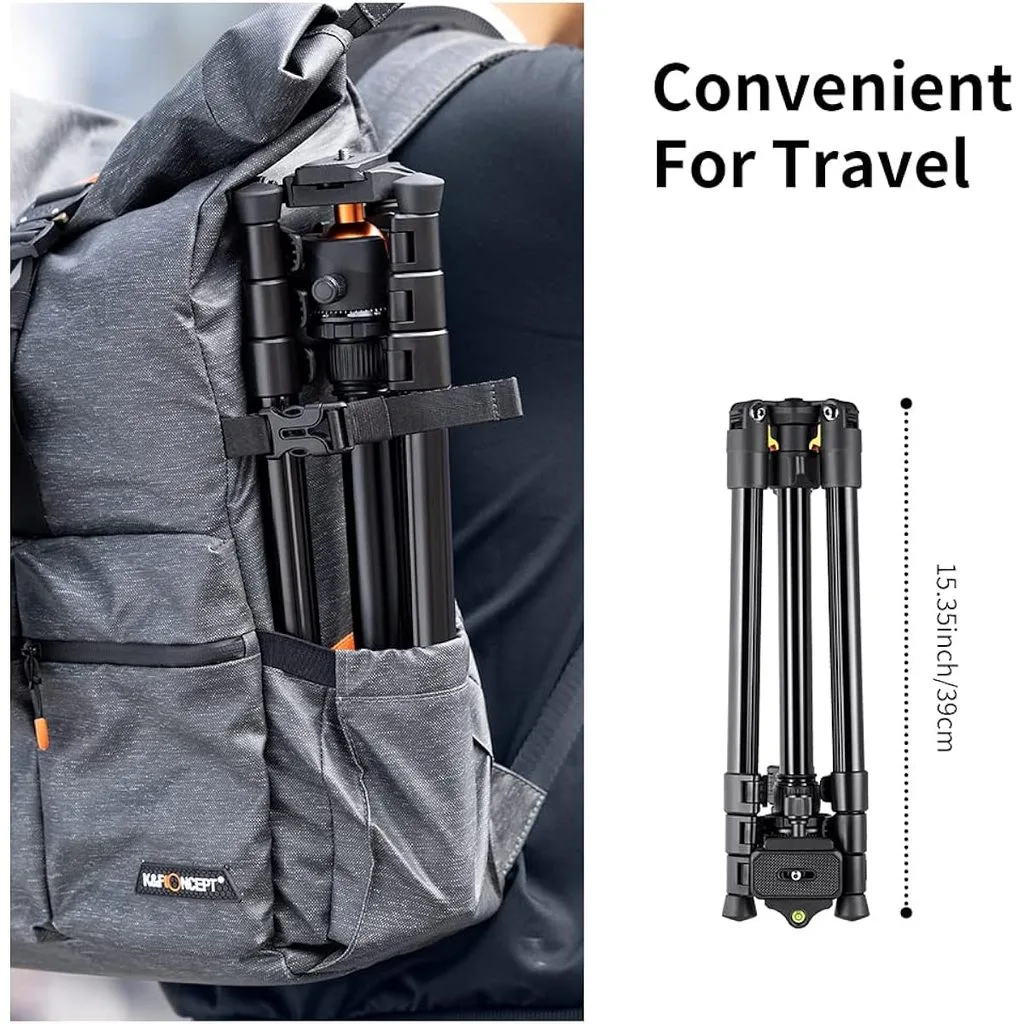
The K&F Concept 64-inch tripod proves that a budget stand can still deliver usable height and stability. Aluminum legs keep weight around 1.2 kg, it reaches roughly 158–163 cm, lists a 10 kg (22 lb) ball-head load, and folds to about 39 cm. It includes a 360-degree ball head, a bubble level, an Arca-style quick-release plate, and a carry bag.
- What we like: tall extension for the money, a phone-compatible platform, and a fold/reverse design that packs small.
- Trade-offs: the plastic leg clips feel less premium than metal locks, the head drifts slightly under heavy telephoto glass, and setup takes a few extra seconds.
This model suits beginners, content creators, and anyone wanting a spare travel or video tripod; pair it with a lightweight mirrorless body, not a heavy wildlife lens.
Cheapest Reliable Stand: Amazon Basics 50-Inch Tripod
If your budget starts near $20, the Amazon Basics 50-inch tripod is the default entry point. It weighs about 0.64 kg (1.4 lb), extends to roughly 50 inches, and supports light camera bodies and smartphones. It carries a very large owner-review base (several hundred thousand ratings) at around 4.5 stars, which tells you most buyers use it for casual, lightweight shooting.
Keep expectations realistic: the rated load sits near 2 kg (4.4 lb), so it handles compact cameras, kit-lens mirrorless bodies, and phones, not a full-frame camera with a 70–200 mm lens. Use it as a learning tripod, travel spare, or vlogging stand, then upgrade when your gear grows.
Best Ultralight Carbon Value: SIRUI Traveler 5C
The SIRUI Traveler 5C targets the photographer who leaves a tripod at home because weight wins the argument. It uses carbon fiber legs, weighs 0.85 kg (1.87 lb), folds to 33 cm (12.99 in), and reaches 138 cm (54.3 in). Hands-on testers flagged it as the standout value in its weight class for price, packed size, and weight combined.
- What we like: one of the lightest near-full-size tripods available, a compact folded length that fits a daypack, and carbon build for less than premium-brand pricing.
- Trade-offs: maximum height is moderate, the thin legs flex at full extension, and opening motion feels fussy at first.
Best Sub-Kilogram Performer: Fotopro X-Aircross 3
The Fotopro X-Aircross 3 pushes the ultralight category further. It weighs just 940 g with the head attached, folds to 36.5 cm, reaches 151 cm, and lists a 10 kg load on 25 mm carbon tubes; at about $169 it undercuts name-brand carbon kits on spec-for-dollar.
The leg-angle locks drop minimum height to 16 cm for foreground-heavy landscapes. That same trade-off applies: use the thinnest bottom tube sparingly in wind, and the brand carries less showroom support than Manfrotto or Gitzo.
Best Aluminum Workhorse: Manfrotto Befree Advanced AS
The Befree Advanced AS keeps appearing in “best tripod” lists for good reason. Aluminum legs weigh 1.51 kg, fold to 40 cm, extend to 150 cm, and carry a rated 9 kg safety payload with the 494 ball head. The “AS” update supports Arca-type plates, so the L-bracket on your camera fits without an adapter.
Aluminum survives gravel drops, salt spray, and overhead-bin abuse better than expensive carbon, and it costs less. It does weigh about 240 g more than the carbon version, and the 494 head drifts under very heavy lenses. Buy this as a first serious travel tripod or as the kit you do not worry about losing.
Best Sturdy Pick for Heavy Gear: 3 Legged Thing Leo 2.0
When you shoot high-resolution bodies, long zooms, or long exposures in wind, capacity beats grams. The Leo 2.0 carbon kit lists a 30 kg (66 lb) load rating, folds to roughly 35–37 cm, reaches 147 cm, and converts one leg into a monopod or boom arm. A companion heavy-duty option, the Feisol CT-3342, has served astrophotographers for over a decade with a 2.5 lb body and a very high claimed payload for night exposures.
- What we like: enormous reserve capacity, rigid carbon legs, modular legs, and a low minimum height for foreground work.
- Trade-offs: about $370 for the kit, a shorter working height than bulkier studio legs, and several locks to seat properly.
High-megapixel sensors amplify any vibration, so heavier gear belongs on legs that can absorb it; compare body choices in our highest resolution cameras guide before matching a tripod load rating.
Best Flexible Mini Tripod: Joby GorillaPod 3K
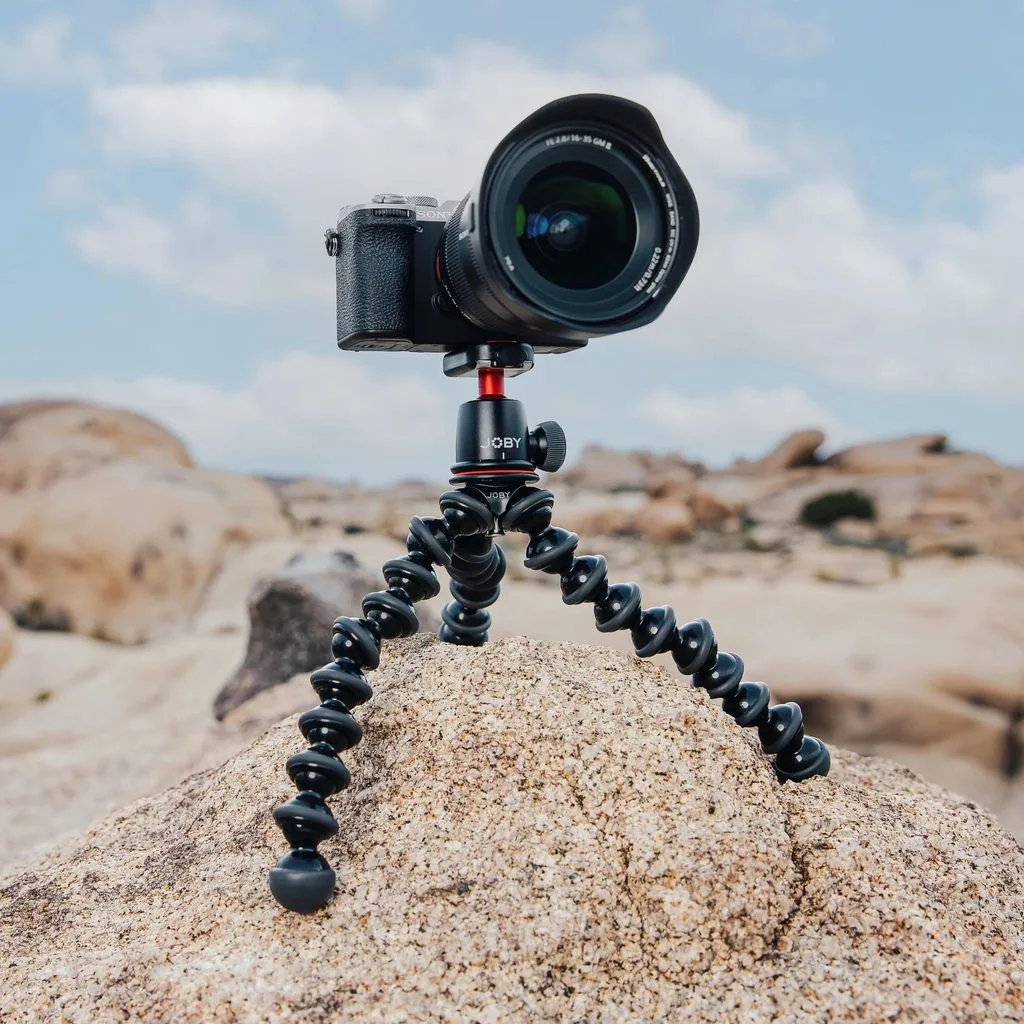
The Joby GorillaPod 3K fills a different niche. Its bendable rubber-ringed legs wrap around railings, branches, and tables, and it holds up to 3 kg (6.6 lb) at a weight of only 400 g. The larger GorillaPod 5K RIG raises capacity to 5 kg and adds accessory arms for lights or mics around $105.
Mini tripods do not replace full-size legs: they cannot raise the camera to eye level, and the load ceiling rules out pro telephoto kits. Choose one for tabletop product shots, vlogging, macro work, and creative mounts where a regular tripod will not fit.
Best Budget Tripods: Sturdy Picks Under $150
Budget tripods earn their place when you need stability without premium pricing. The mistake buyers make is chasing maximum height or cheapest price alone; a wobbly cheap tripod wastes more shots than it saves. The models below balance a usable load rating, decent build materials, and a sensible folded size.
What to Expect in This Price Band
Under $150 you mostly see aluminum legs, twist or flip locks, and ball heads rather than fluid or geared heads. Still demand at least a 5 kg stated load for a mirrorless kit, a fold length near 40 cm, metal rather than all-plastic lock housings, and a standard quick-release plate. Used name-brand units (Manfrotto, Gitzo, Vanguard, Feisol) also appear in this band and are a legitimate option, since tripods wear slowly.
Budget Comparison Table
| Model | Build | Max height | Stated load | Approx. price | Best reason to buy |
|---|---|---|---|---|---|
| K&F Concept 64-inch | Aluminum | ~158 cm | ~10 kg | ~$70–$90 | Tall, light, loaded with features |
| Amazon Basics 50-inch | Aluminum | ~127 cm | ~2 kg | ~$20–$30 | Cheapest phone/kit-lens starter |
| Manfrotto Befree Advanced AS | Aluminum | 150 cm | 9 kg | ~$150 | Brand build quality and Arca compatibility |
| Vanguard VEO 3GO 235CB | Carbon | ~136–138 cm | 4 kg | ~$160–$200 | Light carbon for small mirrorless kits |
| SLIK SPRINT 150 Kit | Aluminum | ~163 cm | ~2.5 kg class | <$75 | Tall extension for the money |
| Neewer LT32 Carbon | Carbon | ~157 cm | ~6 kg class | ~$90–$130 | Carbon feel on a budget |
Two warnings apply across the budget band. First, treat load ratings as a ceiling, not a promise; a head listed at 10 kg can still creep under a heavy lens. Second, a tall tripod with the center column fully extended is a wobbly tripod; prioritize leg stability over advertised maximum height.
Top Rated Travel Tripods: What Sets the Best Models Apart
The Fstoppers 2026 travel-tripod roundup frames the decision around three numbers that matter most: packed length, weight, and combined load rating with leg-tube diameter. The picks below explain how those numbers translate into buying decisions.
Packed Length and Weight
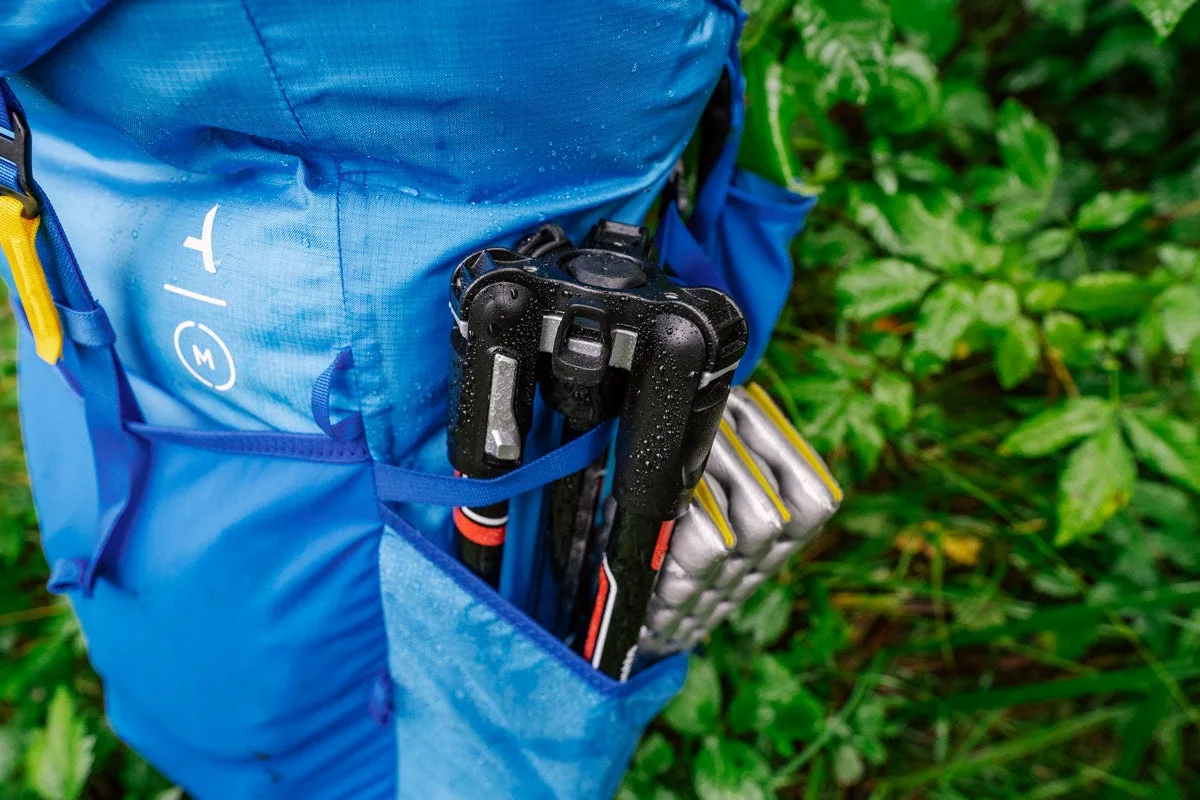
Anything around 40 cm or shorter rides inside a carry-on or a 20-liter daypack; anything over about 45 cm straps outside the bag, where it snags on branches and becomes the first thing you leave behind when tired. Weight works the same way: every saved gram counts on a long hike, while extra grams in aluminum tubes buy stability and dent resistance.
Material: Carbon Fiber vs Aluminum
Carbon fiber legs shed roughly 200–400 g over equivalent aluminum tripods, absorb vibration well, and feel warmer in cold weather. They cost significantly more and crack or delaminate on hard impacts rather than denting. Aluminum costs less, shrugs off abuse, and adds steadying mass. In small travel tripods that gap can be only about 200 g, so compare the price difference before paying for carbon.
Load Capacity for Your Actual Kit
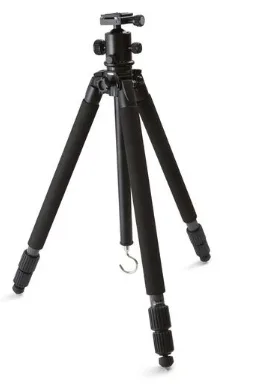
Weigh your camera body and heaviest lens together, then look for a tripod rated above that total. Many working photographers target roughly two to three times their kit weight for wind resilience. A 3 kg mirrorless kit needs a modest 6–9 kg rating; a heavy telephoto setup calls for 15–30 kg legs with a dedicated gimbal or heavy ball head.
Tripod Head Types
The head decides how you frame and lock the camera.
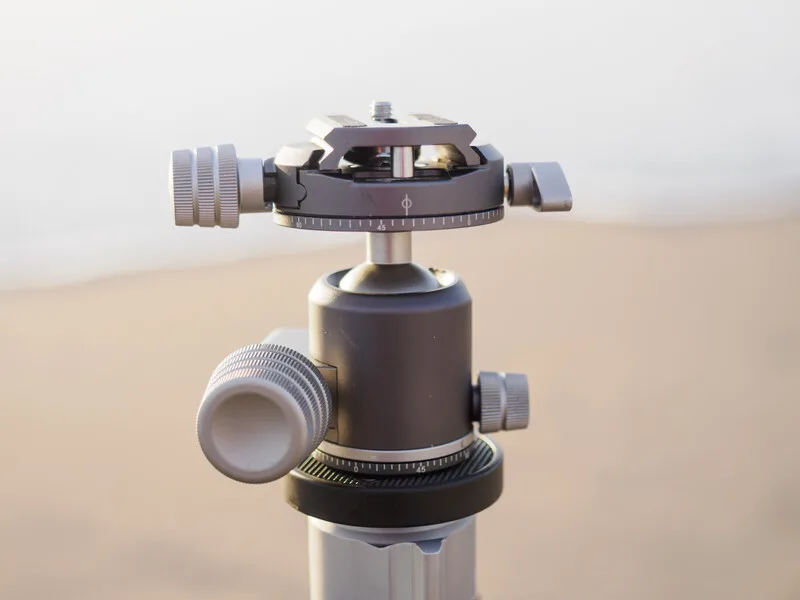
- Ball heads: fast, compact, and easy to reposition; the default choice for travel and landscapes.
- Three-way or geared heads: slower to adjust but precise, useful for architecture, macro, and studio still life.
- Fluid heads: smooth pan and tilt for video; look for models like the SmallRig AD-50Lite budget video kit if you shoot clips. Pair video support with our best budget camcorder picks when audio and motion matter.
- Gimbal heads: balance heavy telephoto lenses smoothly for wildlife and sports.
Leg Locks: Twist vs Flip
Twist locks (collars) run smoothly, have no protruding levers, and pack slim, but you must confirm every collar is fully seated, and sand can grind the threads over time. Flip (lever) locks open fast, lock by feel, and work well with gloves, but they can pinch fingers in the dark and catch on bag fabric. Both designs work well; choose based on your shooting conditions and preference.
Leg Sections, Height, and Low-Angle Shooting
Five-section legs fold shorter but use a thin bottom tube that flexes at full extension. Four-section legs stay stiffer but pack longer. A practical habit: build height from the top sections down, and leave the thinnest bottom section stowed unless you truly need the extra reach. For low landscapes and macro shots, look for a removable or reversible center column and a minimum height near 14–20 cm.
Pair your travel support with a compact body that travels light; our best compact cameras with a viewfinder guide lists natural matches for small carbon tripods.
Camera Tripod Buying Guide: Six Specs to Check Before You Buy
Digital Camera World’s travel-tripod buying guide emphasizes that the best support fits your actual shooting style; the six specs below cover every model worth comparing.
- Maximum and folded height: max height should approach your eye level; folded length decides whether the tripod comes with you.
- Weight: separate legs-only weight from kit weight including the head, since heads add 200–500 g.
- Load rating: compare it against your heaviest body-and-lens combination with margin built in.
- Head included or sold separately: legs-only kits (Gitzo, some Feisol, RRS models) let you choose a head but add cost.
- Minimum height and leg angles: three independent leg angles enable uneven ground and low foreground shots.
- Feet and extras: rubber pads suit pavement; optional spikes help grass and rock; monopod conversion, phone clamps, and accessory hubs add versatility.
How We Selected and Tested These Tripods
We treated manufacturer spec sheets as a starting point and cross-checked them against hands-on testing reports, owner-review aggregates, and current retail prices. Expert Photography’s roundup of the best tripods for photographers proved useful for head-type explanations and mid-range value picks. We weighted four criteria: stability under typical mirrorless and DSLR loads, travel portability, build quality in locks and joints, and real-world value.
A tripod cannot be judged from a spec table alone. Rigidity shows up in wind, long-exposure sharpness, and lock feel after months of use, so these picks favor models with a real field-testing history over unproven new listings.
Pro Tips for Sharper, Steadier Tripod Shots
A great tripod still rewards technique. Follow these habits and you will get sharper files from the same gear.
- Extend thick upper leg sections first; keep the thinnest section retracted unless you need height.
- Lock the center column down for maximum stability; raise it only when extra height is unavoidable.
- Turn off lens stabilization on a firm tripod, since IS can hunt and add micro-vibration.
- Use a 2-second self-timer or a remote shutter release so pressing the shutter does not nudge the camera.
- Hang your camera bag from the hook for extra mass, or rest it on the ground beneath the tripod to avoid sway.
- Keep ISOs low in low-light tripod shots; the whole point of support is a clean file, and the ISO in photography guide explains the trade-offs.
- Finish strong files: shoot raw for long exposures and recover highlights without compression artifacts, as our RAW vs JPEG comparison explains.
Pair the legs with a light camera body; this guide to the best compact cameras for travel photography matches small cameras to small tripods.
Frequently Asked Questions
What is the best tripod for a camera for most photographers?
The Peak Design Travel Tripod takes the top overall spot for mirrorless travel and landscape shooters because it combines a 39.1 cm folded size, 1.27 kg carbon weight, and a 9.1 kg load rating. Budget-minded buyers should choose the Manfrotto Befree Advanced AS (~~$150) or the K&F Concept 64-inch (~~$70–$90); both hold typical camera-and-kit-lens combinations steadily.
What is the best cheap tripod that still holds a DSLR steady?
For under $100, the K&F Concept 64-inch and the SLIK SPRINT 150 Kit offer the best mix of height, weight, and stated capacity for light DSLR and mirrorless kits. The Amazon Basics 50-inch costs the least but only supports light bodies and phones; treat it as a starter or spare rather than a serious support for heavy glass.
Can I take a tripod on a plane as carry-on luggage?
Most airlines allow tripods in carry-on or checked bags if the folded length fits your personal-item allowance. Pack Hacker’s travel-tripod testing notes that sharp metal foot spikes can draw security questions, so pack plastic feet or removable spikes in checked luggage when possible. A 40 cm class travel tripod usually slides into a daypack; bulkier full-size legs may need a separate bag.
Carbon fiber or aluminum: which should I buy?
Choose carbon fiber if weight and packability drive your decision and your budget allows premium pricing. Choose aluminum if you want durability, lower cost, and a bit of stabilizing mass, and you drive to locations rather than hike long distances. For many small travel tripods, the weight difference can be as small as 200 g, so compare the price gap before paying the carbon premium.
How much load capacity do I actually need?
Weigh your camera body and heaviest lens together, then look for a tripod rated above that total. A common rule among working photographers is to target roughly two to three times your kit weight for wind resilience. A 3 kg mirrorless kit needs a modest 6–9 kg rating; a heavy telephoto setup calls for 15–30 kg legs and a dedicated gimbal or heavy ball head.
Ball head or three-way head: which works better?
Ball heads win speed and compactness and suit travel, landscapes, and street shooting. Three-way or geared heads win precision and suit macro, architecture, and studio framing where slow, exact movements matter. Video shooters should use a fluid head for smooth pans rather than forcing a stills ball head to perform video motion.
Why does my cheap tripod feel wobbly, and how do I stabilize it?
Most wobble comes from fully extended thin leg sections, a raised center column, an undersized load rating, or unsecured twist locks. Extend thick sections first, keep the column lowered, seat every lock firmly, splay the legs wide on soft ground, and hang weight from the hook. If files still blur at shutter speeds below 1/30 s, the tripod is undersized for your camera and deserves an upgrade.
Final Verdict
Start from how you shoot, not from the highest rating online. Buy the Peak Design Travel Tripod if travel compactness and build quality justify a premium budget. Choose the K&F Concept 64-inch or Manfrotto Befree Advanced AS for the best balance of price and steady support under $150. Pick the SIRUI Traveler 5C or Fotopro X-Aircross 3 when every gram counts on the trail, and step up to the Leo 2.0 or Feisol class for heavy lenses and demanding long exposures. Match folded size to your bag, load rating to your heaviest kit, and head to your subject, and you will own a tripod you actually carry. For a matching body, browse this roundup of top travel cameras.